
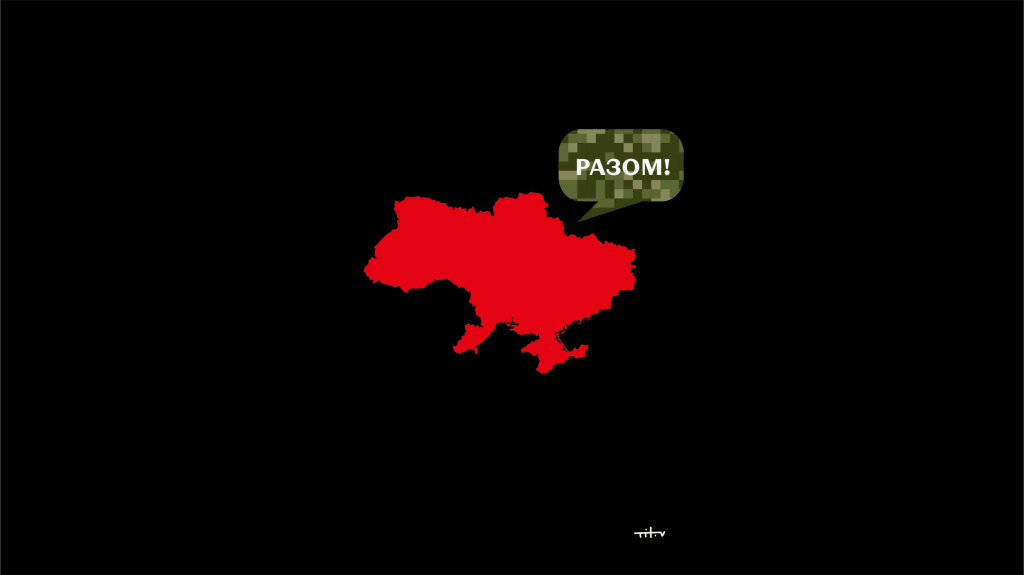
The full-scale war has now continued for more than half a year, and along many sections of the front it has turned into positional warfare. Fatigue, losses, trauma, uncertainty about the future, and a threat that shows no sign of disappearing are all making themselves felt. It is precisely under such circumstances that it is most logical for the enemy to employ an old weapon: to divide and polarise our society. The ancient maxim divide and rule has never lost its relevance, but at this moment it poses an especially serious threat to Ukrainian society. Below are the principal points of vulnerability that the enemy may seek to exploit.
Natural Diversity
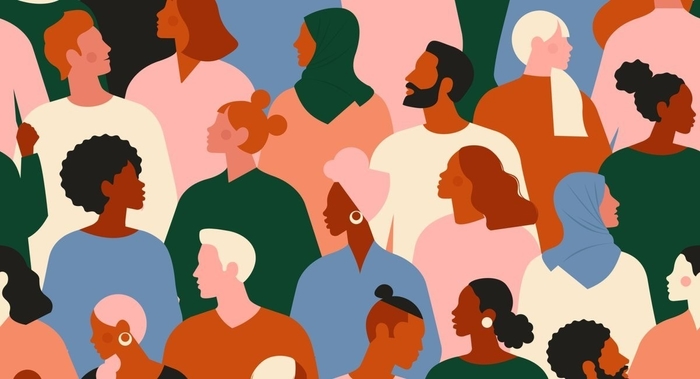
Our country is large. We have many regional communities. This refers not only to the caricatured and oversimplified distinction between East and West, but to an entire spectrum of diverse Ukrainian subcultures: the Polishchuks, Hutsuls, Podolians, Slobozhans, Volynians, the people of the steppe, and many others.
We have different landscapes, and these naturally give rise to different modi vivendi and modi operandi. Living in the mountains is one thing, living on the steppe is another, living in the forests is different again, and living on the seashore is different still. Life in large cities, urban-type settlements, and villages also differs substantially.
We also have sizeable national minorities that have lived here for centuries. We have different religions and Christian denominations.
Citizens of Ukraine speak different dialects of the Ukrainian language, some of which differ considerably from one another, as well as other languages.
Different regions preserve their own local traditions. In some places people celebrate Malanka with carnivals; in others they visit cemeteries on memorial days; some sing Christmas carols; some perform the traditional sowing ritual; others believe in the Good Shubin.
In addition, our society consists of different social groups with different levels of prosperity. Some families have three sport utility vehicles parked in their garages, while others survive on a meagre pension.
The conditions created by the full-scale invasion have subjected this ecosystem of rich diversity to a severe test. Millions of people have been forced to seek shelter away from their homes, bringing them into close contact with other socio-cultural groups of Ukrainians. Under conditions of extreme psychological stress, this could have led to conflict. It did not happen. Nevertheless, the enemy will continue to probe this terrain, attempting to turn us against one another from within.
Political Diversity
Political preferences are not as stable as cultural, religious, and linguistic identities. Nevertheless, supporters of different political parties or individual politicians are, by definition, polarised. They often view supporters of other political figures with contempt or distrust. Different political camps are already engaged in constant disputes with one another. The enemy’s objective is to escalate these disputes into serious conflicts and internal instability capable of undermining the vertical structure of state authority.
Another direction of attack is the creation of divisions within the government itself. A potential conflict between the President, the Prime Minister, the Minister of Defence, the Chief of the General Staff, and the Minister of Foreign Affairs would be an effective means of destabilising the government and weakening its ability to function.
Diversity of Experience
The full-scale invasion has also created new social divisions. There is now a distinction between those who joined the country’s defence and those who remained in the rear. There are those who experienced occupation and those who did not. There are those who evacuated and those who stayed. There are those who became direct victims of shelling or witnessed attacks first-hand and those who experienced only air-raid alerts. There are those who lost their homes, loved ones, or employment and those who were fortunate enough to avoid such losses.
These different wartime experiences may become fertile ground for polarisation.
Residents of Kharkiv, Mykolaiv, and Nikopol, who face shelling almost every day, may feel resentment towards or express grievances against residents of Kyiv or Lviv, where conditions are comparatively calmer. Frontline soldiers and their families may condemn parties and entertainment taking place in the rear, and so forth.
The Mechanics of Polarisation
All of the forms of diversity described above already exist; there is no need to invent them. The enemy’s task is to amplify them and drive them towards confrontation. How can this be done?
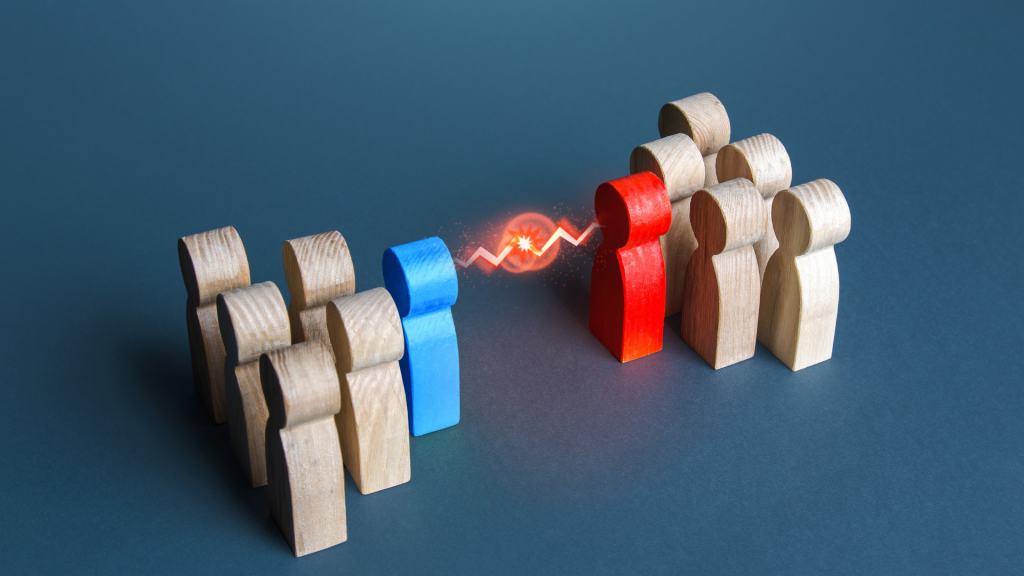
A simplified binary division is constructed—for example, Side One and Side Two (Ukrainian speakers and Russian speakers; combatants and those in the rear; residents of frontline cities and residents of comparatively safe cities, and so forth). Information operations are then launched that praise, glorify, or express insincere sympathy towards one side while simultaneously criticising, devaluing, and showing contempt for the other side. If the opposing side does not react, a mirror-image, symmetrical information operation may be created in its place.
Where a particular form of diversity is already close to conflict, the polarising information operation is often taken up by the opposing sides themselves, who then continue the process without any further external assistance. This is especially characteristic of the political sphere.
Counteracting Polarisation
The principal instrument for counteracting polarisation is empathy. If the hypothetical Side One genuinely attempts to listen to and understand the hypothetical Side Two, it becomes much more difficult to set them against one another. This does not mean that Side One should imitate Side Two. Rather, it means making an effort to view the situation from another person’s perspective.
The second important element is recognising the emotional factor. Under the constant stress in which we are living, some people may fail to cope with their emotions and begin searching for internal enemies. In such circumstances, hope rests with those who possess greater emotional resilience—people who will not respond with counterattacks, thereby completing the process of polarisation, but who will instead respond calmly and thoughtfully in order to de-escalate the conflict.
The third factor is reason. This means simply recognising the fact that any polarisation within Ukrainian society at the present moment is extraordinarily harmful. The well-known expression “this is not the right time” has never been more relevant than it is under the conditions of martial law.
Source: Uchoose
Illustration: Nikita Titov