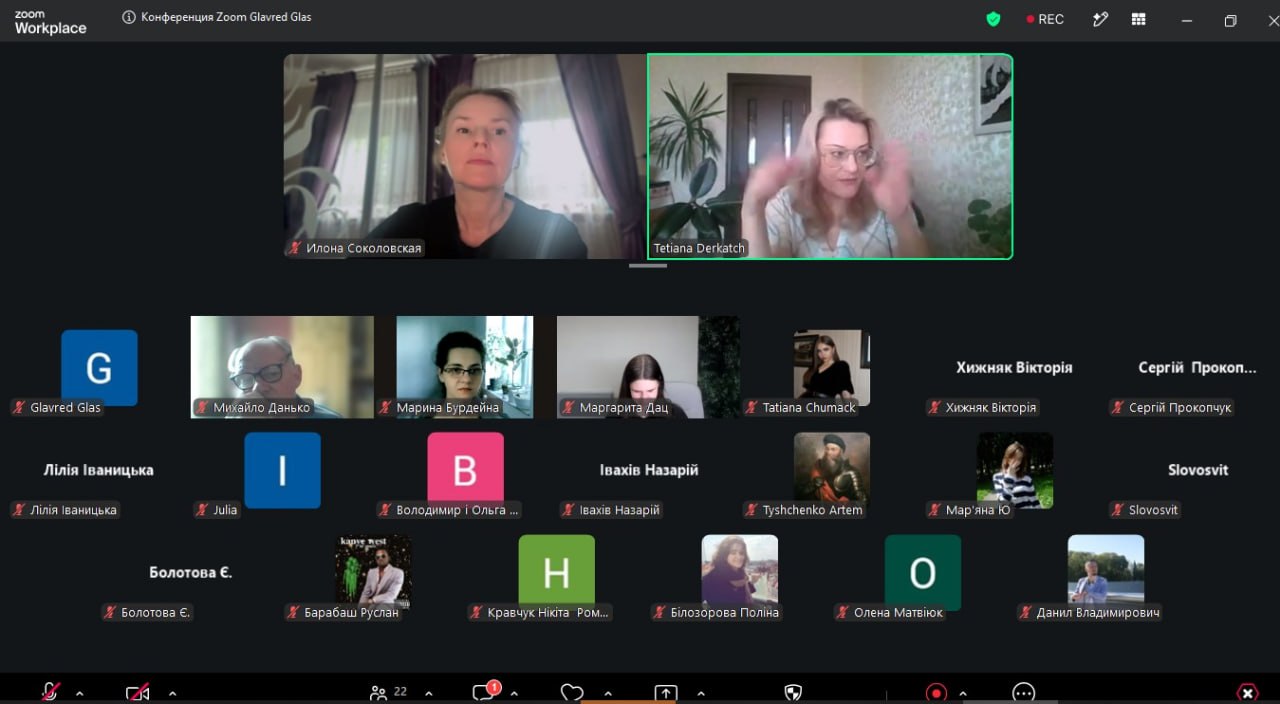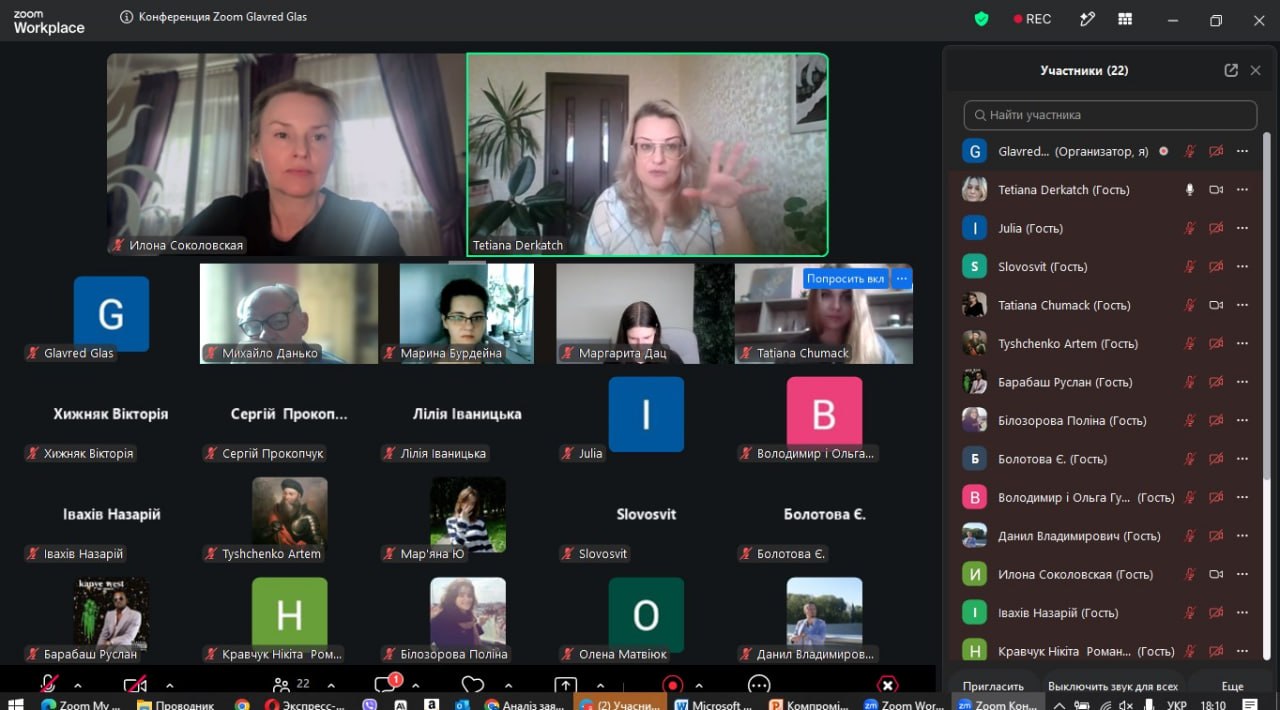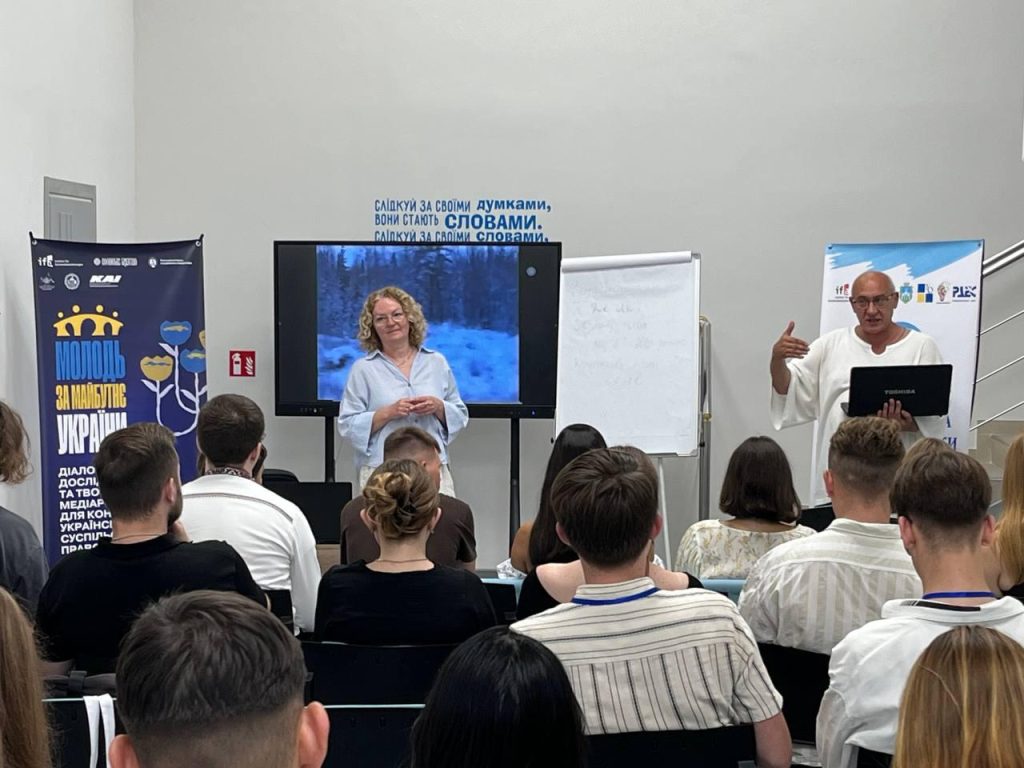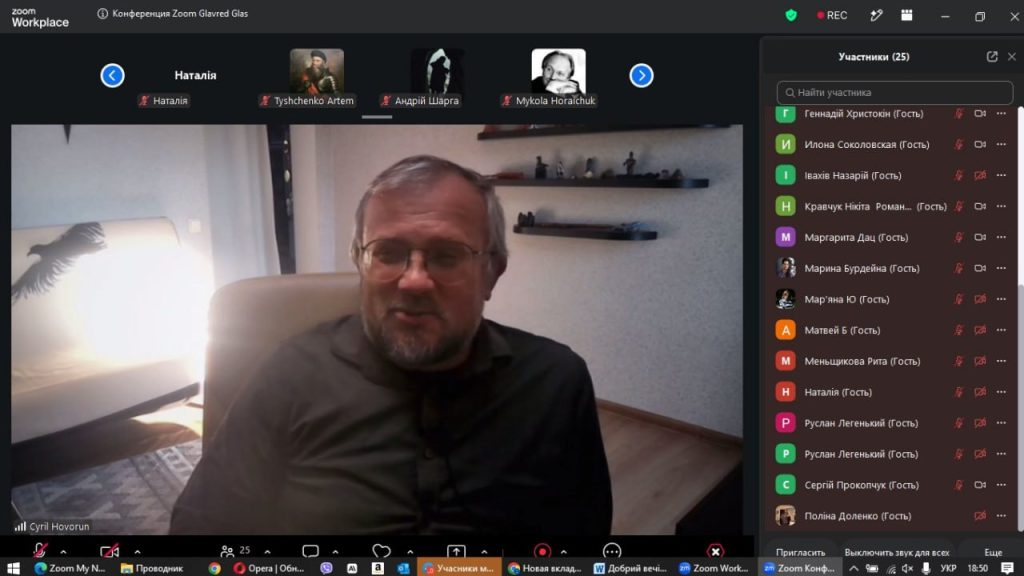
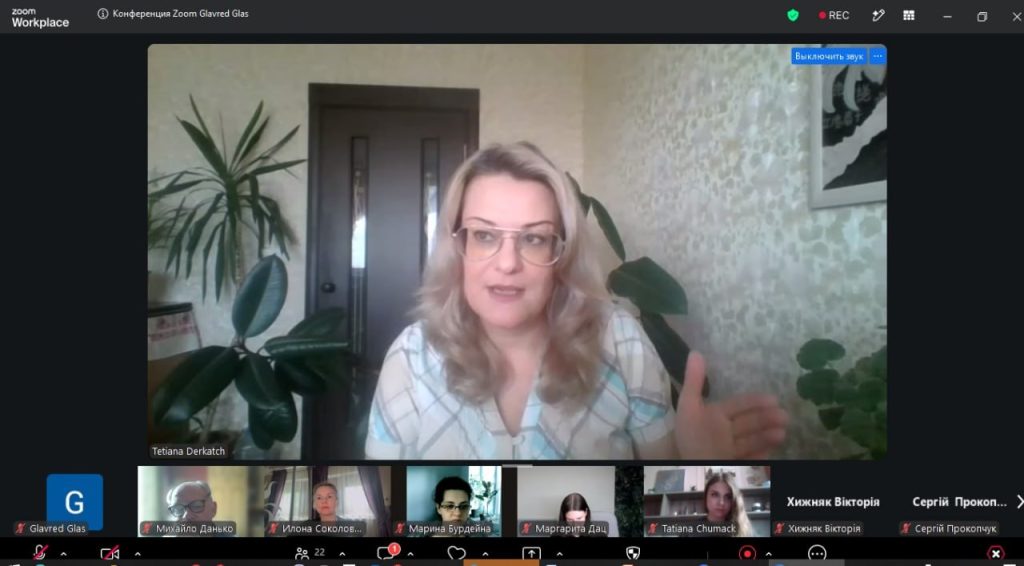
As part of the project “Youth for the Future of Ukraine: Dialogue, Research, and Creative Media Work for the Consolidation of Ukrainian Society and Orthodoxy,” another webinar took place, devoted to one of the most challenging issues of our time—the nature of compromise and its role in overcoming social and inter-church conflicts.
The guest speaker was Tetiana Derkach, a religious publicist, researcher of contemporary church processes, and author of the book The Moscow Patriarchate in Ukraine: The Anatomy of Betrayal.
Although the discussion was prompted by the crisis in inter-Orthodox relations, the webinar quickly moved far beyond church-related issues. In reality, it addressed a much broader question: why some conflicts can end in mutual understanding while others are destined to reproduce themselves endlessly; why, for some people, compromise is a sign of maturity, while for others it is perceived as a sign of weakness or even betrayal.
We Argue in Different Languages
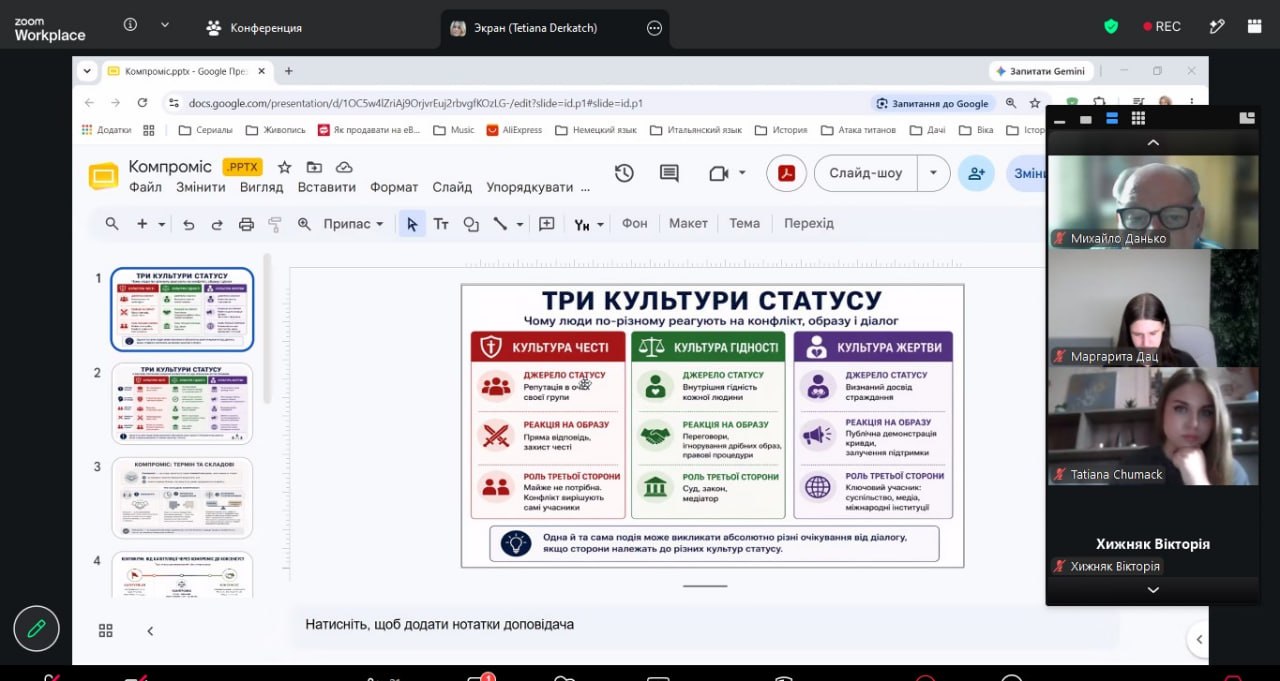
The central idea of the lecture was the typology of cultures proposed by the American sociologists Bradley Campbell and Jason Manning.
According to Tetiana Derkach, people often enter into conflict without even realizing that they are operating within different cultural frameworks.
The culture of honor requires the constant defense of one’s reputation. An insult is perceived as a challenge that must be answered, because silence signifies weakness. Consequently, confrontation often becomes a means of self-assertion.
The culture of dignity, by contrast, proceeds from the understanding that human worth does not depend on external approval. Dignity can neither be taken away nor bestowed by others. For this reason, minor offenses do not require an immediate response, while serious conflicts are resolved through the rule of law, independent institutions, or mediation.
The third type—the culture of victimhood—is built around public recognition of harm suffered. Here, moral authority is often associated with the status of being a victim, and conflict is transferred from direct dialogue to external arbiters, such as society, the media, the state, or international institutions.
At the same time, the researcher emphasized that in contemporary Ukrainian society these three cultures almost never exist separately. They constantly intertwine, sometimes even within the speech of the same individual.
Why Compromise Is So Often Perceived as Defeat
One of the key themes of the webinar was a reconsideration of the very concept of compromise.
Tetiana Derkach pointed out that compromise is almost always experienced psychologically as a form of loss. After all, neither side receives everything it originally sought. That is why, in societies where the culture of honor predominates, the word compromise often acquires negative connotations and is perceived as capitulation or the abandonment of one’s principles.
However, the central message of the lecture was that compromise is not a single, unambiguous concept. It may signify different models of interaction and lead to entirely different outcomes depending on what is actually meant by the term.
When Words Become Misleading
The speaker devoted particular attention to a phenomenon she described as “masking.”
Using numerous historical examples, she demonstrated that capitulation is often presented as compromise, while compromise is portrayed as capitulation. At times, compromise is described as consensus even though genuine agreement between the parties never existed. Conversely, authentic mutual understanding is sometimes deliberately labeled merely as compromise in order to avoid accusations of excessive concession.
Among the examples examined during the webinar were the Munich Agreement of 1938, the Camp David Accords between Egypt and Israel, the Council of Ferrara-Florence in the fifteenth century, and the mutual lifting of the anathemas between Rome and Constantinople in 1965.
All of these historical cases demonstrated how dangerous it can be to equate different models of agreement and how easily political or religious rhetoric can substitute for the actual substance of negotiations.
The Common Good Requires a Culture of Dignity
A separate section of the lecture was devoted to Ukrainian inter-Orthodox dialogue.
Tetiana Derkach noted that contemporary church discourse often combines several languages at once: the language of honor, in which the struggle for reputation and uncompromising adherence to principles become paramount, and the language of victimhood, which appeals to external recognition of one’s suffering.
The search for the common good, however, requires a different logic—the language of dignity, at the center of which lies not victory over one’s opponent, but responsibility for preserving human dignity, trust, and the possibility of future coexistence.
For this reason, the speaker emphasized, genuine dialogue begins not when one side agrees to make concessions, but when all participants are prepared to distinguish honestly between capitulation, compromise, and consensus, without substituting one concept for another.
Young People Sought the Criteria for Responsible Dialogue
A substantial portion of the webinar took place in the form of an open discussion.
Participants discussed how to distinguish genuine compromise from concealed capitulation, whether consensus is possible in conflicts that have continued for decades, how society can avoid falling into the trap of political manipulation surrounding the theme of “betrayal,” and what the criteria for responsible dialogue should be in a country experiencing war.
Special attention was also given to the role of young people. The discussion emphasized that after the war it will be the younger generation that will participate in rebuilding public institutions, restoring trust, and seeking mechanisms for coexistence within a society that will continue to be diverse in its experiences, convictions, and religious affiliations.
For precisely this reason, young people must learn not only to defend their own convictions, but also to analyze critically the language through which conflicts are described and the solutions to them are proposed.
A Space for Reflection Rather Than Ready-Made Answers
The webinar with Tetiana Derkach once again confirmed the central vision of the project “Youth for the Future of Ukraine”: the formation of a responsible generation begins not with ready-made recipes, but with the ability to ask the right questions.
Today, discussions about compromise, dignity, and the common good extend far beyond church-related issues. They concern politics, civil society, education, international negotiations, and ultimately the future model of the Ukrainian state.
Indeed, the language Ukrainians learn to use in speaking to one another—whether the language of honor, the language of victimhood, or the language of dignity—will largely determine not only the success of individual negotiations, but also society’s ability to build trust, reach just agreements, and work together for the common good.