Is it enough for Ukraine to win the war in order to become a successful state? Does a responsible society emerge automatically once freedom has been achieved? And could Ukraine’s greatest test come not on the battlefield, but after victory?
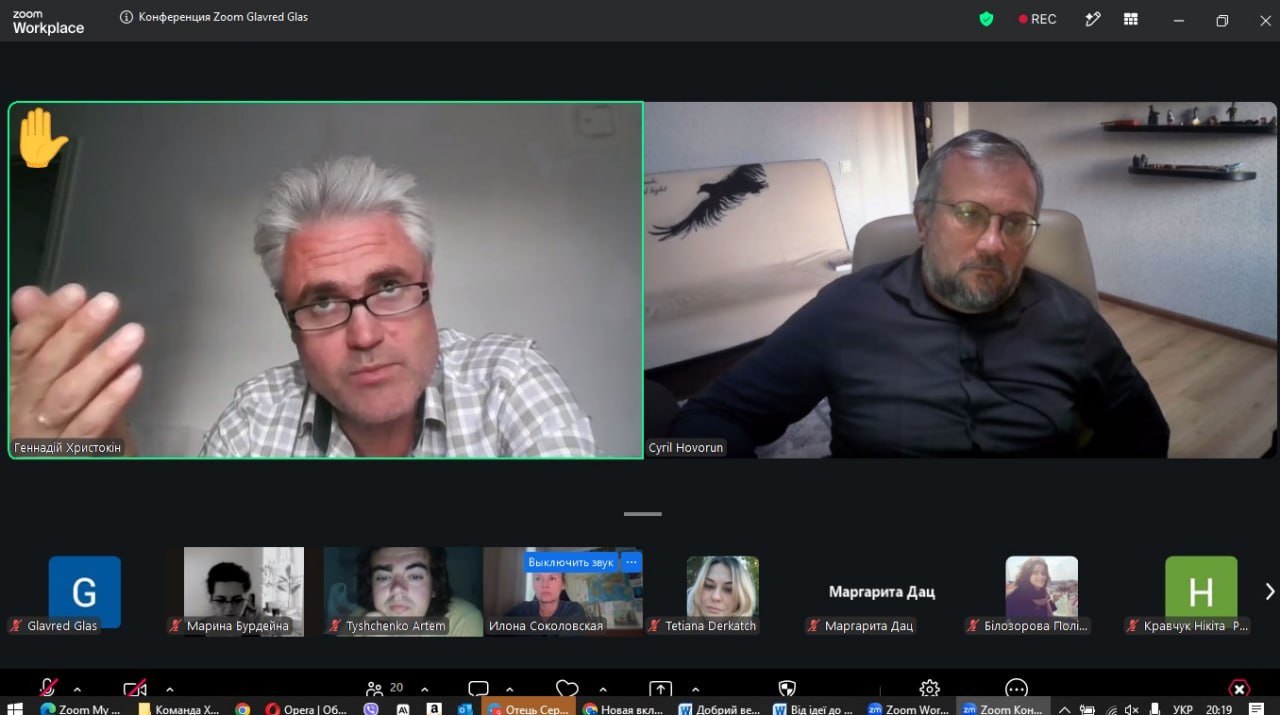
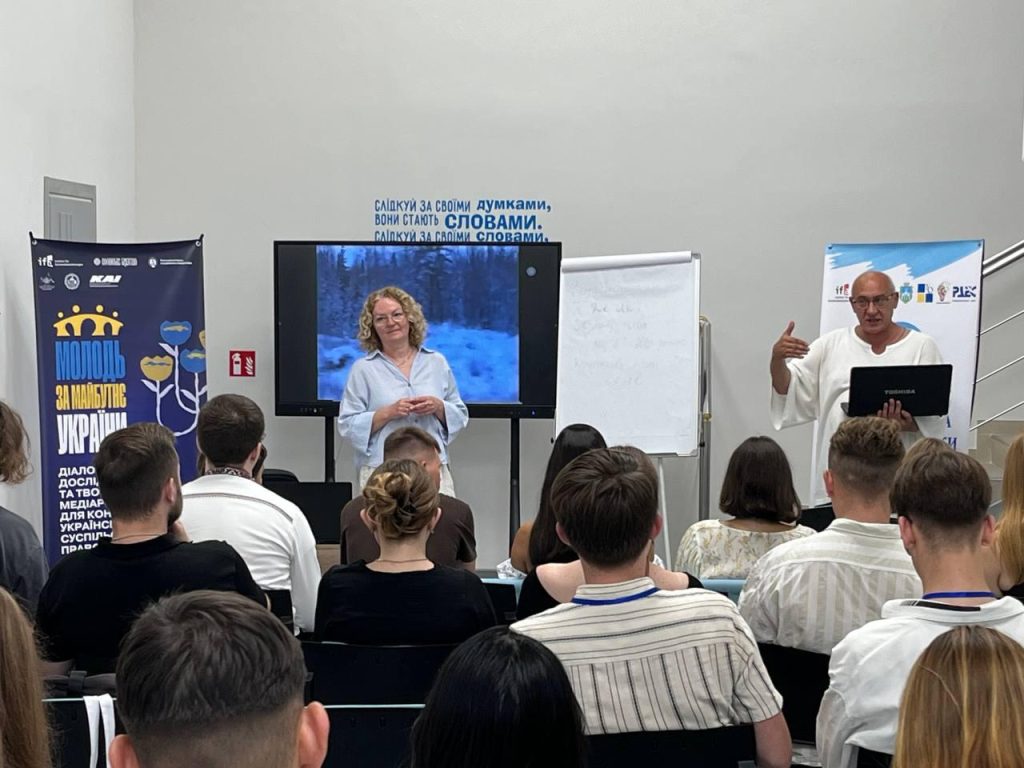
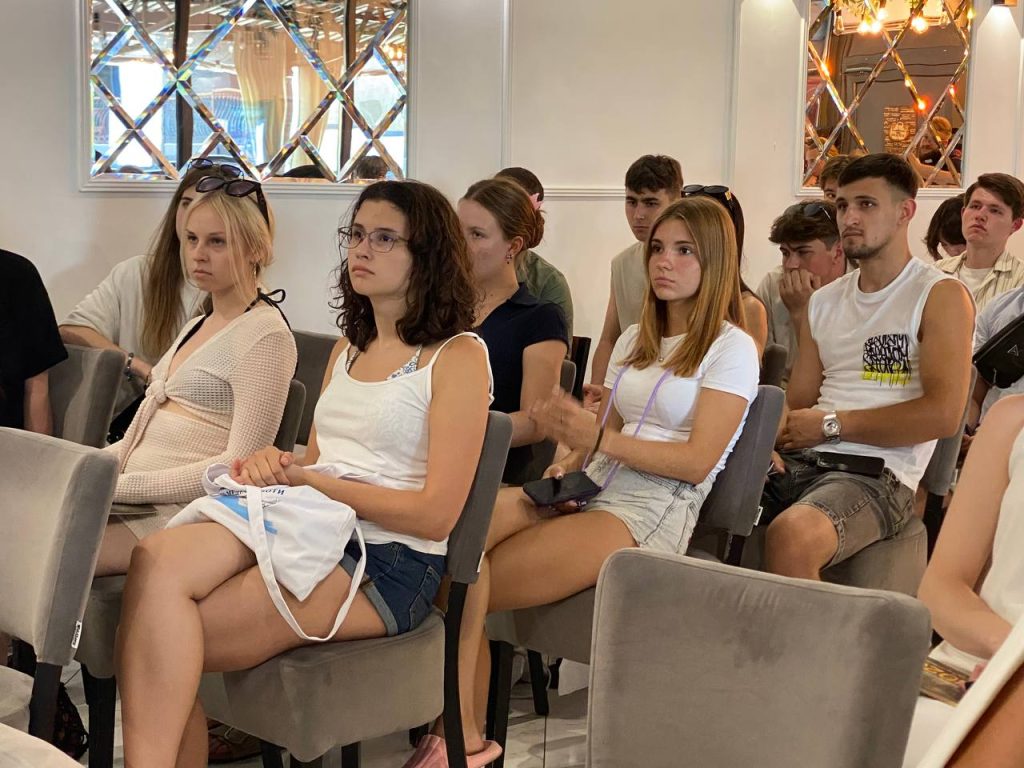
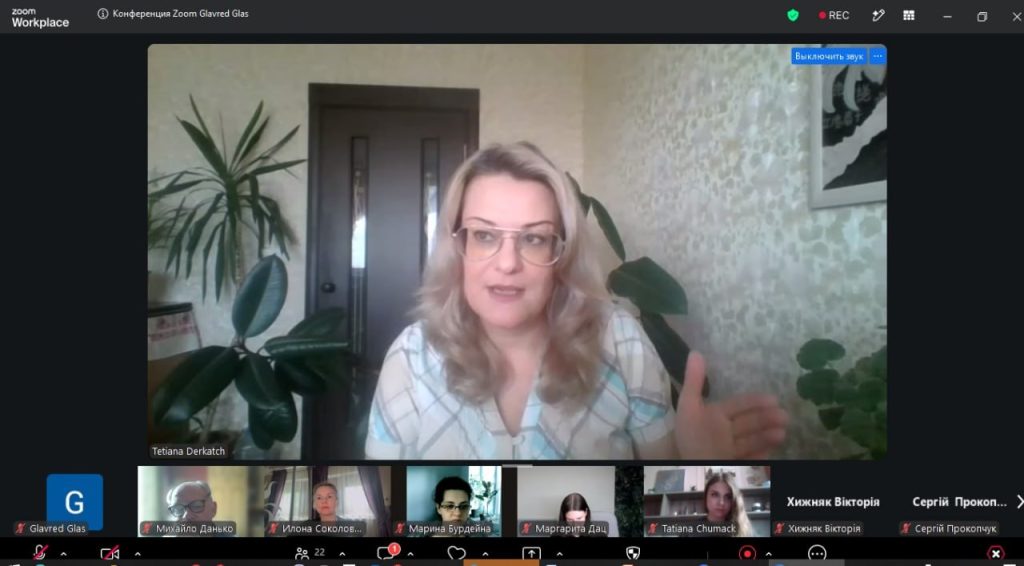
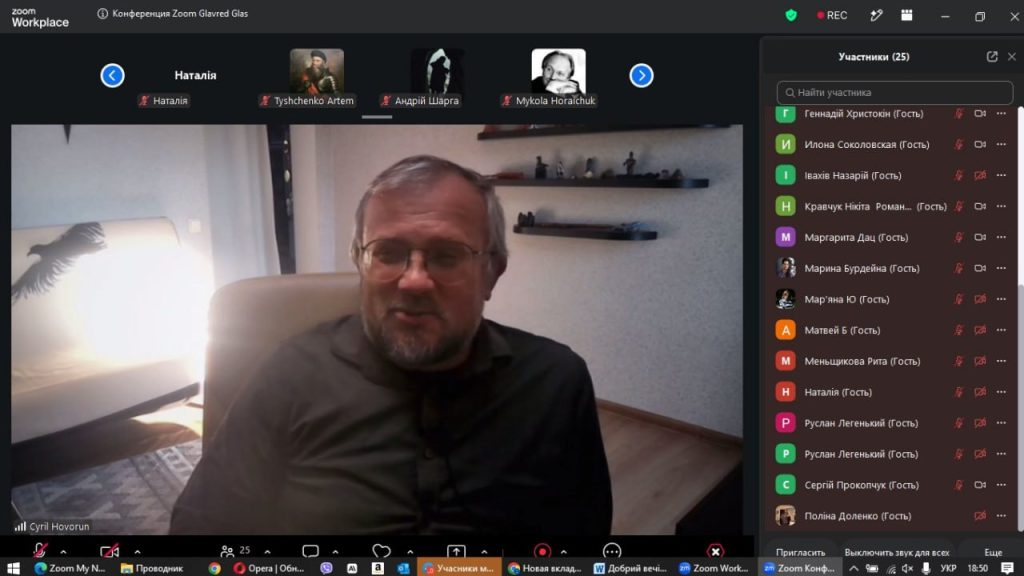
These questions formed the core of the conversation with theologian and philosopher Cyril Hovorun during the final July webinar of the project “Youth for the Future of Ukraine: Dialogue, Research, and Creative Media Work for the Consolidation of Ukrainian Society and Orthodoxy.”
The meeting was entitled “Ukrainian Agency and the Culture of Dialogue: How Collective Trauma Can Become a Source of a Responsible Future.” In reality, however, it addressed something much broader: why the war has become not only a struggle for territory or statehood, but also a process through which Ukrainian society is emerging as a subject of history.
Agency Is Not the Same as Independence
In recent years, the word agency has become one of the most frequently used terms in public discourse. Yet it is often reduced to political sovereignty or state independence.
Cyril Hovorun offers a much deeper understanding of the concept.
Agency is not merely the right to make one’s own decisions. It is the capacity of a society to take responsibility for those decisions. It is the willingness not to wait for external powers, the state, or a charismatic leader to determine the future, but to become the creators of one’s own history.
For this reason, in his view, the Russian-Ukrainian war represents a clash between two fundamentally different models. On the one hand stands an imperial system in which authority is the source of all will, while society exists merely as an extension of the state. On the other hand stands a model of civic responsibility, in which society itself becomes the bearer of agency.
According to the speaker, this is precisely why Russia has never been able to understand the Ukrainian Maidan. The Maidan was not a revolution in search of a new ruler, but the moment when society declared, more clearly than ever before, its own right to become a subject of history.
Why Trauma Does Not Always Destroy
One of the most compelling parts of the lecture was the historical parallel between contemporary Ukraine and early Christianity.
Cyril Hovorun turned to the era of Emperor Diocletian—the period of the most severe persecutions of Christians.
It might have seemed that mass persecution would destroy the Church. Instead, the opposite happened. Precisely through experiencing collective trauma, the Church developed its internal maturity and acquired genuine agency. This historical analogy became one of the central ideas of the webinar.
Ukraine, too, is living through the experience of collective trauma. Yet trauma alone does not make a society stronger. It can either destroy a society or become the starting point of its inner maturation.
For this reason, the essential question is not whether society suffers, but what it chooses to do with its suffering.
Humility as the Opposite of Powerlessness
One particularly unexpected theme was humility. In public consciousness, this virtue is often associated with passivity or submission. Cyril Hovorun offered an entirely different interpretation.
True humility does not deny human activity. It does not mean abandoning struggle or responsibility. On the contrary, a person is called to act as actively as possible while at the same time leaving room for God’s action.
The speaker saw precisely this synergy of human will and divine presence in the Ukrainian Maidan, where mass civic engagement was united with common prayer.
The Russian Model: Agency Belongs Only to the Ruler
A substantial part of the webinar was devoted to an analysis of Russian political culture. According to Cyril Hovorun, its defining characteristic is the denial of society’s agency. Within the Russian political tradition, it is not the people but the ruler who is regarded as the source of history. This explains why Russian political theology so readily sacralizes state power, elevating the political will of the ruler to the status of an almost absolute value.
The Ukrainian experience, by contrast, demonstrates the possibility of a different model—one in which society does not dissolve into the state but remains its equal co-creator.
The Church Must Be a Partner, Not an Instrument of the State
Another section of the discussion focused on the place of the Church within a democratic society.
Cyril Hovorun offered a critical assessment of the concept of the “symphony” between Church and state, which has traditionally been characteristic of the Orthodox world. Historically, he argued, this model has almost always resulted in mutual dependence, with the state seeking to control the Church while the Church sought political privileges.
Instead, he believes that the contemporary model should be built upon partnership. Partnership means mutual respect for each other’s agency and the ability to cooperate without seeking to subordinate or exploit the other.
According to the speaker, this approach opens the possibility for genuinely healthy relationships between the state, religious communities, and civil society.
The Common Good Cannot Be Commanded
One of the recurring themes throughout the webinar was the concept of the common good. Participants sought to understand whether it could be formulated as a state ideology or imposed upon society from above.
Cyril Hovorun’s answer was unequivocal.
The common good is not created through decrees or political programs. Not even the state itself creates it. It emerges where people voluntarily learn to trust one another, cooperate, assume responsibility for their shared space, and seek solutions that transcend narrow group interests.
For this reason, the speaker assigned a particularly important role to the younger generation—not as future voters, but as people capable of developing new rules for living together.
The Greatest Test Will Begin After Victory
Perhaps the most important thought of the entire meeting came near its conclusion.
History offers many examples in which victory did not become the beginning of renewal. Defeat has sometimes produced new strength, while victory has, on the contrary, marked the beginning of moral decline.
That is why, Cyril Hovorun emphasized, it is not enough for Ukraine simply to win the war.
Ukraine must also avoid losing itself after victory.
It must not allow its agency to become a new form of superiority, freedom to be replaced by lawlessness, or the experience of struggle to generate new forms of intolerance or domination.
For agency is not a trophy that can be won once and for all. It is a continual process of the moral maturation of society.
For this reason, the final July webinar of the “Youth for the Future of Ukraine” project became a conversation not only about today’s war.
It became a conversation about Ukraine after the war.
About a country that will have to do more than rebuild its cities – it will have to learn how to rebuild trust.
Not merely restore institutions, but create a culture of partnership.
Not only defend its freedom, but confirm it every day through responsibility.
Perhaps this is the true meaning of Ukrainian agency – not merely to survive history, but to assume responsibility for what history will become next.