

Maria Honcharova, researcher, Candidate of Psychological Sciences
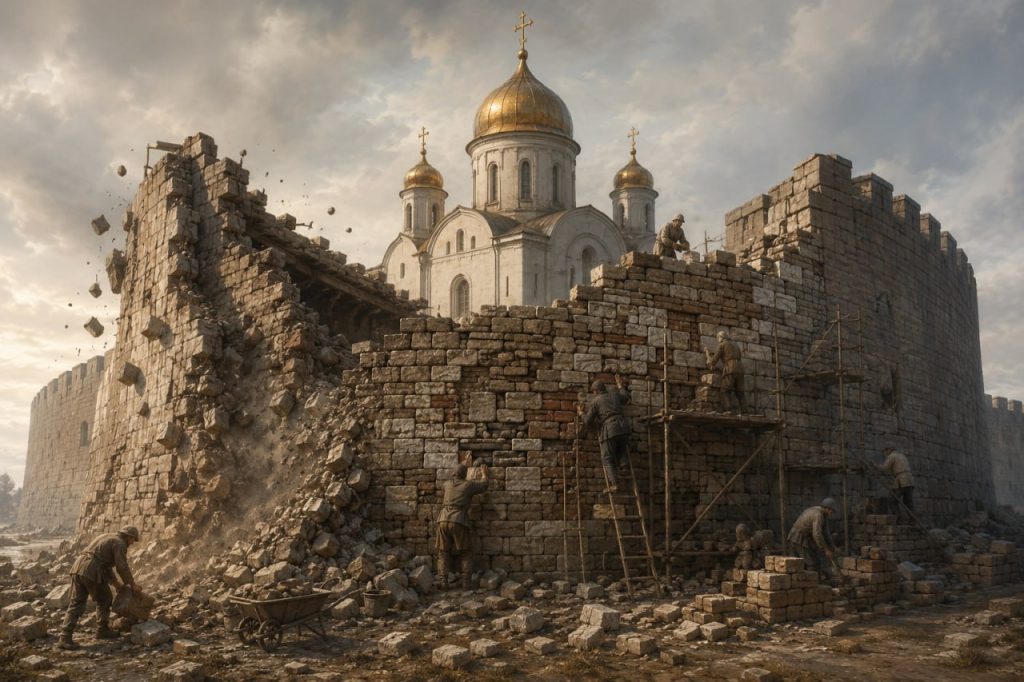
For a considerable part of its history, Ukraine was under the oppression of neighboring states, subjected to attacks from all sides, censorship, and subjugation. For years, our history was rewritten and distorted, our traumas were silenced and denied, our intelligentsia was murdered, and attempts were made to destroy our language. Almost everyone I know has relatives who suffered as a result of the Holodomor. All of this is our collective pain, which has been a foundation of our individuality for centuries.
Consequences of Trauma
Nietzsche described 1 2 what he called active forgetting – a condition characteristic of animals that we, as humans, long for. It makes selective remembering possible. Animals seemingly know how to neutralize past experiences that are not useful for their present and future life and development. Nietzsche argued that it is possible to live almost without memory and to live happily. According to his logic, it is important for a person to forget negative things in order to live more happily. Moreover, he extrapolated this claim not only to individuals but also to society.
A single traumatic event causes1 many different symptoms: depression, anxiety, feelings of guilt, confusion, fear, loss of self-confidence, and so on. People often find it difficult to deal with the consequences of a traumatic event because they overwhelm 3 the mechanisms of adaptation to “normal life” (for example, 4 sharp hormonal changes occur as a response to stress, which have a fairly strong effect on well-being). We already live in a world with a great deal of stress. Everyone develops their own methods of adapting to surrounding stimuli (drinking, yoga, music, hope for a better life, belief in horoscopes, religion, and so on). Many of us have high levels of anxiety, but for the most part we can somewhat anticipate everyday stressful events. An event that causes an extremely high level of stress is one for which it was impossible to prepare and which could not have been predicted in advance.
We can speak of the same reaction in a group of people. Thus, genocide can 5 cause extraordinary trauma, because the killing and wounding of hundreds of thousands destroys all possible frameworks and mechanisms that allow survivors, as well as their descendants, to understand the events and cope with them. This is especially true of people who were convinced that the world was a bright and beautiful place. In an instant, everything they believed in no longer makes sense. This can cause incredible dissonance, a fragmentation of identity and faith.
So would it not be easier simply to forget? According to Nietzsche, it would be better for a group to forget in order for a culture to flourish. In my humble opinion, we and future generations must remember what we have endured in order to protect ourselves from history repeating itself.
Collective Trauma, Memory, and Reflection on the Past
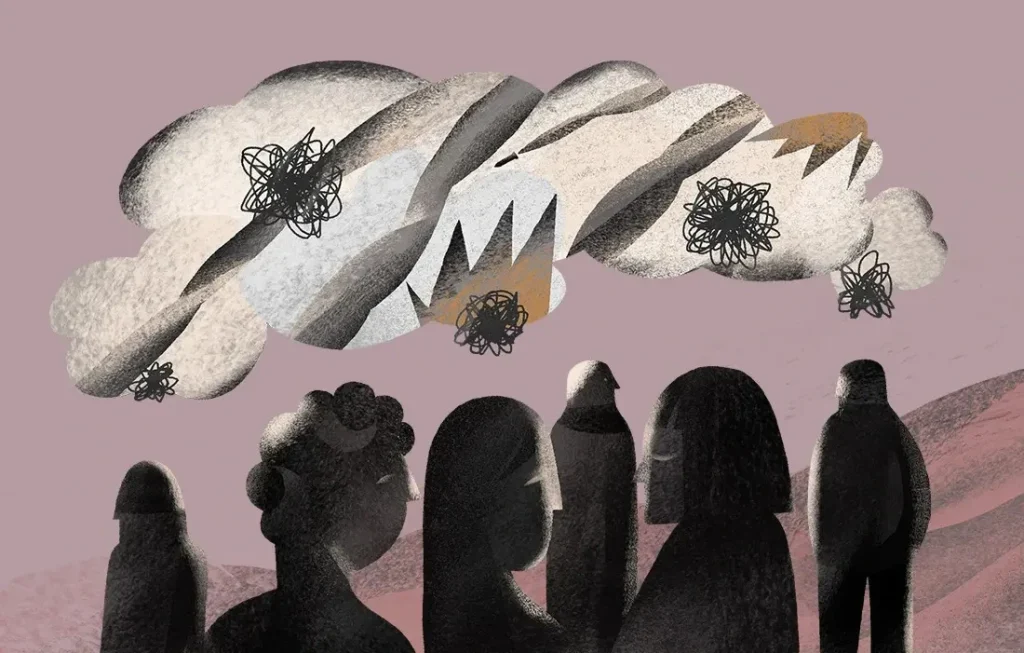
Collective trauma 6 is a group’s psychological response to a traumatic event that has affected society as a whole. It is important to add that a particular traumatic event is not merely present in the group’s memory; it is constantly reconstructed, reflected upon, and interpreted in an attempt to understand its meaning. Thus, collective memory of trauma differs from individual memory because it exists longer than those who directly experienced the events remain alive. It is preserved by members of the group who may be far removed from the traumatic situations in both time and space.
For example, I know that my great-grandmother survived the Holodomor from my mother, who passed this experience on to me on the basis of what she herself had heard. I, in turn, will pass it on, with details and historical context, to my friends in France. My account will no longer be “authentic,” because I did not experience these events directly. But I have my own reflected-upon view of this event and an intention to tell it to people who have never heard of the Holodomor in such a way that they will remember it. This is a story from my family, but it is not an isolated one – the majority of people in Ukraine can tell similar stories. The generation that recounts this event shapes the dynamics through which we all perceive it collectively. That is why it is so important not to forget about the narrative that is created, among others, by cultural figures, artists, writers, historians, and politicians.
Of course, there are many such traumatic events in our history. According to researchers Erica Resende and Dovile Budryte, these chosen traumas are conceptualized 7 as narratives that emphasize that “passing through blood” is necessary on the path toward freedom, independence, and group security.
“History provides us with narratives that tell us who we are, where we came from, and where we should be going. It defines a trajectory that helps construct the essence of a group’s identity.” 8
In discussing collective trauma, it is necessary to mention the concept of self-identification. According to it, we rely 9 on the group to which we belong and share common views, biases, and morality. This is reinforced by the desire to see ourselves and our group in a positive light. In other words, the group’s behavior corresponds to expectations and morality. Moreover, this assessment is also based on a comparison between one’s own group and the “other” group (more on the phenomenon of “us and them”). According to theorists, collective trauma threatens 10 identity because it creates dissonance between the desire to perceive the group positively and the acknowledgment of serious moral transgressions in the past or feelings of shame over past defeats. Thus, if there is no consistency in perception between the character of the group in the present and the character of the group in the past, this may prompt people with a high level of identification to perceive the historical context as less their own – that is, to separate themselves from their ancestors. This leads to the distancing of the contemporary group from past enemies; in other words, we do not perceive past enemies with hatred, contrary to what history or our ancestors tell us. In the context of Ukraine, the situation is rather complicated, because our history of struggle against invaders from two sides began long before the twentieth century. And both powerful states had a considerable influence on how our history and identity were formed. We tried to resist the eradication of everything Ukrainian; we have a heritage that, nevertheless, for years people tried to alter, prohibit, and so on. Thus, much of what our country experienced could not be discussed in the Soviet Union, which affected the formation of Ukrainians.
At the same time, the nations of those who attacked, in their desire to forget the dark pages of history, will be 11 inclined simply to deny or rewrite the fact that it happened (for example, the Holodomor, repression, the execution of the intelligentsia), separating their identity from the past and refusing to take responsibility for it. After all, if responsibility is accepted, the entire group must pay with its sense of superiority, of being better than others. It is easier either to deny such an event or to rewrite it in a more favorable light in order to reduce collective responsibility.
On the other hand, according to one rather provocative assumption (Collective Trauma and the Social Construction of Meaning), collective trauma, for both victims and perpetrator groups, is not merely a destructive event but also an indispensable component in the construction of collective meaning, creating a sense of shared fate within the group. This collective memory of traumatic events of the past becomes an inseparable part of self-identification, functions to preserve the memory of trauma, and encourages subsequent generations to incorporate the trauma into their collective self. In other words, without this event, it would be difficult to have such an identification; it shapes how we collectively perceive ourselves and the world around us. For perpetrator groups, trauma functions as a catalyst that stimulates the construction of a new social representation which, if successful, can sustain the collective self and a positive self-image. An example is Russia’s fixation on the power of the Soviet Union or the whitewashing of the actions of Imperial Russia, without proper acknowledgment of all the crimes they committed.
It is also worth noting that every group – or country – will construct its own “truth” regarding particular events. It is not necessarily historically accurate, but for each group it is its own, built upon history, myths, and collective memory. Recently, I was crossing the border with Poland, and ahead of me was an American who had a flag of the Ukrainian Insurgent Army attached to his backpack. A Pole approached him very seriously to explain that one cannot walk around Poland with such a flag. The American was indignant because he had spent time with Ukrainian soldiers; for him, this flag had already come to be associated with the struggle for freedom. In Poland, however, Stepan Bandera and the Ukrainian Insurgent Army are associated with the killing of Poles by Ukrainians. This example can be described by the so-called “gray zone,” in which the boundary between perpetrators and victims is not clear, and each group will minimize the extent of its own crimes and exaggerate the extent of the other group’s crimes.
When a Country Chooses to Forget
Nietzsche’s confident assertion about happiness through active forgetting does not always work in practice, although for some nations their trauma is so severe that they would rather forget it in order not to feel guilt over defeat or vulnerability. For example, during the Second World War and Japan’s occupation of Korea, so-called “comfort stations” were widespread, to which thousands of young girls from Korea and China were brought en masse for Japanese soldiers. This mass sexual slavery, rape, starvation, and inhumane treatment were regarded as normal in Imperial Japan. After the end of the Second World War and the liberation of Korea, this historical fact was silenced for a long time because of taboo and a collective sense of vulnerability. Thus, in Confucian cultures, women who lost their virginity before marriage for any reason were expected 12 to take their own lives. Therefore, for several decades Korea was more prepared to forget than to speak openly about it. At the same time, Japan for a long time simply denied that women had been forced to provide sexual services, and until the 1980s no one spoke openly about this issue at all. Even today, this topic remains extremely uncomfortable for Japan, and attempts are made to avoid it. In 2015, the country acknowledged that such events had taken place, but as early as 2019 it stated that the expression “sexual slavery” contradicted 13 the facts. This is simply an incredible example of how one country is prepared to rewrite history in order to cleanse itself of its past crimes. This is without even mentioning all the other things the Japanese army did. Japan, therefore, is a good example of the use of soft power. Thanks to its attractive culture and a strategy of self-presentation refined over many years, it is perceived very differently from Germany, for example.
Germany’s image, after all, remains rather tarnished: the history of its crimes is substantial, accessible, and systematically documented. We have museums; concentration camps have been preserved, and people can visit them and see what happened there. Because the war took place largely in Europe, we are fairly well informed about it. In addition, many films and books have been produced specifically about the German occupation and its crimes. The Soviet concentration camps (the Gulag), purges, the deportation of the Crimean Tatars 14, and the mass deportations of Ukrainians (Operation “West” 15 ) are not as well known throughout the world. Moreover, the crimes committed by Soviet soldiers in Germany were concealed for years in both countries.
Therefore, things must be called by their proper names. The way we describe events and construct the narrative will be directly reflected in how our descendants and the world perceive this war. Russia is already rather successfully promoting the claim that “things are not so clear-cut” in Europe, while among the population of its own country it is trying to prove that we somehow deserve the aggression. Meanwhile, in Europe, Russian news outlets either deny the killings and rapes or attempt to construct a different picture of reality, justifying their actions or distorting the facts.
Do People Find Meaning?
The question arises: how are we to live with the entire burden of history and the consequences of this war? Collective trauma undermines the fundamental sense of security, with long-term consequences among the second and third generations of survivors. Thus, at the personal level, these generations demonstrate significantly higher levels of psychological stress. 16 At the societal level, the second and third generations exhibit 17 increased individual and collective fear, a heightened sense of vulnerability, wounded national pride, humiliation, an identity crisis, and a tendency to react to new threats with heightened vigilance.
After the terrorist attacks on the Twin Towers in New York on September 11, 2001, a great deal of research was conducted on trauma, including collective trauma. This was one of the first instances in which billions of people around the world could watch a tragedy unfold in real time. Even I remember my parents watching television in astonished silence. And I myself saw it happen.
However, a longitudinal study 18 among Americans who had mostly watched the events of September 11 on television showed that even a year after the event, most people still found it difficult to find meaning in life. Moreover, the researchers argue that the search for meaning in itself cannot always resolve the distress caused by a negative life event. Nevertheless, it facilitates adaptation by reducing the sense of vulnerability. They emphasize that the best way to adapt to new realities is to try, despite everything, to see something good in the world. I can only imagine how difficult that is.
The first to write about the search for meaning under extremely difficult and traumatic conditions was the father of existential psychology, Viktor Frankl. His life in a concentration camp can be read about in the book Man’s Search for Meaning. He describes himself and other people who, despite everything, managed to preserve a sense of meaning. He argued that the search for meaning is the primary motivation of a human being, sustaining hope and the desire to struggle against difficulties. It was his theory that called Maslow’s hierarchy of needs 19 into question. Maslow suggested that without satisfying basic needs (food, sleep, sex), a person cannot concern themselves with “higher matters.” Frankl, by contrast, described himself and the people who survived alongside him in the concentration camp. Even under horrific conditions, they still dreamed of how they would meet their loved ones after the war, which gave many of them the strength to survive.
At the societal level, people find the motivation to do things despite what they have endured together. In Ukraine, shops and restaurants are operating, books are being published, films are being released, and people are trying to live full lives. People donate, volunteer, and try to do something useful for society.
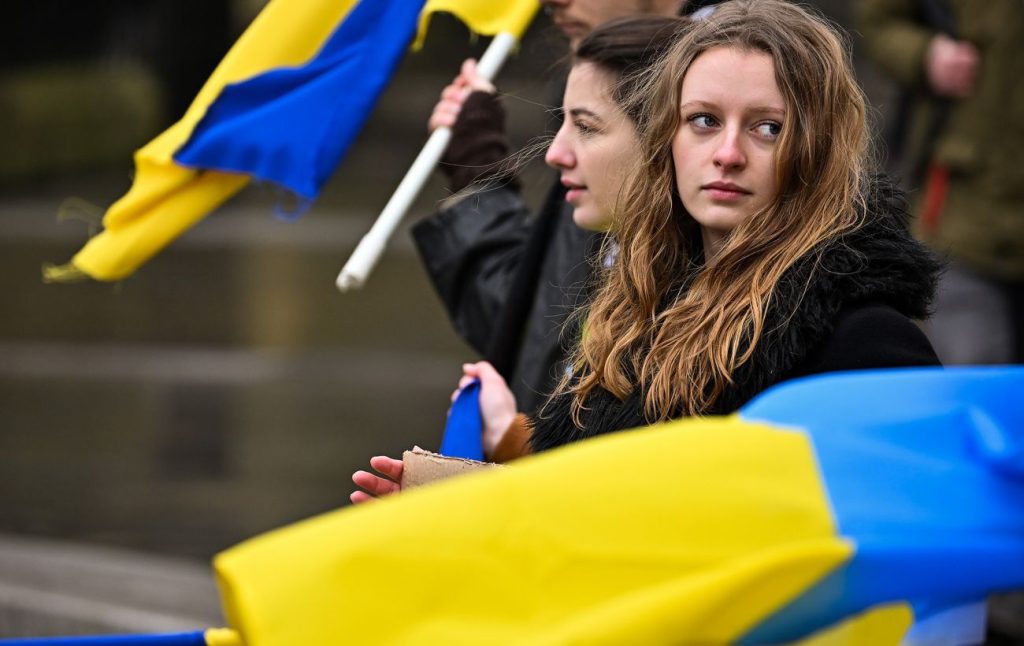
Collective trauma can unite people, because we are going through this experience together, and the average European is unlikely ever to be able to understand us. Unfortunately, the negative consequences remain with the group for generations.
In trying not to forget what we have experienced, we condemn ourselves to a higher level of stress. Forgetting is a luxury (and here I can probably agree with Nietzsche). However, I believe that we have no right to forgive the enemy. If we silence traumas and historical events that have had an enormous impact on our lives, we will nevertheless continue to live with these patterns that influence our perception of the world. Distancing ourselves does not lead to a better life, because events have a tendency to repeat themselves. Especially when one’s neighbor is a totalitarian, aggressive country. Our identity is built, among other things, through the pain we experience. It is important to transform this pain into a narrative that will help our descendants build a strong country.
Illustrations: Yuliia Zinchenko
Source: Kunsht
- How to Forget the Unforgettable? On Collective Trauma, Cultural Identity, and Mnemotechnologies Ciano Aydin. [↩] [↩]
- Nietzsche, F. (1997a). Untimely meditations (D. Breaseale, Ed., & R. J. Hollingdale, Trans.). Cambridge, UK: Cambridge University Press. [↩]
- Herman, J. (1992). Trauma and recovery: The aftermath of violence from domestic abuse to political terror. New York, NY: Basic Books. [↩]
- Bryant, R. A. (2021). A critical review of mechanisms of adaptation to trauma: Implications for early interventions for posttraumatic stress disorder. Clinical psychology review, 85, 101981. [↩]
- Denham, A. R. (2008). Rethinking historical trauma: Narratives of resilience. Transcultural Psychiatry, 45, 391–414. doi:10.1177/1363461508094673. [↩]
- Collective Trauma and the Social Construction of Meaning. [↩]
- Resende, E., and Budryte, D. (eds). (2014). Memory and Trauma in International Relations: Theories, Cases and Debates. New York, NY: Routledge. [↩]
- Liu, J. H., and Hilton, D. J. (2005). How the past weighs on the present: social representations of history and their role in identity politics. Br. J. Soc. Psychol. 44, 537–556. doi: 10.1348/014466605X27162. [↩]
- Organizational Identity: A Reader. [↩]
- Branscombe, N. R., Ellemers, N., Spears, R., & Doosje, B. (1999). The context and content of social identity threat. Social identity: Context, commitment, content, 35-58. [↩]
- Čehajić-Clancy, S., Effron, D. A., Halperin, E., Liberman, V., and Ross, L. D. (2011). Affirmation, acknowledgment of in-group responsibility, group-based guilt, and support for reparative measures. J. Pers. Soc. Psychol. 101, 256–270. doi: 10.1037/a00239 [↩]
- Watanabe, Kazuko (1999). Trafficking in Women’s Bodies, Then and Now: The Issue of Military “Comfort Women”. Women’s Studies Quarterly. 27 (1/2): 19–31. JSTOR 40003395. [↩]
- Diplomatic Bluebook 2019 / The Issue of Comfort Women. Ministry of Foreign Affairs (Japan). 2019. Retrieved February 1, 2021. [↩]
- Interview with a Historian about the Deportation of the Crimean Tatars. [↩]
- What Was Operation “West”? [↩]
- Yehuda, R., Halligan, S. L., and Bierer, L. M. (2002). Cortisol levels in adult offspring of Holocaust survivors: relation to PTSD symptom severity in the parent and child. Psychoneuroendocrinology 27, 171–180. doi: 10.1016/S0306-4530(01)00043-9. [↩]
- Lifton, R. J. (2005). Americans as survivors. N. Engl. J. Med. 352, 2263–2265. doi: 10.1056/NEJMp058048. [↩]
- Searching for and Finding Meaning in Collective Trauma: Results From a National Longitudinal Study of the 9/11 Terrorist Attacks. [↩]
- Maslow, Abraham H. (1943). A theory of human motivation. Psychological Review. 50 (4): 370–396. CiteSeerX 10.1.1.334.7586. doi:10.1037/h0054346. hdl:10983/23610. ISSN 0033-295X. OCLC 1318836. [↩]