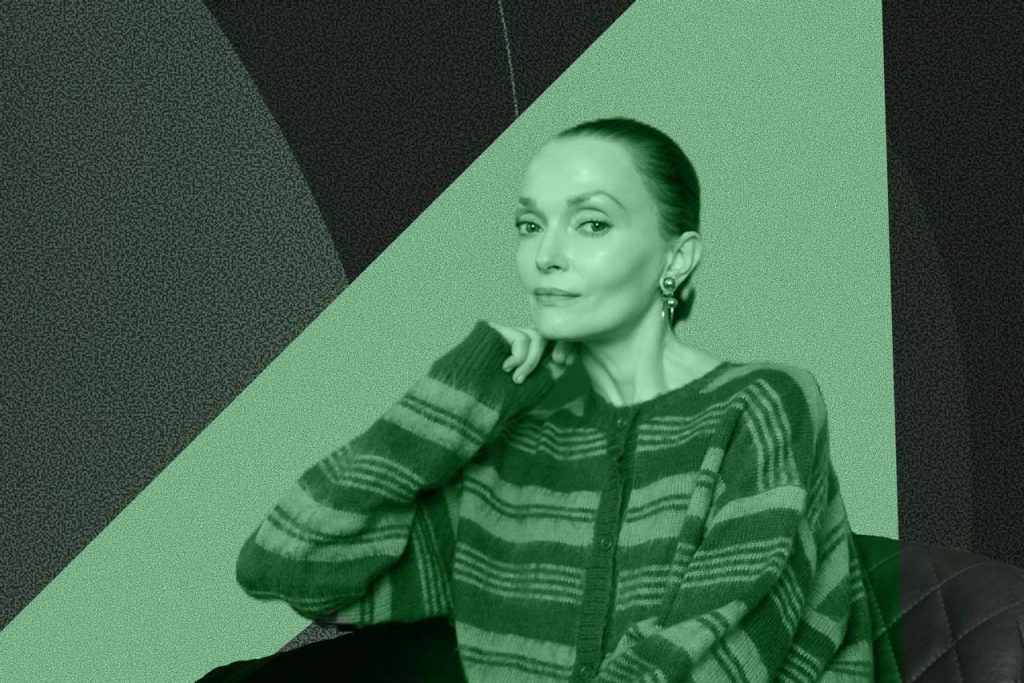


Hennadii Druzenko, lawyer, civic activist
One of the main reasons for our return to square one, for our running in circles, is the lack of a genuine counter-elite
I believe that there are people in government who sincerely care about Ukraine’s victory and prosperity. Nor is there any shortage of such people outside government. Ukraine has no reason to complain about a lack of friends, allies, and partners who want us to succeed, who want us not merely to defeat the Russians in this war, but to become different – more honest, more effective, happier…
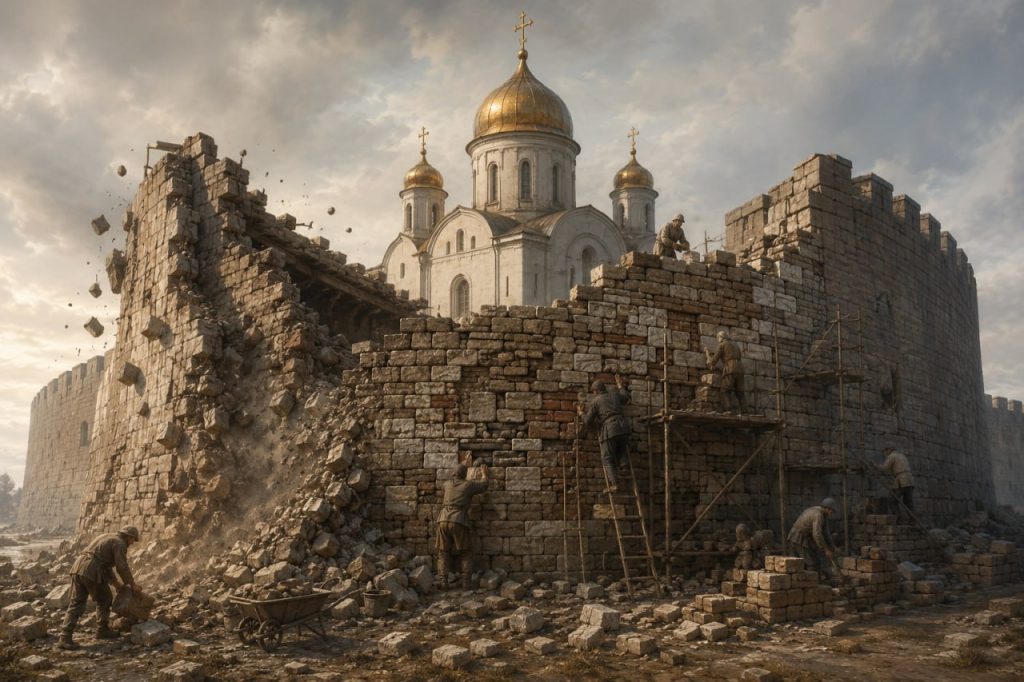
And despite all these prerequisites for a leap into the future, there is a growing impression that we are once again being sucked into the quagmire of absurd bureaucracy, rampant corruption, and glaring inefficiency. That the system is once again outplaying the reformers, as it did in the early 1990s, after our two uprisings that we proudly call “revolutions,” and even after Russia’s aggression – first hybrid and then full-scale.
At all these historical points of bifurcation, our deeply sincere feeling that “we cannot go on living like this” collided with the cynical truth of life – yes, we can, of course we can!!! And once again we became convinced that “revolutions are conceived by romantics, carried out by fanatics, and their fruits are enjoyed by scoundrels.” The same foreboding is now descending upon the country…
Why did this happen? Why have we repeatedly managed to step back from the brink of tyranny and foreign occupation – yet still failed to build an effective state of our own? A state that, instead of serving its own citizens, still remains an instrument for a handful of nouveaux riches to rob their own people and cash in on their own country…
One of the main reasons for our return to square one, for our running in circles, is the lack of a genuine counter-elite. A sufficiently large and organized community of people who adhere to principles fundamentally different from those of the authorities and live according to them. In communist Poland, the Church and Solidarity nurtured such a counter-elite. In the Ottoman Empire – the military. In Vichy France – the Resistance. In Ukraine, in the middle of the twentieth century, the members of the Organization of Ukrainian Nationalists and the soldiers of the Ukrainian Insurgent Army undoubtedly constituted such a counter-elite. We may or may not like their vision of Ukraine, but it was they who, through their energy, sacrifice, and heroism, demonstrated the only alternative for Ukraine that existed at the time.
Unfortunately, neither the Church – or rather, the Churches – nor the military, business, universities, clubs, or cultural circles have managed to become an incubator for a Ukrainian counter-elite. It seemed that Zelenskyy, together with his neophytes who had never been in government, might be able to accomplish this task. It did not happen. By now, this is obvious. Lytvyn was right: “If you put a fresh cucumber into a barrel of pickled ones, it will become pickled.” Four years ago, we replaced the cucumbers in the barrel of government, but forgot to pour out the brine…
If you are interested in how revolutionary reforms that change the very matrix of a particular society can be carried out without rivers of blood, read about the Cluniac Reform. By the tenth century, the decline of morality in the Catholic Church seemed to have reached rock bottom: simony, servilism, and subordination to secular authority had become widespread. Yet one saint – Odo of Cluny, the abbot of a single monastery – was enough to create a stronghold for the revival of Christianity in Europe.
While at the beginning of the eleventh century there were around thirty Cluniac monasteries, by the first half of the twelfth century there were already more than a thousand. And by the second half of the eleventh century, the Cluniacs had helped Pope Gregory VII reform the entire Catholic Church, curb the influence of secular authority, and restore a degree of morality among the clergy…
What Ukraine lacks is not so much concepts or visions of future development as an “incubator of the counter-elite” – an ecosystem capable of nurturing a sufficient number of leaders able not merely to come to power, but to radically transform its very nature. At one time, we hoped that the Kyiv-Mohyla Academy would become such an incubator – unfortunately, it did not happen. Then we thought that the Maidan would become an incubator of people of a new quality – intelligent, virtuous, and patriotic at the same time. Unfortunately, it did not. Then we hoped that the army would nurture a counter-elite. It is already clear that these hopes, too, are futile. With the exception of certain units, the Ukrainian military is flesh of the flesh of the Ukrainian people. And as the people are, so is the government.
Where is the yeast that leavens the whole batch of dough? Where are those Cluniacs who will revive Ukraine? Where is the Ukrainian Order of Cincinnatus that will nurture an elite that serves its people rather than robs them? Where is the nursery in which cucumbers will grow that will not become pickled when thrown into a barrel filled with the old governmental brine?
Ukraine desperately needs communities around which a Ukrainian alternative can crystallize. It needs incubators of the counter-elite. What is needed is not so much visions, concepts, and reform strategies as teams capable of producing and implementing them. We need people who go to sleep dreaming of seeing themselves on the pages of history textbooks, rather than in an estate somewhere in Kozyn…
Source: Glavkom