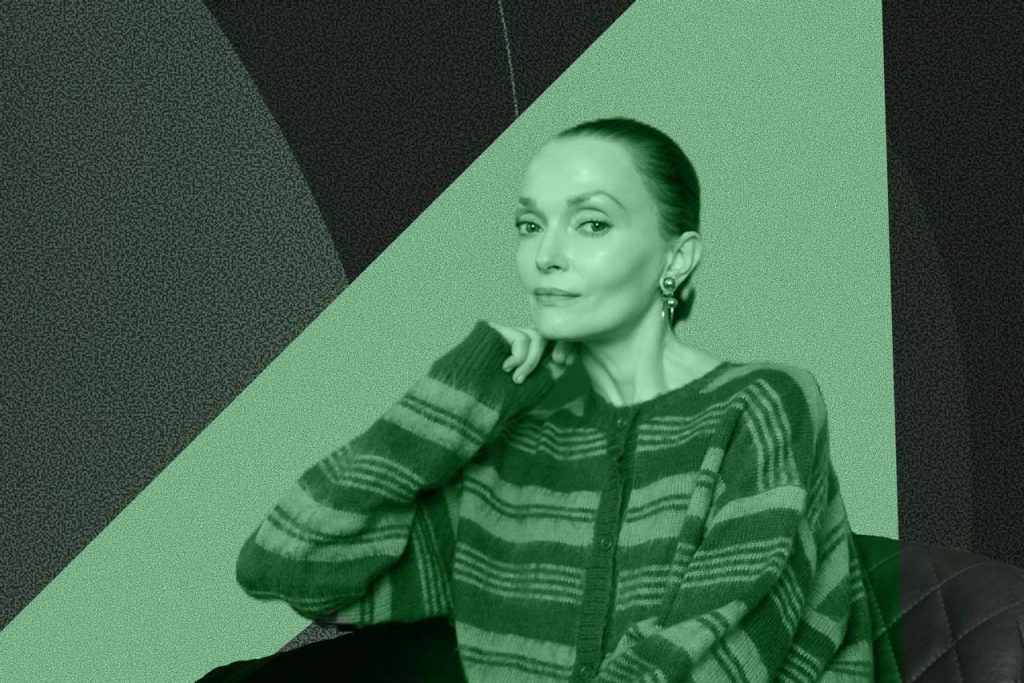

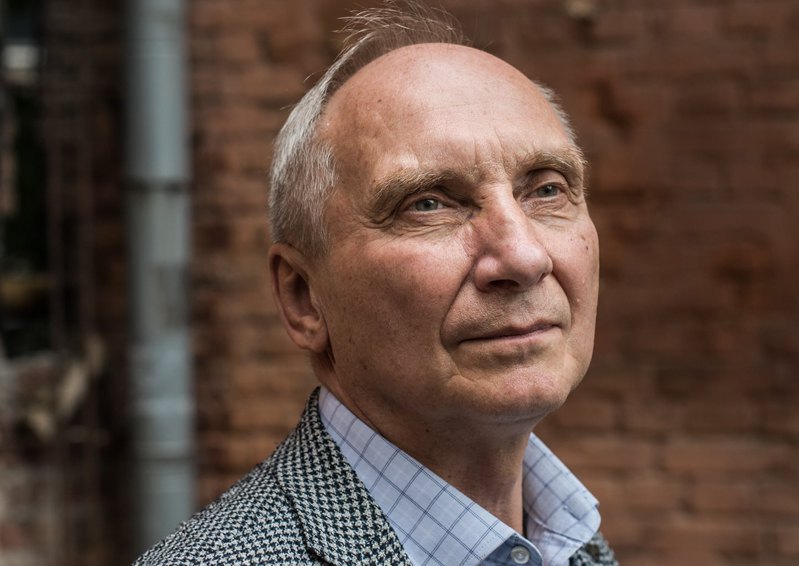
“This is not only a war for territory. It is a war for our souls, for our identity, for our values, because this is an existential war. The challenge is not only historical. It is connected with the fact that, as a political nation, we are becoming aware of our present and are oriented toward the future; our values are the values of the future. But if we are talking about Russia, these are quasi-values, the ‘values’ of the past, values of dying, values that died in the world long ago but have remained in Russia. And now their shoots are blossoming profusely, which is already frightening not only us, but the entire world,” says the renowned scholar and religious studies expert Ihor Kozlovskyi.
He understands the nature of the large-scale invasion better than almost anyone and can compare current events with those of 2014, including the reactions of people who were occupied then and those who are under occupation now. “I saw how this war began, how our men and women lined up at military enlistment offices in order to defend the country, and those were enormous queues. It was that same manifestation of love for one’s land. And it was striking because it really was different from 2014. Back then, not everyone understood what was happening; very many people were indifferent toward the East, and that affected society as a whole,” Kozlovskyi notes.
How will Ukrainian society change after our Victory, including electorally? What will the new social contract be like? What kind of Ukraine will we all build together? And, most importantly, how can we overcome the enormous trauma of war, the scale of which we do not yet fully comprehend?
“The only way to emerge from a state in which you are immersed in trauma and cannot get out of it, and in which it can destroy you as a person and as a society, is to work and turn the trauma into experience. We must extract from it the experience of understanding ourselves, the circumstances in which we have found ourselves, and what we personally need to do now. In other words, we must bring the trauma to the level of consciousness, then verbalize it, articulate the specific features of this trauma, and then move it to the periphery – that is, look at the trauma with an understanding of why you need this trauma as an experience, because it may indeed be necessary,” Kozlovskyi says. He himself managed to do this after two horrific years in the dungeons of the so-called Donetsk People’s Republic. Thus, he does not merely provide an example; through his own life he bears witness to the principle: “Love is action.”
You can also listen to the podcast recorded for Radio Ukraine, which broadcasts from Prague, as part of the program “An Hour with Sonya Koshkina.”
Sonya Koshkina, Editor-in-Chief of LB.UA
“This Is a War for Our Souls and Values; It Is an Existential War”
– I suggest beginning with the general picture. In your view, how has the full-scale war changed Ukrainians? Previously, there was much talk about the supposed infantilism of our society and our nation, but it seems that we have matured greatly during this time.
– You know, this really is an important topic, because any crisis, any war, any trial requires a person to understand why they exist in this world and to take responsibility. And responsibility itself is a sign of maturation, both for an individual and for society. Of course, not everyone will mature. But these trials have shown that we are capable of taking responsibility and uniting for the sake of Ukraine, and not simply for Ukraine as a territory, not simply for Ukraine as a country inhabited by our people, but for the sake of its future.
This is not only a war for territory. It is a war for our souls, for our identity, for our values, because this is an existential war. The challenge is not only historical. It is connected with the fact that, as a political nation, we are becoming aware of our present and are oriented toward the future; our values are the values of the future. But if we are talking about Russia, these are quasi-values, the “values” of the past, values of dying, values that died in the world long ago but have remained in Russia. And now their shoots are blossoming profusely, which is already frightening not only us, but the entire world.
– Compared with 2014, almost everyone has now experienced the war directly. How do you see the difference between people’s perception of the events of 2014 and 2022?
– We know that when something affects us directly, it confronts us with important questions – questions not only of survival and life; we learn to reflect on these events. I saw how this war began, how our men and women lined up at military enlistment offices in order to defend the country, and those were enormous queues. It was that same manifestation of love for one’s land. And it was striking because it really was different from 2014. Back then, not everyone understood what was happening; very many people were indifferent toward the East, and that affected society as a whole. The fighting was somewhere far away in the East, while here one could simply live, and that left a certain imprint.
But when we see that the overwhelming majority of the population is already suffering from this war, that it is already here, knocking on everyone’s door, knocking on our hearts because our loved ones, acquaintances, relatives, and even distant but remarkable people are dying, all of this changes the way we think, changes our worldview, and puts us into an entirely different mode of functioning. Our society has undoubtedly matured. It has learned to unite; it has gradually learned to love, to love through action. Love is action. And this love manifests itself in volunteer service, in chaplaincy, and simply in the fact that we have begun to treat one another differently. I would not say the absolute majority, but the overwhelming majority of people have changed.
– According to statistics, the 2014 war directly affected roughly every fifth Ukrainian, whereas today every second Ukrainian has someone who is either serving or is connected to the war in some other way. Through volunteering, for example.
– Absolutely. This affects not only our understanding of why we are in this country. It touches precisely on existential dimensions – our humanity, our understanding that only in such a community and through joint action can we live and move forward, and this brings us to an entirely different level. We are no longer the Ukrainians we were 30 years ago. We are completely different Ukrainians. We remember the past, but from that past we take what nourishes us now, as contemporary Ukrainians, and directs us toward this future. We know why we live in this world.
“I Remembered Why I Did Not Scream During Torture”
– Sociologists say that the old dividing lines that existed before the large-scale invasion – what region you came from, what language you spoke, whom you voted for, and so on – have disappeared. Society is very united, but obviously new dividing lines of this kind will emerge over time. Am I wrong?
– Yes, certainly. We know that there is a phenomenon of regression after a period of uplift, because one cannot live constantly in a state of uplift. People return to regressive patterns of thought because these were their first forms of information, if they do not work on themselves, if they have not made an effort to learn to reflect and ask questions. We know of such phenomena after every war; many people return to what is familiar because what was familiar was comfortable. And comfort, unfortunately, is limiting. But the migrations now taking place, when people from the south and east move to territories that have not been affected by active hostilities, give them an opportunity to get to know and discover other regions of Ukraine. Direct knowledge – when we actually encounter something – gives us an entirely different perspective. I think this is a positive development, strange as that may sound. Bitter as it is to admit, war very often encourages people to rethink themselves, and it will already be more difficult for politicians to use slogans such as East versus West, South versus North, to divide people and paint regions in different colors. This is good. This is a new situation not only for civil society; it will also be a new political situation in the future.
– It is clear that pro-Russian forces will no longer have support – fortunately, we can forget about them for some time. Perhaps forever. What other potential changes have you noticed?
– I see that a space for dialogue among different forces is finally emerging. Civil society is more dynamic, and it had already been establishing these platforms for dialogue earlier. It is more complicated with the political class because, unfortunately, for them this is a question of survival rather than life. These platforms for dialogue make it possible to construct a developmental dialogue in a constructive way. A professional dialogue. Because, first of all, there is now a goal – the restoration of Ukraine and the further development of Ukraine. These are things we call joint action – how people with different preferences, different worldviews, and different professional orientations can unite and understand that we are working for the common good. We must acknowledge that we are different, that our unity in diversity is precisely a repetition of the European Union’s motto. In our own way, we are moving toward Europe. And we are already developing this capacity for understanding.
But civil society is not the only one that needs to work on this. The state and public authorities also need to understand the necessity of establishing such bridges, connections, and dialogues. I do not particularly like the phrase “stitching Ukraine together”; rather, we need to make it possible for everyone to live together – different as we are, yet united by this war. Finally, sad as it is to acknowledge, we now have a pantheon of heroes who unite all of Ukraine. Not regional heroes – historically, they are important, that is clear – but specifically a pantheon of new heroes. We must constantly remember them, not merely name streets and places after them, but give people an opportunity to see that people with different worldviews, from different regions, fought and died here for the sake of our common good.
– What will the new social contract be based on? What will it be like after the war, and will the elements you mentioned become its foundation?
– Any social contract is an agreement about values, value orientations, and those fundamental principles that make it possible for these values to be continuously embodied in life and to develop, because a value is a living organism; it must develop. These include the values of freedom and solidarity, the values of dignity and human life. This social contract must place the human being at its center. In other words, the human person is the principal purpose of a united Ukrainian state. Not only the rights and freedoms of that person, but also the so-called ethical dimensions.
In one analytical group, we examined contemporary legislation adopted after 2014 – we analyzed whether it contained this human dimension, whether a human being was present in one law or another. Not the interests of certain financial groups, different local oligarchs, and so forth, but specifically the human person with their values of life and freedom, their ethical values. And unfortunately, we do not see precisely this emphasis in these legislative acts. It needs to be restored both at the legislative level and at the level of implementing these laws in practice, so that every person in Ukraine is not merely protected, but also has space for personal development. Then this state will be attractive to everyone.
– Three years ago, I was fortunate enough to attend one of your lectures, during which I wrote down one of your quotations: “A value becomes a principle when it is combined with conscience. When a person has an internal observer, not only an external one, such as God.”
– Yes. Absolutely correct. Because the dominance of conscience emerges only when we work on it. When we fill a person with the understanding that they truly become human only when these values of humanity become the central element.
…After I returned from captivity, I reflected on different moments and remembered why I did not scream during torture. I realized that it was important for my inner self not to show them, the torturers, that they had achieved their goal – that they had broken my dignity, broken my inner self, my conscience. And by not screaming, I did not give them that chance. This is an important point – when we become aware, when we activate the internal observer not simply to observe, but to involve that observer in making one decision or another, both internally and externally.
– What we are experiencing as a society now is difficult to assess in the moment. But when the war ends, the degree of trauma will be very high. How can we deal with it? Is it appropriate to say that the generation of today’s thirty-year-olds, who are living through this war and who also lived through 2004 and 2014, could become a “lost” generation?
– This is an extremely important question. Because our society is indeed traumatized. It is traumatized individually, at the level of those who are now at the front, those who have endured rape, destruction of property, displacement, loss of loved ones, captivity, and it is also traumatized collectively. This really is trauma, deep trauma, and teaching people to work with this trauma – both collective and individual – is also a task. A task for the state and for civil society. I constantly say that the only way to emerge from a state in which you are immersed in trauma and cannot get out of it, and in which it can destroy you as a person and as a society, is to work and turn the trauma into experience.
We must extract from it the experience of understanding ourselves, the circumstances in which we have found ourselves, and what we personally need to do now. In other words, we must bring the trauma to the level of consciousness, then verbalize it, articulate the specific features of this trauma, and then move it to the periphery – that is, look at this trauma with an understanding of why you need this trauma as experience, because it may indeed be necessary. There are already certain aspects that make it possible to clearly distinguish not only things connected with war but also, I would say, a deeper wisdom. And on the other hand, this means that you must understand how to move forward without breaking, without exploiting the trauma, because unfortunately such a moment will come. It always happens after wars.
We also need to draw on the experience of countries that have gone through such trials. The German experience, for example, or the American experience, when people returned from the Vietnam and Afghan wars. I have repeatedly spoken with the United States Embassy and with other Americans about providing specialists who could prepare people to work both with communities and with individuals. This is important. Society must not be left traumatized – that may result in a pathological situation in the future. And our enemies are counting on this as well. They are deliberately traumatizing our society. In this way, more collaborators emerge who cannot withstand the pressure of this trauma. This means that it is also a matter of national security.
– How did you personally manage to turn trauma into experience after captivity? Your example could be useful for many people.
– I began working with this trauma immediately. I understood that remaining inside the trauma was not helpful to me and that, in order to emerge from it, I needed to activate reflective thinking. Reflective thinking begins with asking yourself the right question. Not who is to blame for my having ended up in such a situation – it is clear who is to blame. The question is why I need this experience. In other words, from the very beginning I spoke about trauma as experience.
When people ask what allowed me to survive under those conditions, I always recall the moment when I returned after the first torture session. When they remove the bag from your head, you are standing there covered in blood and unable to speak because dehydration prevents you from pronouncing words. And then I hear someone’s voice among the people lying on the floor: “Why are you smiling?” And then I remember catching myself thinking for the first time that I was no longer afraid to die, and for some reason this was such a joyful thought. It meant that they could no longer reach me; they no longer had that power.
And the second thought was that I would live because I love. I love my family, my loved ones, Ukraine. But that is not the most important thing; what matters most is that they love me, and I am indebted to that love. And a debt must be repaid. So I look around – how can I repay it now? How can I get out of this prison? And I see that people around me are suffering, they are immersed in this trauma, while I am already indebted to love. And this means that I must understand what is troubling one person or another. In other words, to live in such situations rather than merely survive, you must not think about yourself. You think about how to help this person. They are suffering, they are depressed, they want to take their own life. You understand that one person needs a saving word, another needs human warmth, another needs clothing. And you begin talking to those people, working to make their consciousness more resilient under those conditions. And even when you are in solitary confinement, in a death-row cell, and you are alone, you still have an inner space and can ask questions, reflect, see a perspective, and avoid despair. And these are already the first steps in working with trauma.
Therefore, when I was released from captivity in a prisoner exchange, this task continued to confront me – how to help society, not only my family and loved ones, but society as a whole, because society needs my experience. This includes the experience of reflection and of formulating the right question. Unfortunately, many people have a particular problem – they do not know how to ask questions. Especially the question “why.” And this becomes a problem because we become accustomed to receiving answers before we have even asked the question, including from the mass media. Unfortunately, this prevents a person from internally rethinking trauma, while trauma must be rethought and brought to the level of consciousness.
“If You Take the Past Away from Russia, It Means Death. The Death of Its Ideology”
– And what are we to do about our northern neighbor? Geographically, they are not going anywhere. Throughout these months of the large-scale war, many people have asked themselves: what is wrong with them? Why are they such beasts? What happened to an entire society that it hates us so much? Of course, propaganda plays a very important role, but surely it cannot be the only reason.
– Of course, we are destined to live alongside this insane neighbor. And it really has already gone insane, which is a problem both for Ukraine and for the entire world. Here we need to understand the nature of the system that has developed on the territory of the Russian Federation. We see how the authoritarianism initiated by Putin is gradually transforming into a totalitarian system. We already have before us a systemic ideology, because the “Russian world” is not merely a name; it is an ideology with certain mythologemes oriented specifically toward the past. Not even toward the twentieth century, but toward the nineteenth.
What unites all totalitarian ideologies? It is not even the content of their ideas – the phrases themselves can be written very beautifully – but the particular poison carried by totalitarian ideas, which seeks to completely replace reality with itself. Viktor Frankl once said that there are two factors that can prevent a person from developing – totalitarianism, meaning that everything you are supposed to see in the world is imposed on you from above, and conformism, when the mass itself pulls you toward a distorted vision of this particular system, so that you look through the prism of ideology.
I would add three more factors to Frankl’s definition that effectively prevent both the individual and society from developing. The first is ideology: any idea that becomes an ideology narrows one’s perspective and works to replace reality with the idea imposed on society or on the individual. Second is the infantilization of society – people do not take responsibility and do not understand their own place. And finally, the third component is intoxication, when mass alcoholism, so to speak, prevents a person or society from taking responsibility. You know the classic phrase: what can you expect from him, he is drunk.
All these things are connected with people relinquishing responsibility, transferring it to the totalitarian system, and agreeing that their reality disappears. They no longer see it; instead, there is an idea. This is precisely the moment when, instead of understanding life, which requires questions and reflection, they are given a substitute. This substitute is a reality prescribed from above, transmitted through the mass media, and perceived by people as absolute truth. And then, for this person or society, good becomes evil and evil becomes good.
Any such system has many characteristics. For example, ideology is mandatory for everyone. The “Russian world” – for everyone. One mass party – United Russia – headed by a leader who is also the head of state. There is complete control over all means of communication and information; independent media are not allowed to exist. There is complete control over all means of suppressing people. Control over society and the disappearance of civil society as such, which in a democratic state balances public authorities. There is complete control over the economy.
An important point is that, in the name of a particular idea, they seek to replace or destroy reality, and reality itself becomes uninteresting to people. Everyone who disagrees is destroyed, everyone who holds or might even potentially hold different views. Just as, for example, during Nazi Germany the Jewish population was exterminated, or in the Soviet Union the peasantry, the so-called “kulaks,” were destroyed. In other words, the struggle is not against actual crimes, but against possible ones. That is why they look at what you post on the internet, on Facebook, and persecute people who simply hold a different opinion. Then the dominant force becomes a diabolical logic, and the person themselves becomes not real but hypothetical. Real people are killed for the sake of abstractions.
And Ukrainians are a challenge to them. Ukraine in general is a challenge to this entire totalitarian system, to its ideology, to its past, to its history, because without Ukraine this history of Russia would not exist at all; it does not know where to begin it, because it is completely oriented toward the past. If you take the past away from it, that means death. The death of this ideology. This means that we Ukrainians, with our Ukrainian identity – and I mean all of Ukrainian society, because national identity is the identity of people who have chosen Ukraine as their homeland and who defend it: ethnic Ukrainians, Crimean Tatars, Jews, and Russians who have chosen Ukraine as their identity – are forming a new identity: healthy, mature, real, and oriented toward different values – the values of life.
This is a challenge for Russia. And they use this diabolical logic of theirs to invade Ukraine – not because Ukraine posed a threat, but because it hypothetically could pose one. This means that they begin using their fakes and simulacra to destroy everyone who disagrees, not only within Russia itself but beyond its borders, in all territories. This tells us that what we are facing is insanity. It is an illness. Madness.
– Is there any way to get rid of this? To recover from it? Sooner or later, Russian society will have to rise above itself, but it is difficult to imagine how that will happen.
– First of all, we need to think about ourselves, because we also need to “vaccinate” ourselves. This is an illness, and they are trying to spread this illness to the occupied territories as well. What do they do immediately? They impose their unreal view of reality, these simulacra and fakes. This is a pathological system that tries to spread this illness into other environments, primarily the Ukrainian one. We will effectively need to “vaccinate” people’s consciousness, de-occupy and “vaccinate” people so that they can emerge from this state of Russian illness.
What will happen to Russia is more complicated. First, like any empire, it needs a despot, because a mature civil society in such formations would demand either a real federation – and Russia is not a real federation – or the creation of separate states, which would mean the disintegration of Russia. An empire cannot allow this, and it will fight to the end. This will be a bloody period, unlike the disappearance of the Soviet Union, which happened unexpectedly. And precisely because they already anticipate a similar stage in their own development, they are putting certain safeguards in place – a safeguard of blood, a safeguard of war, a safeguard of even greater systemic repression. They used the regions they occupied – Crimea and parts of Donetsk and Luhansk regions – as experimental grounds for developing precisely these systemic forms of repression that operate outside any law. Laws are not needed there because they will persecute people for thoughts that the person themselves has not yet even formulated internally.
We need national security, a stronger army, the de-occupation of people’s consciousness, orientation toward the free world, integration into Europe, and the creation of a protective barrier for all of Europe and perhaps even for the world against what will happen in Russia.
– How will we reclaim not only territories and land, but also people and their consciousness? It is clear that in the newly occupied territories everything will happen faster and more easily – we can see what a powerful partisan movement exists in the Kherson region, people are pro-Ukrainian and are simply waiting for the Armed Forces of Ukraine to liberate them. But what about those parts of Donetsk and Luhansk regions, and especially Crimea, that have been occupied since 2014?
– This is an extremely important question because it is the people who matter to us; we will regain the territories. It is clear that some people who are already firmly oriented toward Russia will leave these regions for various reasons – fear, a desire to live in Russia, and so on. There are people waiting for Ukraine in Crimea, in Donetsk region, and in Luhansk region. There are fewer of them than there were in 2014, but they are there. And there is a large number of indifferent people who absorb these fakes and myths and live by these myths. Because this gives them an opportunity to feel that they have their own opinion, although it is not actually their own. And they need an opinion in order to explain why everything is so bad and who is to blame – and that is the main thing for a person. Russian and pro-Russian media in these territories are precisely the ones injecting these narratives about Ukraine.
Everyone who knew Motorola, everyone who was part of “Sparta,” whom I spoke with because in 2014 and 2015 they were also thrown into punishment cells and arrested, hated him. They said he was scum. He was nobody, just like Givi, who had worked as a parking attendant at a Donetsk market. And there, at Motorola’s funeral – S.K. – there really were many people who had been forced to come: public-sector employees, students. But there were also many people, whom I know, who sincerely believed that he was a hero, a person defending Donbas. I saw him, Motorola – S.K. – he lived near my home, and I repeatedly saw that pathetic scum. But for those people whose consciousness is occupied, he is a hero.
What should be done? We know that every consciousness is plastic. A large number of people who are now mature adults were formed in the Soviet Union, and the period they spent living in Ukraine changed the consciousness of many of them, though not all. Some will remain within that occupied consciousness, but there will also be people who will free themselves, whose eyes will open. They will see all of this differently. Especially since many people are in contact with those who left long ago for Ukrainian-controlled territory, and this provides an opportunity even now to influence their consciousness. To be honest, this is not a hopeless process. It is a long one. The main thing is not to stigmatize people.
You know how, after the Second World War, people were required to indicate whether they or their relatives had lived in occupied territory. This stigmatization alienates people and turns them into third-class citizens. We must not do that. This “treatment” must be carried out precisely from the standpoint of humanity and understanding. There will be people who will not want to free themselves, and they will remain as they are, but I emphasize again that these are predominantly indifferent people; they are not active collaborators. They are passive collaborators. Their main concern is simply to be left alone. They will grumble, they will live their lives, and once again they will vote for the wrong politicians, of course. But what can you do? We have to live.
– Religion is a fairly significant factor within the system of the “Russian world.” But what is currently happening in the Russian Orthodox Church has nothing whatsoever to do with God or religion. Can you explain the path from what we might call a “healthy” Russian Orthodox Church to its present condition – to images of Stalin and Putin in churches, to the construction of the Main Cathedral of the Russian Armed Forces entirely around numerology? This is not about religion, faith, or God.
– Even that cathedral is an apology for war rather than peace. This is entirely diabolical logic, in which the foundation on which Christianity stands – the foundation of love – is turned upside down. If you remove love, the antithesis of Christianity appears – the devil. This happens. Because a symbol unites different sides, while the devil divides them. This happened in the history of the Russian Empire. The Church effectively began to perform the role of a state apparatus. Especially after Peter I placed it in the service of the empire. For 217 years there was no patriarch in the Russian Church. Above the Church stood the Ober-Procurator of the Holy Synod, that is, a state official, and the Church effectively became part of the state apparatus, while the state became, I would say, the muscles of the Church, performing the role of the apparatus they believed to be necessary. Instead of preaching the Gospel and engaging in missionary work, they used the machinery of the state to force non-Russian peoples to accept Orthodoxy.
Immediately after the restoration of the patriarchate, the Soviet period began. The Church found itself on the margins. Stalin tried to turn it, if not exactly into a state apparatus, then at least into a structure needed to monitor citizens. Lists had to be submitted recording who had been baptized. If they were Party members, they were summoned for questioning. In other words, this too was a mechanism of control.
At the beginning of the 1990s, the Church seemed to be liberated, but on the other hand, it had no appropriate habits or skills. And very quickly, beginning in the 2000s, it was adapted to the interests of the empire itself, of the Russian state. And the Orthodox Church became a central pillar of this ideology of the “Russian world.” Specifically the “Russian Orthodox Church,” as they call it. This creates a phenomenon in which the shell of the Church remains, while its content is no longer Christ-centered or even Church-centered, but empire-centered. Christian preaching is replaced by the preaching of the “Russian world” and an apology for war. That is what is terrifying. The Church works not for life, but for death. Before us is the phenomenon of the transformation of the Church according to a diabolical logic. The devil triumphs.
Photo: Facebook / Igor A. Kozlovskyy
Source: LB.UA