

Yuliia Tymoshenko, journalist, blogger, head of the Ukraїner organization
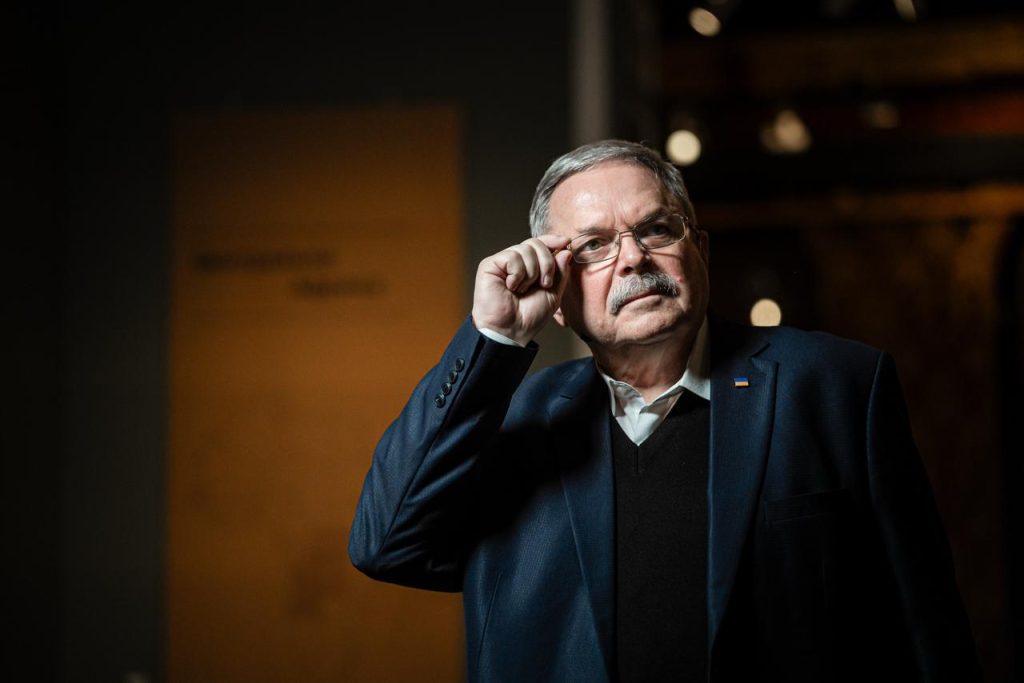
Myroslav Marynovych is a Ukrainian philosopher, religious studies scholar, dissident, Soviet-era political prisoner, one of the founders of the Ukrainian Helsinki Group, and, since 2008, an adviser to the Rector of the Ukrainian Catholic University.
Why It Is Difficult for Us to Learn the Lessons of the Past
Metropolitan Andrey Sheptytsky impresses me with how, having been raised in a Polish aristocratic environment, he managed to understand the character and destiny of Ukrainians and describe very clearly the reasons behind their defeats. Moreover, he repeatedly addressed us with warnings. Among the adverse factors, Sheptytsky identified what I consider an excellent diagnosis — moral hemophilia, when a dispute does not subside but instead turns into hostility. This is a characteristic of a people without a tradition of statehood: as soon as we see that the president is leading us in the wrong direction, we abolish what we have and fight for something else, without valuing what previous generations have achieved.
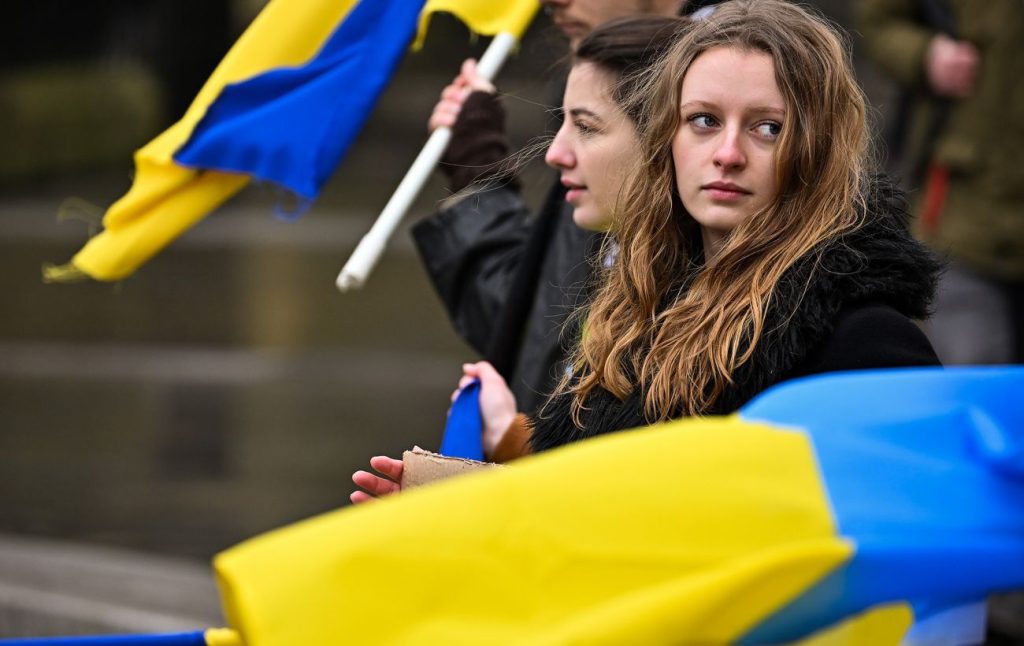
The current corruption scandal can serve as an example. On the one hand, such horrors have been exposed. But was it really better when all of this was swept “under the rug”? Zelenskyy’s reaction to the Cardboard Protest satisfied me. I assumed that they might find some loopholes to protect their own people — but what would Yanukovych have done in his place? He would simply have crushed the protest. So the fact that the President of Ukraine has already learned from the Maidan is an important achievement of Ukrainian civil society. I can see the nation growing in its national maturity. Although we have not yet reached the desired state, we should be able to see something positive, reassuring, and optimistic behind the tragic moments.
What We Can Demand of the Head of State
Let us not make the same mistake over and over again — electing a president and expecting everything to be perfect. When difficulties arise and unlawful things happen, the nation begins to rebel, saying that the president has deceived us. We must be a state-minded people, which means knowing from the outset that the person before us is a sinful human being. And then, through consistent work aimed at strengthening the state, we must create conditions in which that person has no opportunity to manifest their weaknesses — that is democracy. If we learn to think with a cool head, we will become a state-minded people.
In 1991, Ukraine gained independence, but power remained in the hands of the communists. We changed the colors of the flags but retained the same methods of governance — and this was the case under every president, even though each of them wanted to change something. The principal flaw of state governance — keeping everything under one’s control, using the justice system to fight opponents, preventing the rule of law from taking hold — existed under every president. Today, during the war, Ukraine must realize that victory is possible only if we change the social contract to which so many people have grown accustomed. What do we do when a relative is under threat? We try to protect them by bribing the opposing party. Our small sin nourishes the great, sprawling tree of corruption.
Is Society Responsible for the Actions of the Government?
Undoubtedly, as long as we have democracy, we bear direct responsibility. Fate has placed us between two great poles. One part of society has gravitated toward the pole of good and has changed tremendously. Meanwhile, another category of Ukrainians wants to take advantage of the opportunities created by the war and obtain certain benefits. Therefore, it is impossible to describe the state of Ukrainian society unequivocally — we must see both sides.
The Changing Position of the United States
America’s current position represents the complete collapse of the Ukrainian dissidents’ vision. For 30 years, Ukraine perceived the United States as a model democracy and a pillar of liberal society. Today, however, democracy is being attacked from within that very fortress. I think Trump became the result of processes that were ignored or not adequately monitored. First, he does not understand the language of values, which is extremely dangerous for democracies around the world. Second, there is his bloc-based thinking: Trump admires dictators and therefore wants to divide the world into blocs, perhaps even recreate some of them. He understands this logic; he understands Putin almost without words. But what, then, of the freedom of all peoples? In that case, we divide ethnic groups into those entitled to independence and those that are secondary.
I am struck by the fact that Americans today pay no attention to the Crimean Tatar people and casually say: “Is Crimea really yours? Give it up, accept that it is Russian.” But as far back as the late 1980s, the Crimean Tatars linked their fate with that of the Ukrainian people and believe that together with us they will reclaim not only a democratic system but also their own land. This is what horrifies me — bloc-based thinking that completely destroys the logic of human rights and a nation’s right to self-determination.
I do not envy our diplomats — this conversation is extremely difficult now. The arrogance of the Trump administration is further reinforced by the fact that for a long time we had no voice because this part of the geopolitical space was controlled by Moscow. American cynicism manifested itself like this: “You are backward, and the proof is that you do not always accept the ideas that have emerged in our country. Simply adopt our rules, and then you will become a normal people.” This condescension on the part of the bastion of democracy will change only when Ukraine proposes something of its own for the organization of the Eastern European space. The men and women on the front line are doing their job, while intellectuals and spiritual leaders in the rear are not. When the West realizes that the old security system does not work, it will begin developing a new one. And if Ukraine has no voice in that process, the system will be created without us — which is why now is the time to act.
What We Lack in Order to Offer a Vision That the West Will Hear
It seems to me that the main thing hindering us is the well-known saying: where there are two Ukrainians, there are three hetmans. I would rephrase it this way: where there are two Ukrainians, there are three intellectuals. Each of us creates our own world and is convinced of its validity. But sitting down together and thinking about a common idea does not always work.
I was very pleased when, in 2023, a Ukrainian group developed a manifesto for sustainable peace — an example of how intellectuals were able to unite and arrive at a shared vision. This is how platforms in Ukraine should work today as well. So let us leave our established comfort bubbles — we need youthful intellect capable of thinking outside the box and searching creatively.
For a long time, I tried to formulate the flaws in the West’s current policy toward Russia that prevent a just peace from being achieved. But today I am beginning to realize that the problem is not one of concepts, but of instinctive fear, which creates a tendency to think about how to bargain with Putin and avoid escalating the conflict. Putin, meanwhile, escalates to his heart’s content because he sees this weakness in the West. Fear must be overcome: we must persuade our partners and explain the fallacy of their position. Putin must feel cornered — this is being discussed increasingly often in the West. The situation is not hopeless, but for now it remains extremely difficult for us.
I would not call Trump fearless, but rather impulsive. Today he can suddenly “flare up” and present himself as a great alpha male. At the moment, we can observe the “love” between Trump and Putin. But, as in the case of Stalin and Hitler, sooner or later the honeymoon between them ends when one of the alpha males wants to demonstrate that he is tougher than his counterpart. It appears that Trump is now being told that Putin has figured him out and is exploiting his weaknesses — perhaps this will become a problem in the future.
The Role of Religion in Establishing Peace
I think the current Trump administration is influencing the Pope by applying a security-based logic, along the lines of: do not speak out too strongly, because somehow the two sides need to be reconciled. And for the Vatican, the idea of reconciling adversaries is one of the most important. Its experience in resolving the Cuban Missile Crisis is paradigmatic. But that was a conflict between two great powers, in which both could make compromises. By contrast, an existential conflict is taking place between Ukraine and Russia: a compromise on Ukraine’s part would mean finding itself on the brink of extinction. Therefore, there can be no concessions here, at least no territorial ones, because it would be an enormous mistake in global politics to vindicate an aggressor on the grounds that it has seized part of someone else’s territory.
The Vatican has two roles: it is a state with diplomatic institutions and a center of faith. Diplomacy is concerned with not offending anyone and resolving issues calmly. Faith, however, speaks the language of frank truth, which can sometimes be politically incorrect. Therefore, leaders must address Russia in harsh terms. One must not flatter it, because there is no truth in that.
If I were a child longing to return to Ukraine, I would be very grateful for being rescued and for the return of [abducted children]. In reality, however, I expect much more from all Christian denominations. At the dawn of Christianity, there were Ecumenical Councils at which Christians from throughout the world fought against heresies. Today, there is the heresy of the “Russian world.” Around three hundred Orthodox theologians have declared that it is a heretical doctrine that threatens the entire world. We must unite, discuss this issue, and issue a common condemnation of this heresy. The Vatican can play a major role here.
I am struck by the religious aspect of the American administration, behind which there is a distinct fundamentalism — a radical Christianity that divides the world into what is right and what is wrong. Such thinking leads to the creation of idols, which is precisely what the Bible seeks to teach us to avoid. Another flaw in this religious concept is that very many people in America and Europe regard Putin as a defender of traditional values. But has truth ceased to be a traditional Christian value? Has love ceased to be the foundation of Christianity?
A similar situation already existed in Europe in 1982, when popular Christian peace marches were being held. The Soviet Union actively supported these marches and encouraged them financially because it was interested in the disarmament of the West and its own survival. At Easter that year, we were placed in punishment cells in the camp merely for praying together on the occasion of the feast — we simply gathered, I read a prayer, and ten minutes later the guards burst in and transferred all of us to punishment cells. We then wrote an appeal in which we compared this punishment with the fact that the Soviet Union supported Christian peace marches, and eventually we managed to secretly send the letter to Pope John Paul II. So perhaps Europe should have reflected on those political aspects at the time and not regarded the Soviet Union as a defender of Christianity? The same thing is happening again today.
The Tradition of Struggle for Ukraine: Would the Dissident Movement Have Emerged Without the Ukrainian Insurgent Army?
I do not think so. For me, the history of the Ukrainian Insurgent Army was extremely important. Even when I was a child, my mother told me that the best young men from her village had joined the Ukrainian Insurgent Army. Naturally, they were killed. So there was a sense that we were passing the baton from one generation to another, even though we did not necessarily use the same models of resistance. In fact, whenever you look back at the previous generation, you see some history of struggle.
I do not embrace Stepan Bandera’s logic, but I give him his due, and every generation has the right to do so. We need to understand that being critical of the previous generation may even be decisive, because then the new generation knows which form of struggle suits it. The important thing is not to cross the line in that criticism, so that it does not become total condemnation resulting in an episode of the past being erased from history. This is precisely what Soviet propagandists once urged us to do, and what Polish propagandists are now urging us to do. I am not a supporter of Bandera, but I oppose erasing him from history.
What Today’s Generation Can Criticize in the Previous One
I remember a conversation with Zenovii Krasivskyi — a well-trained Bandera follower who was imprisoned three times for participating in armed struggle. He said at the time that Russia was a fierce enemy of the Ukrainian people. I listened to this with some hesitation because dissidents from Ukraine were, to a certain extent, partners with Moscow dissidents, and we must give them credit — they provided a great deal of assistance to our families when they traveled to visit us in the camps. So I was not prepared to agree unequivocally, even though I understood the past and knew the painful chapters of our relations. At the time, it seemed entirely possible that Ukrainians and Russians could reach an understanding, as the dissidents had done, even though there were certain disagreements between us.
In 1991, Ukraine gained independence. The assertion of the Ukrainian Insurgent Army members that if Ukraine became independent, a war with Russia would inevitably begin seemed not to have come true. In 1997, the Treaty on Friendship, Cooperation, and Partnership between Ukraine and the Russian Federation was signed, containing perfectly normal, civilized provisions. Then came 2014 and 2022 — Russia returned to its old model of relations with Ukrainians. In other words, it had not changed, and therefore Russia is a fierce enemy of Ukraine. I do not rule out the possibility of Russia’s transformation, but I must acknowledge that the Bandera followers’ assertion proved true. It proved true in Bucha, Mariupol, and other places.
The Russian Empire cannot be democratized. It can, however, be broken apart and forced to abandon the idea of territorial expansion in favor of the idea of a nation-state, something never truly attempted in its history. My fellow prisoner, the Russian Vladimir Balakhonov, wrote in a 1978 article that the Russian people were a threat to the entire world. The only way to avoid this, he argued, was to dismantle the Russian Empire and leave Russians with the historical lands on which they had formed as a people. Today, not every Russian thinks in this way. Nevertheless, it is more likely that this, rather than democratization, will determine Russia’s fate.
Russian Culture: Only Violence Remains
Wherever there are Ukrainians, the difference in prison culture inevitably becomes noticeable. One particular feature of the camp was that everyone had their hair cut short, wore prison uniforms, and had been punished for their ideas. As a result, a certain camp solidarity emerged: even when you disagreed with something, you still respected another political prisoner because they had the same status as you. Although, of course, there were also debates. For example, when a man from Kharkiv and a man from Kyiv proposed that decisions in the camp should be made by national communities, Yevhen Sverstiuk and I strongly opposed this — because in the camp, you could pay for personal decisions with your own fate and the fate of your relatives. And if such a “camp parliament” had existed, an individual would not have been responsible for their own actions but would have submitted to the majority.
One characteristic of the Soviet system was that a large proportion of the population passed through the Gulag, prisons, and camps. Consequently, this language and way of thinking penetrated society and became commonplace. Nothing new has emerged there today either.
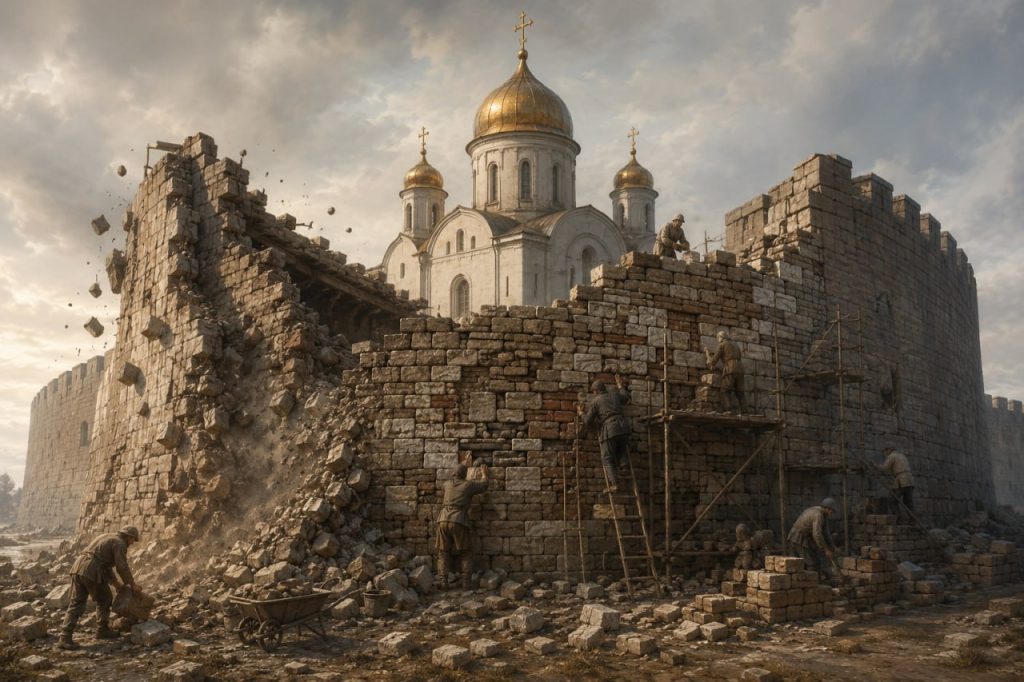
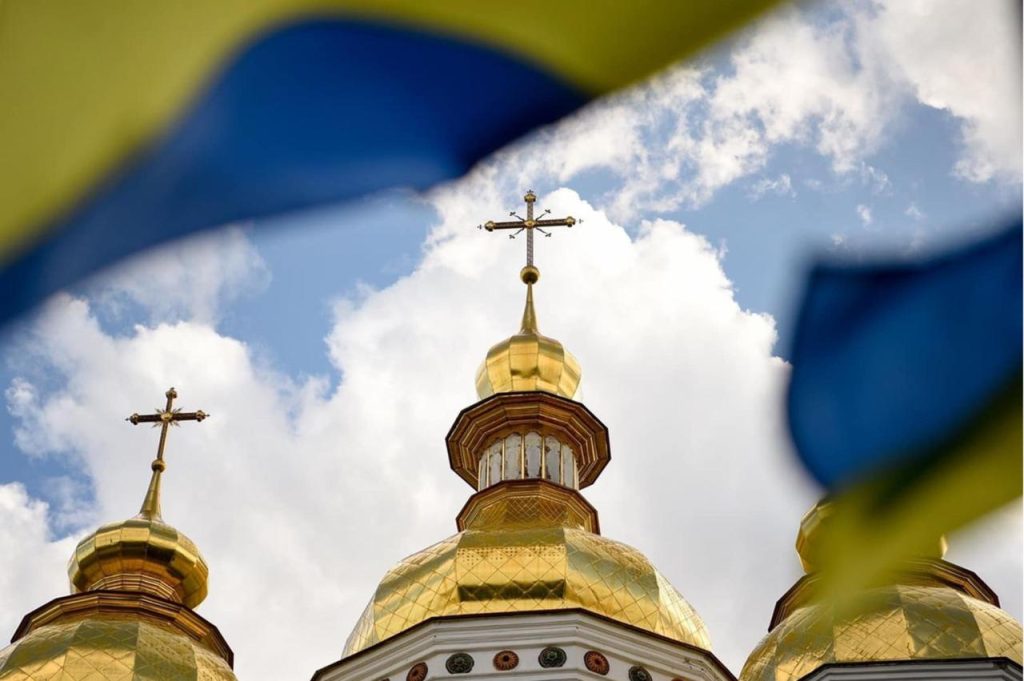
When St. Petersburg was built, Europe was impressed by what it saw there — somewhat modified Western architectural concepts. Moreover, in the West, onion domes on churches are perceived as something unusual and interesting, supposedly representing authentic Russian Orthodox culture that should be taken as a model. Even in our own time, in 2016, a church with such domes was built near the Eiffel Tower — as a church and center of Russian culture in Paris. The inertia of this fascination is extremely powerful. But now all of Russia’s “greatness and power” is the power not of culture, but of violence. There is no longer any Russian “great culture,” nor so-called Russian science, which in reality is also metropolitan and imperial in nature. Everything changes; only violence remains.
Choosing Between Struggle and Comfort: The Figure of Vasyl Stus
Vasyl Stus has long intrigued me because, on the one hand, he resembles an equally uncompromising figure such as Oleksa Tykhyi, who also died in prison, while on the other hand, he was a person of profound spirituality. I always stereotypically assumed that an uncompromising person was a radical who did not understand nuances. But that is not true either in the case of Vasyl Stus or in the case of Oleksa Tykhyi.
Two lines from Vasyl’s poem are extremely important to me: “That I lived and loved and did not become tainted by filth, hatred, curses, or remorse.” This man’s life unfolded in an extremely cruel way. I sometimes compared it with my own three-year exile, which I spent among Kazakhs — quite normal people, close to nature and distant from politics. I experienced some traumatic moments only at the beginning, and then they disappeared. Vasyl Stus, by contrast, lived in a workers’ dormitory somewhere in the Russian Far East, where drinking, swearing, and fighting occurred almost every day. He could not play those roles, which meant that in the eyes of those drunks he was different, an enemy. He therefore had countless reasons for hatred. Yet he “lived and loved and did not become tainted by filth, hatred, curses, or remorse.”
The Dilemma Between Struggle and the Safety of Loved Ones Today
At that time, those who chose such a path were genuinely prepared for the consequences and were not even afraid of death. But under a totalitarian state, they also risked the fate of their loved ones — this dilemma was the most painful one for political prisoners. I know families in which potential dissidents tried to fight for the truth, but then their relatives persuaded them: you cannot do this, think about us a little. And they gave up, and later often became alcoholics — they were already spiritual ruins.
For dissidents, the only justification was the words of the Gospel saying that if you want to follow me, renounce your home, your father, your mother, your children, take up this cross, and follow. Of course, this is a somewhat grandiose comparison, but ultimately dissidents fought for truth, and truth is simply another name for God. We believed in values such as freedom, human dignity, and justice, and we went against the current, even putting ourselves in danger, because we understood that this was the right path. In some way, this justified us.
I do not want to judge those families who today are afraid to let their sons join the military. However, I regret that for the sake of physical existence at home, close to their families, they lose something deeply defining in life — a sense of pride in their position, a feeling that they are following the right path and fulfilling a mission. This choice depends on each individual, so it is sad that so many people condemn their sons to such suffering, because while hiding they do not respect themselves and in fact experience discomfort.
Soft Power Does Not Work: 50 Years of the Helsinki Group
First and foremost, the Ukrainian Helsinki Group prevented the baton from falling from our hands when, after the second wave of arrests in 1972–1973, society was somewhat disoriented. On the one hand, it became absolutely clear that “nothing good could come” from the existing authorities, that they were criminal and therefore had to be changed. On the other hand, the question arose: how could this be done? All the methods used until then, such as the Sixtiers movement and cultural resistance, had been closed off. But suddenly a small window appeared in the form of the Helsinki movement, which began in 1975, and in the following years Helsinki groups began to be established. And there emerged a sense that this was a channel for the struggle for Ukraine, for the civilization of human rights, which was extremely popular throughout the world at the time. It was important to understand that we were not isolated, but stood together with Europe.
However, every era has its own logic. And just as I did not want to equate Bandera’s approach with ours, I would likewise not recommend using the concept of soft power today, because the Helsinki movement was its apotheosis. At that time, the Soviet Union was invited into a dialogue that resulted in the compromise signing of the Helsinki Accords, in the hope that the Soviet Union would gradually emerge from its totalitarian condition and become a different state. Yet this logic did not work so directly, although thanks to the dissidents and, in particular, the Helsinki Group, fear of any activity unauthorized by the government began to disappear. It was precisely fear that served as the glue binding communist power and society together.
Today, however, the concept of soft power does not work, because Russia has always perceived Ukraine as a lawn where the weeds of nationalism grow and therefore need to be periodically cut down. Putin forgot, however, that over 30 years a generation had grown up for whom being born in an independent Ukraine was entirely natural. Moreover, this generation is prepared to sacrifice itself for that independence. When the Orange Revolution took place, Putin still hoped that he could install his own president and return Ukraine to the union, but the Revolution of Dignity prevented this. The Kremlin then realized that Ukraine had to be taken by force because it would not return on its own. In other words, with figures such as Putin, it is not soft power that works, but direct, firm resistance.
The Question of Responsibility and Justice After Victory
The dissidents and I were not opposed to holding accountable those who had worked with the Soviet regime — rather, we simply did not actively advocate it. Moreover, our Western partners strongly influenced us, saying: “Nuremberg I was a wonderful event that established justice. But this case is different. So do not think about Nuremberg II; draw a line under the past and begin a new life.” At that time, I had no reason not to trust the West. Moreover, there were virtually no categories of citizens in society who could confidently claim that they bore no responsibility for supporting the communist system. After all, it was not only judges or investigators. Did schoolteachers not teach that communism was the best system in the world? That is why one of my early articles was titled “Atonement for Communism,” because the whole of society needed to undertake this. We tried to draw a line under the past and begin a new life. Yet within a few months, those who should have been held accountable became political opponents in a democratic state. Having reshaped themselves, they did not change; on the contrary, they continued their criminal activities in other forms.
During the Orange Revolution, the slogan “Bandits to Prison” was heard, but once again we failed to establish the rule of law, which in fact has still not been fully established. There have been attempts, but much work remains ahead because it is necessary to change society’s way of thinking, not merely the government. Today, too, there is no comparable court judgment, so we must achieve one after the war. We should not turn the entire country into one vast courtroom, but we must give those who have suffered a sense that justice has been restored.
Ukraine’s Free Youth
The youth of the early 1990s, or the generation of Sashko Kryvenko, represented progress in which, on the one hand, there was an inspired embrace of freedom, while on the other hand, freedom was already in their hands but had not yet been internalized. This was noticeable, and therefore young people sometimes took steps that were not entirely successful.
For today’s young people, freedom is already within them: this is a completely different condition, a different look in their eyes, different behavior. These young people have a very acute sense of their own dignity, but they do not always feel the need to respect the dignity of other generations, except during the Maidans or moments of mobilization such as the Cardboard Protest. Yet dignity and freedom mean responsibility. During the Maidans, young people wanted to embrace the entire world and help everyone who appeared there. But time passes, and this sense of collective responsibility disappears. So the question is how we can unite not only through enthusiasm, but make this a rule.
The Ukraine of the Future I Dream Of
I am an incorrigible optimist when it comes to Ukraine. I do not know what price we will have to pay for the future. But I am certain that we will survive. As long as we hold on to goodness and to our values, we have a chance to emerge victorious. Evil can win battles, but it cannot ultimately win the war. Therefore, I want Ukraine to stand on the side of good and to see a higher meaning in doing so.
I have a distinct feeling that the spirit of Kyiv, which once left it and moved northward through the Ukrainian elites, is returning today. It would only be good if Ukrainians understood this. The people themselves, even without realizing it, have the potential to recreate that spirit and give it room for new heights.
Source: Ukraїner