
Maryna Starodubska, Managing Partner of the consulting company TLFRD and lecturer at Kyiv-Mohyla Business School
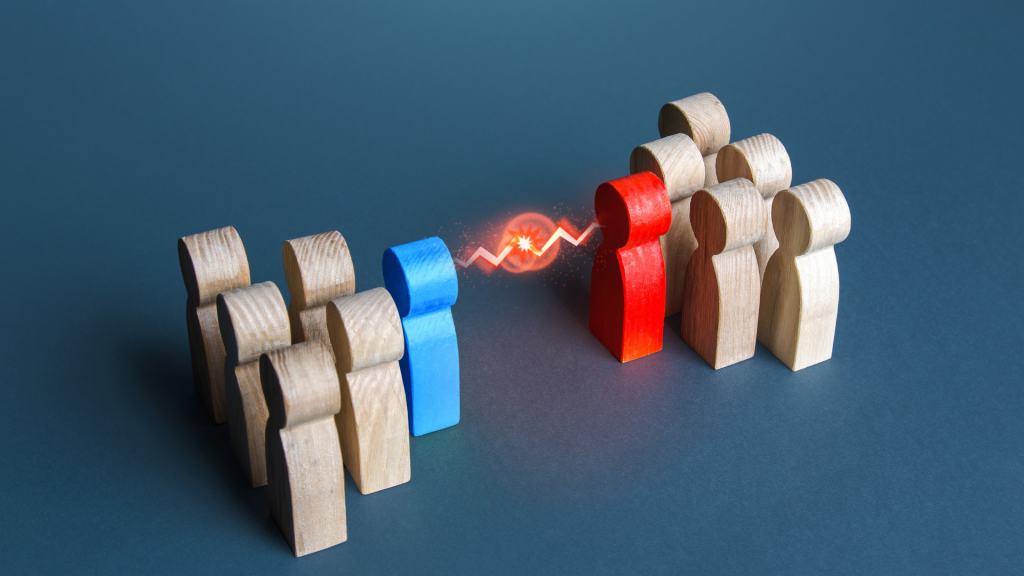
Among the most difficult norms of our society to explain is the combination of behavioral patterns that, formally speaking, should be mutually exclusive.
Millions in donations for the needs of the military, often without demands for formal reporting, alongside the desire to pay as little tax as possible or not to pay taxes at all. A willingness to share one’s last possessions to help even not-so-close acquaintances whose homes have been destroyed, alongside corrupt schemes of an audacity unheard of even in a country that is not at war.
A glaring demand for justice — 56.3% of Ukrainians are convinced that justice is not ensured in our society, according to the Institute of Sociology of the National Academy of Sciences of Ukraine — alongside impunity for actions serious enough to warrant thorough investigations, and not merely journalistic ones.
There are three widespread misconceptions that lead to erroneous judgments about our national mentality in general and about citizen-to-citizen and citizen-to-state interaction in particular.
The first is that there is a “universal” morality, in the sense of one that is the same for everyone.
The second is that the same person cannot act altruistically and transactionally at the same time, and that anyone who does so is an unreliable and “slippery” character.
The third is that we can perfectly well do without those institutions that are so “troublesome” to build and reform; that a country can rely on “values-driven” and “passionate” people and on “public oversight,” which often degenerates into online brawls and coordinated pile-ons.
In reality, the second and third misconceptions stem from the first. If one does not know that moral priorities differ even among different social bubbles within the same country, one will predictably and mistakenly assume that logical explanations work on people with a different moral structure. One will also underestimate the formative and regulatory role of institutions in directing social behavior through normative requirements that are mandatory to follow — provided, of course, that these requirements do not conflict with the values and norms of the society in which they are introduced. Today we will focus on the first misconception, while the other two derivative ones can be examined in a subsequent post.
Haidt’s Moral Foundations Theory teaches us that morality is not monolithic. Like a Lego house, it is built from five “bricks” — moral principles, deep “intuitive navigators” that automatically guide our judgments about what is acceptable and what is not. Morality itself is a set of biological and cultural solutions to problems arising in recurring interactions between individuals and society, shaped through the equal influence of intuitive, “automatic,” processes and “controlled” reasoning. Each moral principle has polar manifestations, so to speak, a “+” and a “−”:
Care/harm: protecting the vulnerable and avoiding cruelty, or accepting “justified” harm and the principle of “everyone for themselves”; typical dilemmas: should pain be avoided? Is it permissible to deliberately cause harm or pain to another person for a “higher purpose”? Would you help someone you are seeing for the first time?
Fairness/cheating: equal rights and shared transparent requirements, or status, cunning, connections, and “useful contacts”; typical dilemmas: should preference be given to “our own” or to the most professionally qualified? Is inequality unacceptable or sometimes justified?
Loyalty/betrayal: loyalty to the group and defending its position, or defending a dissenting opinion; the value of belonging to a group and being validated by it; typical dilemmas: do we protect “our own” under any circumstances? What matters more: loyalty or fairness and adherence to rules?
Authority/subversion: compliance or rebellion; whether authority derives from a formal position or from how a person is perceived; typical dilemmas: are obligations fulfilled unconditionally or selectively? Is a leader respected because of their status or because of demonstrated qualities and effectiveness? Are compliant people regarded as “weaklings,” or do they command respect? Is breaking the rules courageous and creative, or shameful and unacceptable?
Sanctity/degradation: living “as one should” or as one wishes; restraining one’s desires or indulging them; typical dilemmas: does it matter “what people will say” and “what is appropriate right now”? What kind of behavior leads to social exile? How important are external approval and form compared with personal convictions and substance?
In Haidt’s classical framework, there are five moral foundations, and this is the approach incorporated into the Moral Foundations Questionnaire, or MFQ, but expanded versions include more. In the screenshots, I used an expanded set of foundations that includes another one — “liberty/oppression.” This is because, for approximately 91% of Ukrainians, freedom is a key value, ranking several dozen percentage points above security, equality, dignity, justice, and responsibility, according to the Democratic Initiatives Foundation. Moral foundations are “activated” before rational logic begins to operate and trigger a corresponding reaction: compassion, disgust, anger, shame, indignation, a desire to help or to remain on the sidelines, and so on. Only afterward do we select arguments and words to explain or justify what is happening and how we are acting.
Take something as commonplace as pain relief, for example — not during surgery or critical illnesses such as cancer, but in less severe cases where the pain is tolerable. In the United States, pain is something to be “managed,” and the underlying approach is that pain should not be present. In Germany, by contrast, pain is considered part of recovery, so if it is tolerable, it will not necessarily be completely suppressed. In the first case, it is considered morally appropriate for the patient not to experience pain — care expressed through high expectations of comfort and the perception of medicine as a service. In the second case, it is entirely moral not to treat tolerable pain — care expressed through avoiding the harm caused by excessive medication and through a perception of medicine that is more scientific and protocol-based than service-oriented. Because of different mentality-based values, the principle of “care” can manifest itself in diametrically opposite ways in the same specific situation.
This is why different social bubbles, citizens, and institutions within one country, or representatives of the establishments of different countries, look at the same events through different “moral lenses” and often reach opposite conclusions — while being deeply convinced that they are acting “according to their conscience” or “in the interests” of their group or society. Manifestations of different moral foundations in society are studied using the Moral Foundations Questionnaire, and existing studies in different countries show that these foundations guide mass behavior differently from one country to another and vary significantly within countries, including depending on how conservative or liberal citizens’ views are. At the same time, moral foundations are not ready-made moral systems, although they constrain the types of moral orders a society can create. Some societies build their moral order primarily on one or two foundations, while others use all five. In other words, there is no “universal” morality even within a single country, let alone across different countries.
For example, in Ukraine, the core moral foundations according to Haidt are “loyalty,” “care,” and “fairness.” However, when the well-being of “our own” is at stake or interaction takes place under conditions of low trust, the first two foundations are often prioritized over the third. Seventy-seven percent of Ukrainians are convinced that the integrity of public officials can be improved by severely punishing those officials who accept bribes. Yet only 19% believe that citizens who give those bribes should be punished, according to the Rating Sociological Group. Fairness would require all participants in the corrupt transaction to be punished proportionately, but for most Ukrainians the state as an institution is perceived as “alien” and often “hostile,” hence this unequal attitude.
At this point, it is worth pausing to synchronize the concepts of “morality” and “national culture,” or mentality, so as not to become confused. National mentality guides moral reasoning by encouraging and prioritizing certain moral foundations, determines their relative weight, and shapes the rules and norms that regulate emotions and support social coordination. In other words, it is national mentality and its underlying values that determine which set of moral foundations, and in what proportions, will take shape in society. If that society is politically, ethnically, and culturally diverse or polarized, the same “mix” of moral foundations begins to operate differently for different social groups.
In the United States, for example, liberals tend to be guided by the foundations of “care” and “fairness,” while conservatives are more likely to emphasize “loyalty,” “authority,” and “sanctity.” Thus, in debates over same-sex marriage, liberals focus on reducing stigmatization — reducing “harm” and increasing “care” — and on equal rights, or “fairness.” Conservatives, by contrast, focus on traditional family norms, or “loyalty,” church teaching, or “authority,” and chastity, or “sanctity.” Or consider Russia, where a moral foundation skewed toward “harm” helps explain the normalization of violence throughout all aspects of society — from the family to the military — something characteristic of all authoritarian regimes, including “benevolent” ones.
Recall the strict laws of Lee Kuan Yew, who was, by definition, a dictator, albeit a benevolent one. In Polish society, meanwhile, the liberal segment is guided by a combination of “fairness” — the rule of law and equal rights — and “harm,” meaning protection against threats and betrayal, while the conservative segment combines “loyalty,” meaning defending the nation from hostile external influences and interference; “authority,” meaning following leaders’ decisions; and “sanctity,” meaning zealously defending the moral order and one’s position from encroachment.
Let us consider four “sketches” from our present reality that illustrate moral foundations “at work,” so to speak. These are illustrative examples that contain no judgments of “good” or “bad,” do not call on anyone to take any particular “side,” and do not represent my personal convictions.
1. Citizens vs. the state. Ukrainians’ deeply rooted social distrust of most state institutions is compounded by appeals to different moral foundations manifested in our national mentality. Official institutional rhetoric relies on “authority” and “loyalty” — “there is a law,” “there is an order,” “we must unite,” “the state has the right to demand.” But because most citizens do not perceive the state as caring for them, in Ukrainians’ eyes the state is a “bad authority” that violates fairness while demanding loyalty. According to reSCORE, on a ten-point scale of social cohesion, Ukrainians give the lowest ratings to “the authorities care” at 3 out of 10 and “the authorities are accountable” at 3.1 out of 10. By contrast, the most productive horizontal communities operate according to the principles of “care” and “fairness,” where one does not “give up one’s own,” people support each other, and “do not stab each other in the back.” In successfully decentralized communities where a sense emerged that citizens and local authorities were “in the same boat,” trust in local government increased by 17%, without any corresponding change in trust toward the central government, according to the Kyiv School of Economics.
2. Volunteers and civil society. In terms of the priority given to moral foundations, these clusters of our society are an extension of the citizenry — unequivocally emphasizing “care” and “fairness.” They are also among the most trusted social institutions in Ukraine, with approximately 80–85% trust in different years according to the Razumkov Centre. Here, fairness means a balance between self-sacrifice and benefit rather than formal transparency, as fairness is interpreted, for example, in English- and German-speaking cultures. Recall the scandal involving the Hospitallers, whose core donors were not interested in additional reporting because, in their eyes, the principles of care and self-sacrifice, including those demonstrated by the battalion’s leader, remained intact. By contrast, the work of institutionalized foundations such as the Serhiy Prytula Charity Foundation, Come Back Alive, and others is perceived through the lens of “loyalty” — why I donate and whom specifically I trust, usually a well-known person affiliated with the foundation — and “fairness” understood as accountability, meaning the ability to verify how the money was spent.
3. Ukrainians who stayed and those who left. According to CAT-UA, in 2025 the level of hostility among Ukrainians toward various social groups decreased, while the only leading “social” target of hostility was “those who left Ukraine,” and the primary target of criticism was “the authorities.” A survey by the Kyiv International Institute of Sociology showed that 54% would “treat differently” those who return from abroad, 52% would “have problems” with such Ukrainians, and 36% would perceive them as traitors. Meanwhile, 79% are convinced that when making official decisions, public servants are guided entirely or partly by personal gain, according to the Rating Sociological Group.
In the case of those who left versus those who stayed, there is a conflict in the prioritization of “loyalty” and “care,” as well as different manifestations of “fairness.” Those who stayed prioritize “loyalty”: “real patriots do not flee,” “only those who are currently in Ukraine truly support the country.” Those who left prioritize “care”: “no one is obliged to sacrifice their mental health or their children indefinitely,” “protecting children from bombardment is also a moral duty.” The remaining moral foundations are then brought in on both sides, such as “authority”: “do not lecture us from abroad about how to live here!” versus “we support Ukraine financially and volunteer!”; or “sanctity”: “those who left are fugitives and traitors!” versus “I feel guilty that I live abroad in relative safety.”
4. Mobilization. A whole range of moral foundations is at work here. They range from “loyalty” and “authority” among volunteers — “everyone must obey the law,” “defending the country is a duty, not a choice” — to “fairness” among those who entered military service after receiving a summons — “the law must be obeyed,” “the rules are the same for everyone.” Deep and entrenched distrust of the state undermines the principle of “fairness” among some citizens: “why does one person receive a summons while another does not?”, “why can someone pay to get out of it?”, “why do certain people who supposedly should not qualify have exemptions?”, “the state will not provide what is necessary and will not take care of me if I lose my health.”
This is where the principle of “care” also comes into play, but with the negative pole of “harm,” because most Ukrainians generally do not perceive the state as caring or accountable. Hence the recitation of everything the state “failed to provide,” “failed to do,” or “failed to ensure.” According to 40% of Ukrainians, “an exchange in which everyone thinks only about their own interests” best describes the interaction between the state and society in Ukraine, according to the Institute of Sociology of the National Academy of Sciences of Ukraine. Appeals to patriotism and duty do not work on the segment of citizens who hold this belief because of their fear of the state as an institution and their distrust of it.
Morality is an extremely complex subject to study. Moral foundations operate so differently across cultures that when the Moral Foundations Questionnaire is used, the wording, interpretation, and substantive content of its questions are calibrated. From a practical standpoint, however, it is worth remembering that our society has a demand for “fairness,” but functions primarily according to “loyalty” and “care” — within trusted circles.
Outside those circles, we tend toward “subversion,” meaning breaking rules and “hacking the system,” and toward “liberty” in our particular interpretation of it — overthrowing authorities that do not suit us and acting as we find convenient without restrictions. These moral “lenses” should be taken into account not only in communications, but also when developing and implementing decisions and reforms.
Moral foundations also operate differently at the level of individual organizations and projects when shaping values, developing organizational culture, designing performance management systems, and implementing change. In most of our projects at TLFRD and TLFRD Baltics, in one way or another, we have to deal with conflicts between different “moralities” — not only in multicultural teams, but in Ukrainian teams as well.
I am sincerely grateful to those of you who have read this far because, despite simplifying it as much as possible, the text still turned out to be far from easy.
Source: NV