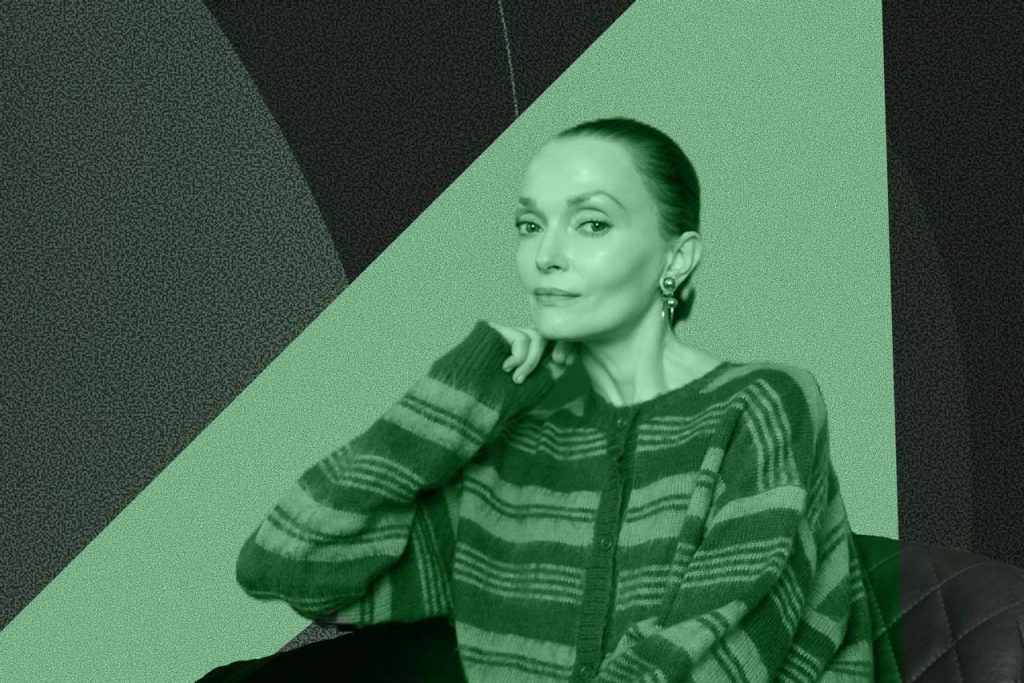

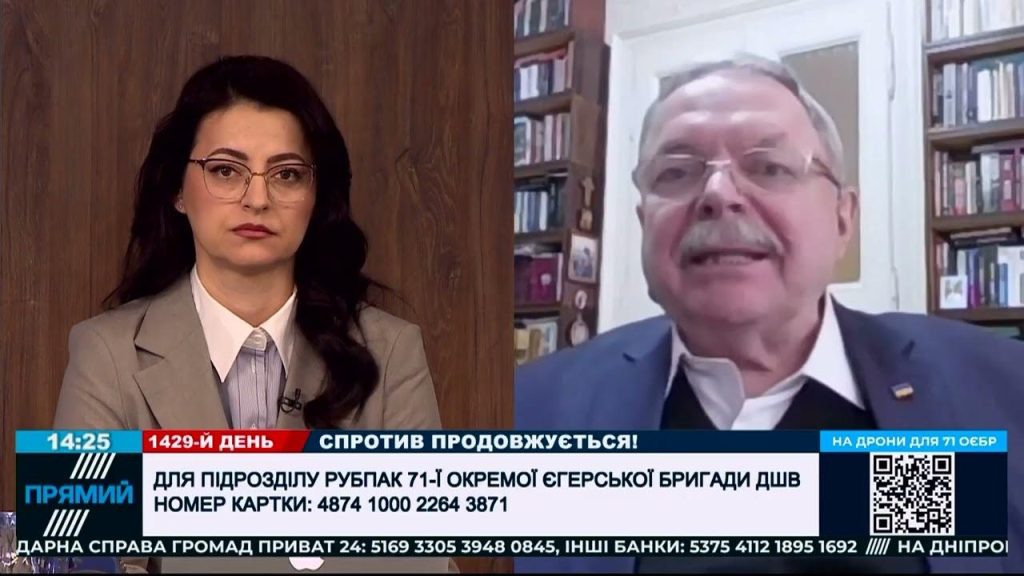
Edited transcript of a broadcast on the Pryamyi TV channel. Natalka Fitsych spoke with Myroslav Marynovych – a human rights activist, founding member of the Ukrainian Helsinki Group, dissident, and political prisoner of the Soviet era.
What Ukrainian Unity Means
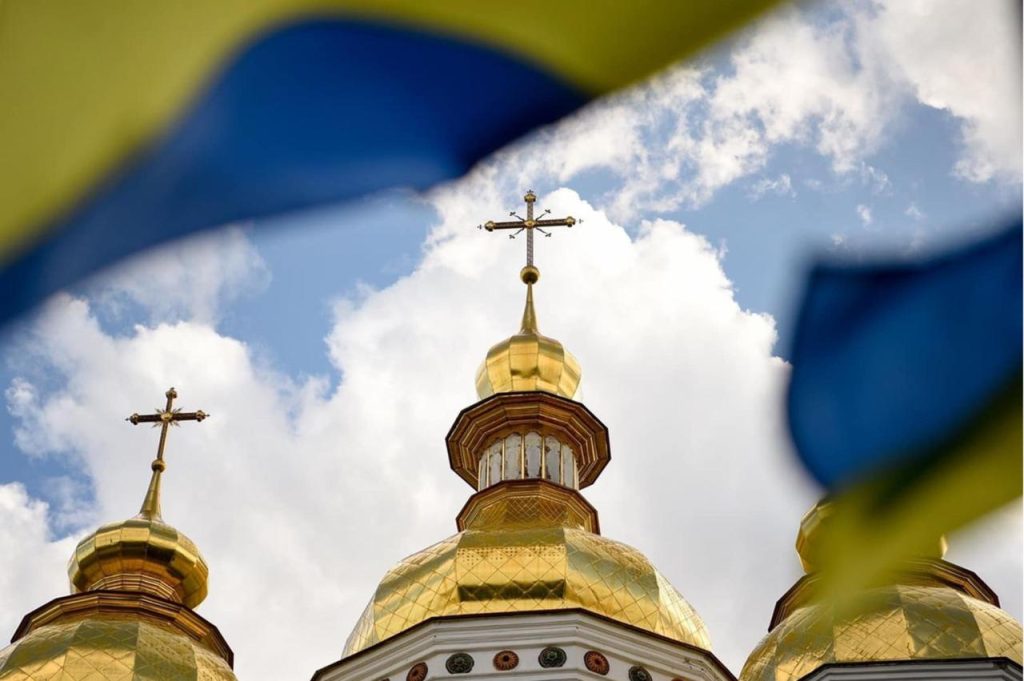
For me, Ukraine has always been united. I remember my mother’s stories about how, in Galicia, while still living within the Polish state, they looked toward golden-domed Kyiv and dreamed of unification with greater Ukraine. So for me, this is an inherited value that brings me great joy.
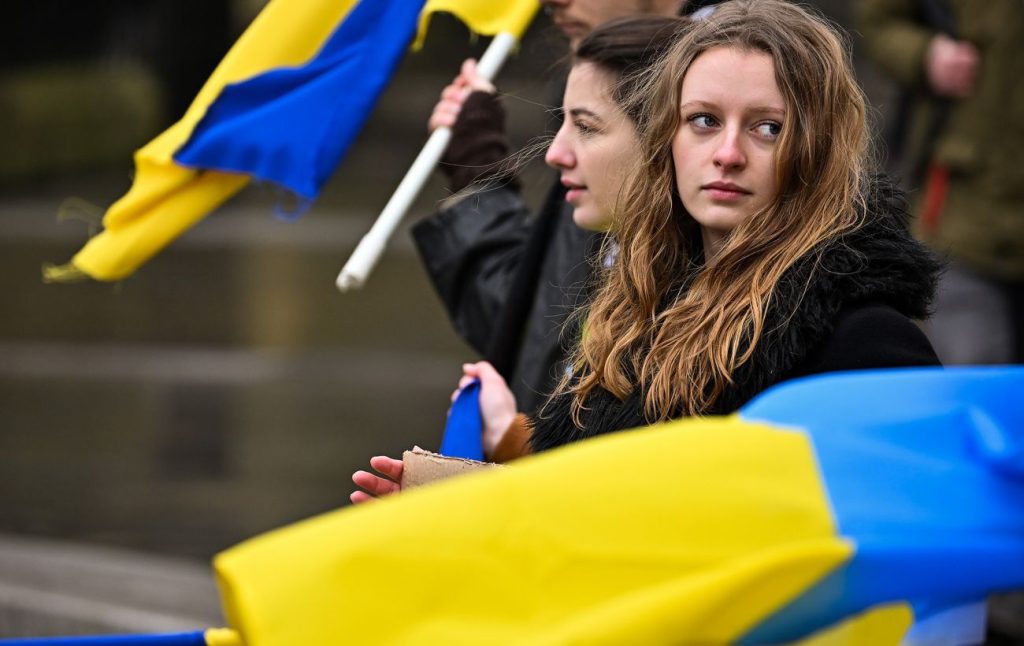
This Ukrainian unity has endured tremendous trials. I even remember a phrase by Yaroslav Hrytsak, said sometime in the 1990s, that Ukraine cracks but does not split apart. In other words, there were many different predictions that Ukraine would eventually break up, with various commentators constructing scenarios about how many parts it would divide into. But even in difficult times, Ukraine preserved its unity. And for this I want to thank everyone who contributed to it – this is our great achievement. But this tradition of unity must continue. This unity is especially important now, in wartime.
Is It Right to Separate the Holidays – the Day of Unity and the Day of National Unity?
For me, these are truly identical concepts, but I agree that one can never have too much unity. The only problem is how we understand this unity.
Unity can be understood as homogeneity, as uniformity “from the San to the Don.” We have never had such unity, and we never will – we have always been a mosaic society, since the times of Kyivan Rus. Look at a map of Kyivan Rus and you will see the same mosaic character. And we do not need some “ancestral charter” proving our claim to Kyiv’s legacy: it is enough to compare the map of Kyivan Rus with the map of present-day Ukraine, and you will see the same cores of sub-identities.
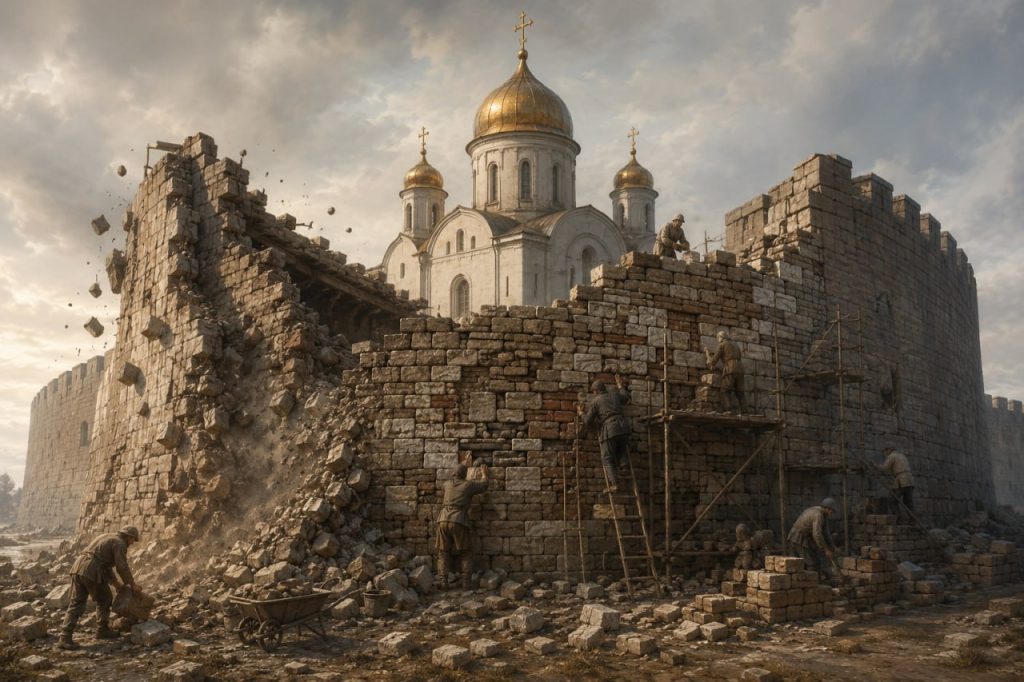
Therefore, we will never be homogeneous and identical. But this is not God’s punishment – it is a great gift from God that we have not yet learned to use properly. In other words, we are not accustomed to perceiving otherness, to accepting it as something natural under Ukrainian conditions. People from Volyn will be different from people from Slobozhanshchyna, Galicians will be different from people in Chernihiv or Kyiv. And this is natural. If we learn to accept our mosaic character as a gift, we will understand that from close up it may appear chaotic, some kind of lack of unanimity, but let us step back a little – and we will see the mosaic of the Orans. The pieces of glass are different, but the image should be one. This should be our integral unity – essential and spiritual.
Political Unity: Why a Government of National Unity Has Not Emerged
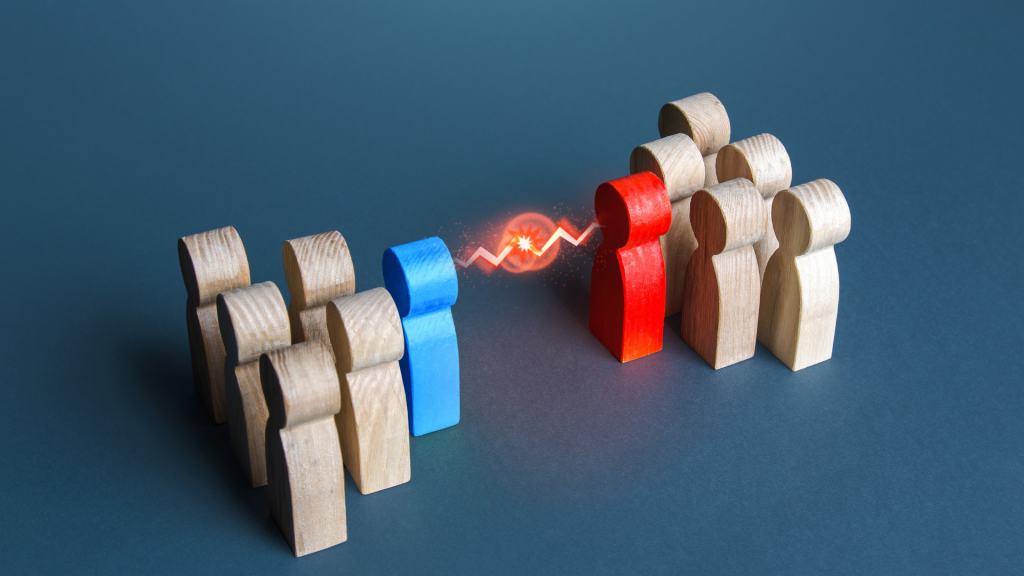
We certainly see unity in resisting the aggressor, and since the beginning of the full-scale war there has been no doubt about that. But when it comes to political unity, the further we go, the more doubts arise.
There was a time when President Volodymyr Zelenskyy believed that under wartime conditions it was more advantageous for him to make decisions within a small group. I am not rushing to blame him for this, although at times it is difficult not to – because war imposes its own requirements: when a decision must be made immediately, there is no time to seek consensus throughout Ukraine. But today, it seems that all of Ukraine feels that we have entered a stage in which, in order to choose the right path, different possibilities need to be analyzed – that is, different political experiences possessed by our political elite, which today is largely deprived of influence, need to be brought together in one place.
I am not necessarily talking about a government of national unity, although I would be glad if one appeared. But it would be important for me to see that the current ruling elite is seeking solutions together with other experienced Ukrainian politicians, that they are gathering for some kind of consultations. Ukraine needs this today – and those politicians who now feel sidelined should have a sense that their experience is valued. This would also create a good sense of national unity and cohesion under difficult circumstances. This is still untapped potential of ours. I can already see President Zelenskyy’s desire to change the previous model of governing the state – there are some signals of this, and we will see what happens next.
Where the Situation Is Heading: Why a Reliable Strategy Is Impossible
Under the current conditions of rapid global turbulence, it is practically impossible to develop a reliable strategic course for the state’s development. We can formulate the ultimate goal – and this is something we need to work on. But today I simply do not see the possibility of building some strategic plan, some tactical transitions from one stage to another, because something new happens every day. I have the impression that Trump has imposed his style on the entire world, and we are living in a highly unpredictable world in which it is impossible to develop a reliable strategy.
Therefore, I am in no hurry to criticize the absence of things that would normally exist in peacetime but are absent today – because circumstances have developed in such a way that no state today can afford the luxury of reliable strategic planning.
Is Russia’s Economic Situation Forcing It Toward Compromise?
This is a rule of authoritarian regimes: Putin cannot allow himself to show any weakness. He must go all in, he must pretend that he is strong – because that is what the rules of the game under which authoritarian governments operate require. So I do not expect this from Putin. Such regimes remain stable, stable, stable, laying claim to eternity, and then suddenly and rapidly collapse. Ultimately, that is what happened to the Soviet Union – it too disintegrated rapidly.
How Far Has Ukraine Broken Away from Moscow – and Is It Irreversible?
I am an optimist, and I remain an incorrigible optimist. But I can see how much our people have changed for the better. I remember the 1970s, when even good, friendly people would tap a finger against their temple and say to me: “What are you doing? You cannot break through a wall with your forehead, why are you leading yourself to destruction?” – referring to my dissident activity. Today the country is being defended by – I do not know the exact proportion – but one can say that the people have learned to defend themselves. This is a fantastic change.
In addition, the internet brings us moments that demonstrate the wonderful moral state people remain in even during this terribly difficult time of war, and now also during a winter without electricity, gas, and heat. I will mention two cases that simply astonished me. The first: in Lviv, a woman is clearing snow, and then Shahed drones begin falling. She stops for a few seconds, looks around, and then continues clearing the snow while they keep falling. That is simply incredible. The second: two men in Dnipro, outside, under the snow, are playing chess with each other. It was not a staged scene – that is exactly how it happened. This is equally wonderful. And I am not even mentioning the resilience shown today by Kyiv residents, Kharkiv residents, and people in other cities. We have wonderful people. And as long as these people remain committed to values, as long as they do not give up – they cannot be defeated.
Unity Not in Words but in Deeds – the Legacy of the Maidan
This is precisely the unity with which we began our conversation – mutual assistance, which continues to amaze me today. Kyiv residents who have gas invite those who have only electricity to come and cook something on their stove or take a shower. Assistance is being sent to Kyiv from other cities to help people somehow withstand the cold. This truly is unity not in declarations by senior officials, but genuine unity among people, which I call the legacy of the Maidan – because it was on the Maidan that this mutual assistance and unity were felt most strongly. These horizontal connections, which helped people endure under extremely difficult conditions, have now spread throughout the entire country.
What Comes Next: Will We Endure?
We will endure. I remember 1991. Our problem in general is that we extrapolate: we look at what exists today and think that if this continues, then in six months there will be a complete catastrophe. That is our problem – we extrapolate.
Now let us remember 1991. In March, Gorbachev proposed that the Soviet Union hold a referendum on a new conception of the USSR. People voted, and in Ukraine the majority supported the new conception. I was horrified, knowing what it meant in my own Drohobych: the new conception did not provide for the right to leave the Union, everything would be forever. And I thought: will these people really drive themselves into this trap with their own hands? And then came August 1991, three days of the coup attempt, which radically changed public attitudes not only in Ukraine but also in Russia. And by December 1, in the referendum, Ukraine voted 91% for independence.
So the most important thing is this: in March, it was impossible to predict what would happen in December. It was a complete break in the pattern. Therefore, I expect that our sometimes pessimistic assessments – “what will happen in another year, we will completely collapse” – will not come true. I assume that something will happen that completely changes the arrangement of the pieces on the chessboard – and Ukraine will endure.