
This paper was presented on April 29, 2025, at the round table “Contemporary Ukrainian Orthodoxy: Deconstructing Myths for the Sake of Reconciliation among Orthodox Christians in Ukraine and the Consolidation of Ukrainian Society,” organized by the “Sophia Brotherhood” with the support of the Renovabis Foundation. The “Sophia Brotherhood” may not share the views of the speakers, and individual opinions expressed by representatives of the Brotherhood within the framework of the project may not represent the consolidated position of the “Sophia Brotherhood.”
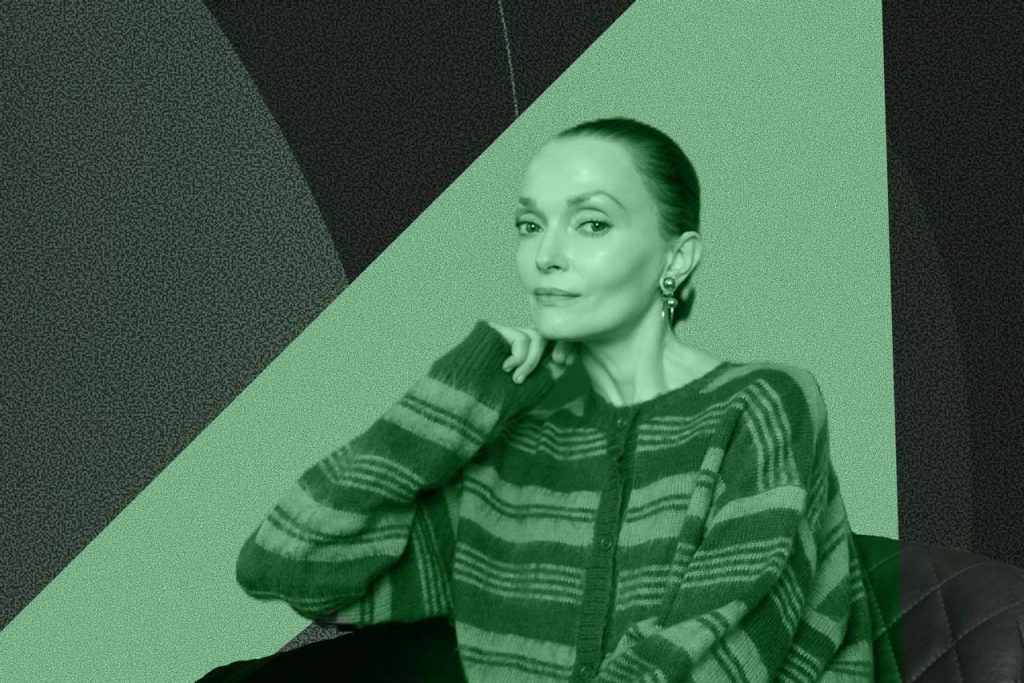
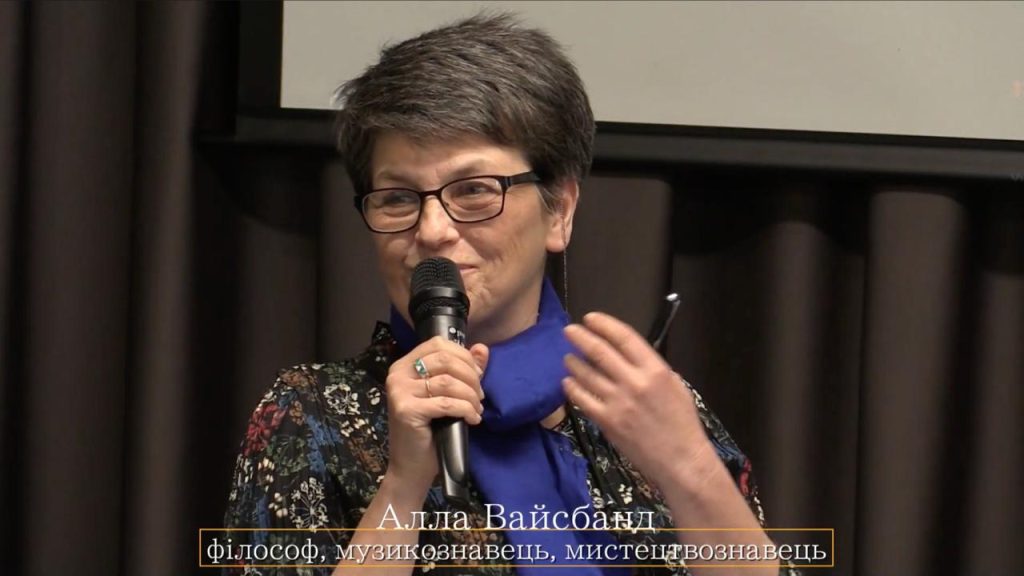
Alla Vaisband, philosopher, musicologist, art historian
I would like to begin my presentation by returning to the paper “Faith in One Church: Myth or Reality?”, presented by Doctor of Theology, Professor of the Kyiv Theological Academy Serhii Bortnyk at the webinar “Myths and Prejudices as Obstacles to the Unity of Ukrainian Orthodoxy.”
The speaker appeared here as an advocate for his, and our, Church. Among other things, he sought to show that the silence of the leaders of the Ukrainian Orthodox Church, who consistently avoid dialogue with Ukrainian society, is “Christianly motivated,” which, in his opinion, changes the status of this silence “from a political question into a theological one.”
To this end, the speaker quoted Christ’s response to Pilate and cited a number of biblical statements that “set Christ’s disciples in opposition to the world”; in his view, this idea of “the opposition between the faithful and the world” “effectively finds its parallel in the Apostle Paul’s opposition between the fleshly and the spiritual.” “The current isolation and silent resistance of the faithful of the Ukrainian Orthodox Church can be viewed through the theological prism of such an opposition: between the Church and the world, the spiritual and the fleshly.”
At the end of his presentation, Serhii Bortnyk expressed the conviction that the “full-scale” war is “an unquestionable reason for deeper reflection and for rejecting the political as something superimposed upon the life of the Church.” According to the theologian, it is precisely this rejection that constitutes a prerequisite for “constructive changes in Ukrainian Orthodoxy.”
The interpretation proposed by the theologian of “the opposition between the Church and the world, the spiritual and the fleshly” as a purely Christian phenomenon made me recall one of my favorite texts by the brilliant scholar and Christian thinker Sergei Averintsev. I mean his text “Toward an Understanding of Biblical Literature,” published in 1990 in one edition of the New Testament. There we read the following key words:
“At one time, Greek philosophy developed the doctrine of the ‘impassibility’ of the divine principle, to which the ethical ideal of ‘ataraxia,’ that is, absolute imperturbability, corresponded. Christianity, having encountered this tradition of Hellenic idealism, accepted it, but for Christianity divine ‘impassibility’ exists ‘without confusion and without separation’ together with Christ’s suffering on the cross. Christ’s divine glory is real not somewhere above His human humiliation, but within that humiliation, at its very heart. Therefore, the most general form of Christian thought and perception – alive both in New Testament texts, in the Orthodox icon, and in the lines of Dante – is the symbol, which does not merge the thing and its meaning, as in pagan myth, but neither does it separate them; rather, it presents both ‘without confusion’ and ‘without separation.’”
And further:
“This formula provides a universal Christian model for the relationship between the divine and the human, the spiritual and the material.”
The author placed a full stop there, but I think that the “doubly paradoxical,” in Averintsev’s words, formula of the Council of Chalcedon can also be applied to the Christian understanding of all other fundamental oppositions, including the Christian understanding of the relationship between the Church and the world, and between the religious and the political.
If we agree with this thesis, then the prerequisite for “constructive changes in Ukrainian Orthodoxy” will look different from the way Professor Serhii Bortnyk presented it while defending a view that is widespread within the Ukrainian Orthodox Church. Namely, not as the “rejection of the political as something superimposed upon the life of the Church,” but as the search for a fragile balance between the political and the spiritual as one of the constitutive elements of the life of the Church.
Several further conclusions may be added to this one.
At the beginning of our project, one of its participants asked Artificial Intelligence to compile myths and stereotypes widespread among Orthodox Christians in Ukraine. Among others, Artificial Intelligence identified the following:
“The Ukrainian Orthodox Church is excessively inclined toward fundamentalism. The Orthodox Church of Ukraine is inclined toward modernism and Western liberal values that threaten ‘true Orthodoxy.’”
These ideas are indeed myths because they offer a simplified, generalized interpretation of complex and diverse phenomena: both within the Ukrainian Orthodox Church and within the Orthodox Church of Ukraine there are adequate, healthy centers that seek a balance between the conservative and the modern, the spiritual and the political, and so on, as well as peripheries that absolutize one side of these oppositions.
Nevertheless, we can still speak of certain dominant tendencies.
The Ukrainian Orthodox Church is generally more conservative, more oriented toward tradition, authority and obedience, toward the magical and the eternal, toward the salvation of the soul, and so on.
The Orthodox Church of Ukraine is more liberal, places greater value on human freedom and dignity, and is more open to the social, civic, and political spheres.
If we recognize that the essentially Christian formula is precisely that of a union “without confusion and without separation,” this opens the possibility of saying that both of these Churches, which today generally deny one another either canonicity or Ukrainianness – at least potentially – are canonical and legitimate Ukrainian Churches, and that the existence of these two Churches – provided they do not wage a war of mutual destruction – is a great gift and opportunity for Ukrainian Orthodoxy. For these Churches, in the mode of “more – less,” embody phenomena that, from the standpoint of genuine Christianity, are equally necessary. Father Cyril Hovorun and Daryna Morozova have spoken in this context of “two wings” and “two lungs.”
Of course, this interpretation is itself, to a certain extent, also a myth, because it is based on broad generalizations. But unlike the widespread destructive exclusivist myths of both jurisdictions, this myth is constructive because it promotes dialogue and mutual understanding, to which we are called both as Christians and as citizens of Ukraine.
A few more words regarding potential canonicity and legitimacy. According to Sergei Averintsev’s interpretation, the “doubly paradoxical formula of the Council of Chalcedon” can also be extended to the interpretation of the relationship between the literal and the metaphorical, that is, between spirit and letter, in the key concepts of the New Testament.
I would venture to suggest that this interpretation should also be extended to the Christian understanding of the concept of “grace-bearing character.” That is, the grace-bearing character of the Church is determined not only by certain documents that recognize its canonicity as such, and not even solely by apostolic succession, but also by the extent to which the life of the Church corresponds to the Spirit of Christianity, including, among other things, the genuinely Christian “without confusion” and “without separation” of the fundamental oppositions of religious culture.
And finally. During one of the preparatory online meetings for this round table, Liudmyla Oleksandrivna Fylypovych insisted on the need to move immediately from words to action and to develop a concrete strategy – a clear plan of actions aimed at reconciliation and mutual understanding.
At present, this strategy obviously cannot include holding open dialogues and round tables with representatives of both Churches, since Metropolitan Onufriy has not given his blessing for such dialogues. But in terms of preparing the ground for such dialogues, we can and must already work on expanding and strengthening the adequate, healthy centers within both Churches, which seek to achieve a balance between the traditional and the modern, the mystical and the political, and so on – between the two sides of all the oppositions mentioned above. The expansion of these centers would significantly facilitate reconciliation and mutual understanding. I see that these centers are much closer to one another than they are to their own peripheries.
One element of this work, in my view, should be the debunking of the myth that treats “the opposition between the spiritual and the fleshly, between the Church and the world” as a purely Christian phenomenon.
Source: Sophia Brotherhood