

If a few decades ago it was enough for the Church to have its own newspaper, website, or communications department, today this is clearly no longer sufficient. The Church exists within the same information space as politics, business, culture, civil society, and the everyday lives of millions of people. The question is no longer simply what the Church says about itself, but also what role it plays in shaping the public agenda.
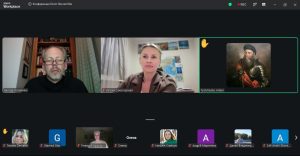
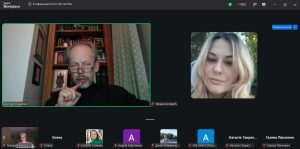
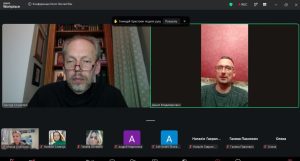
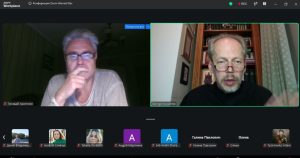
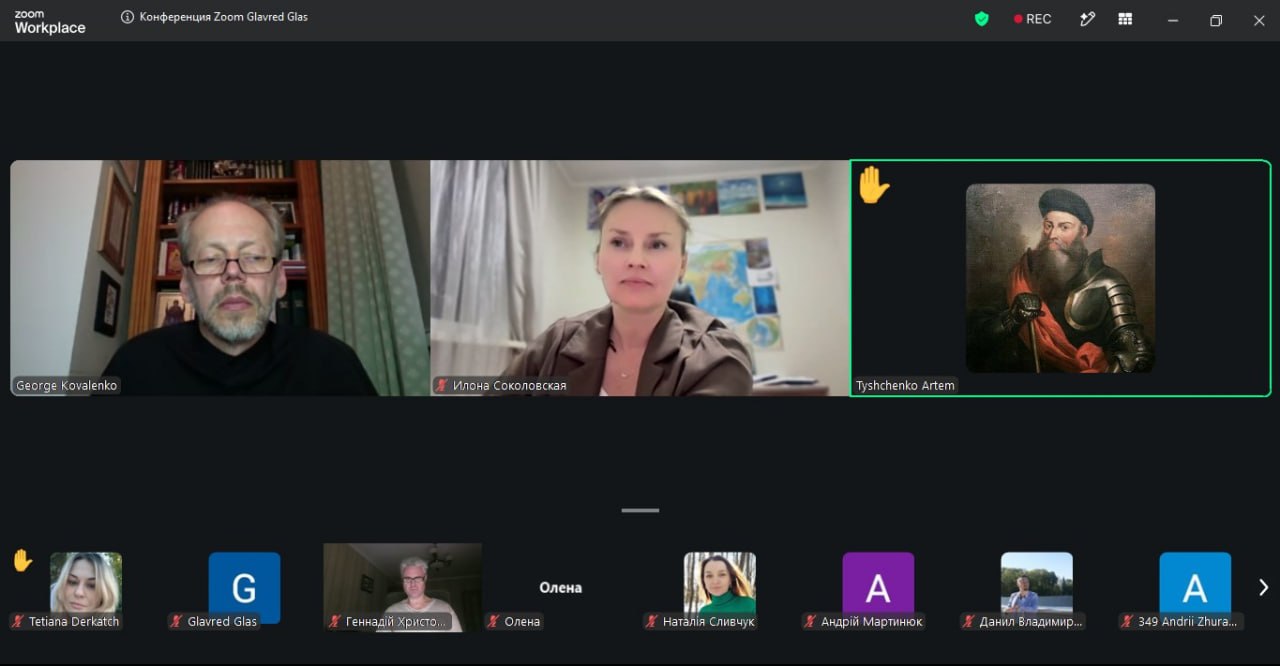
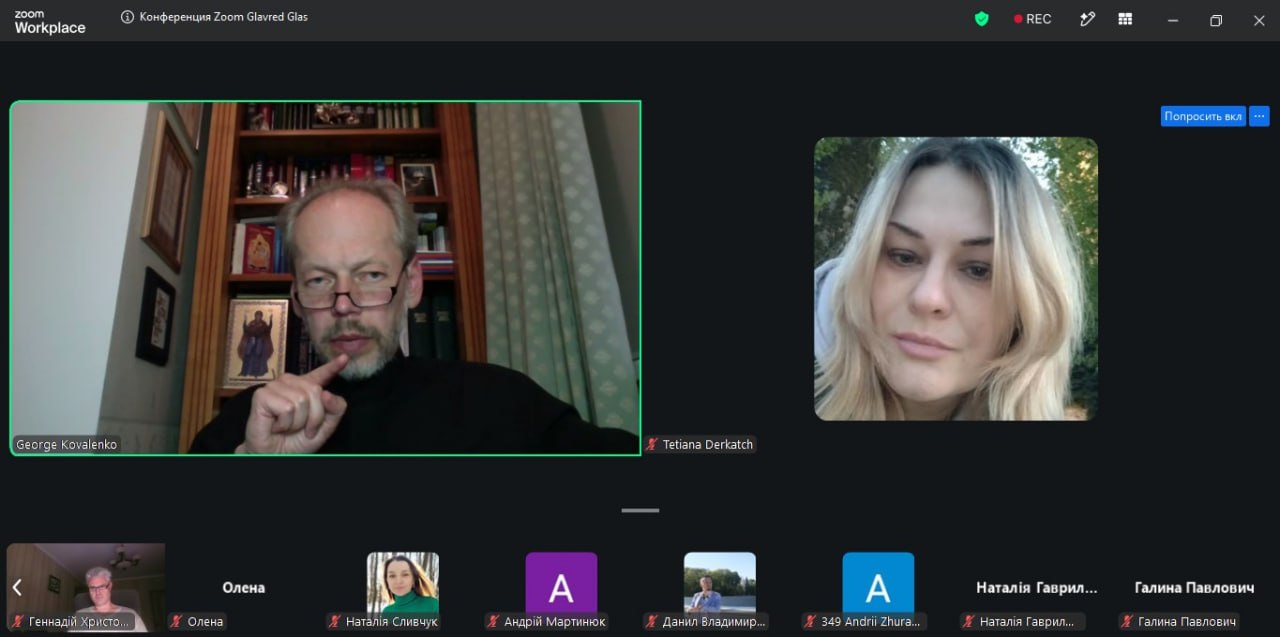
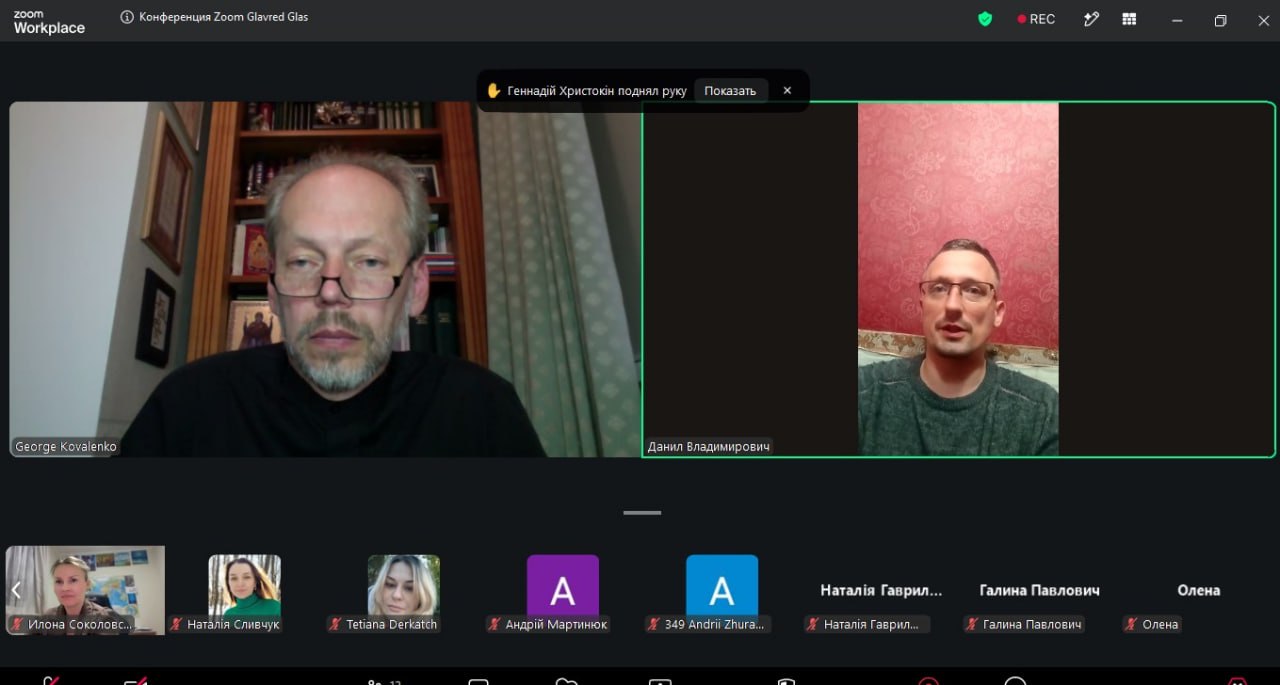
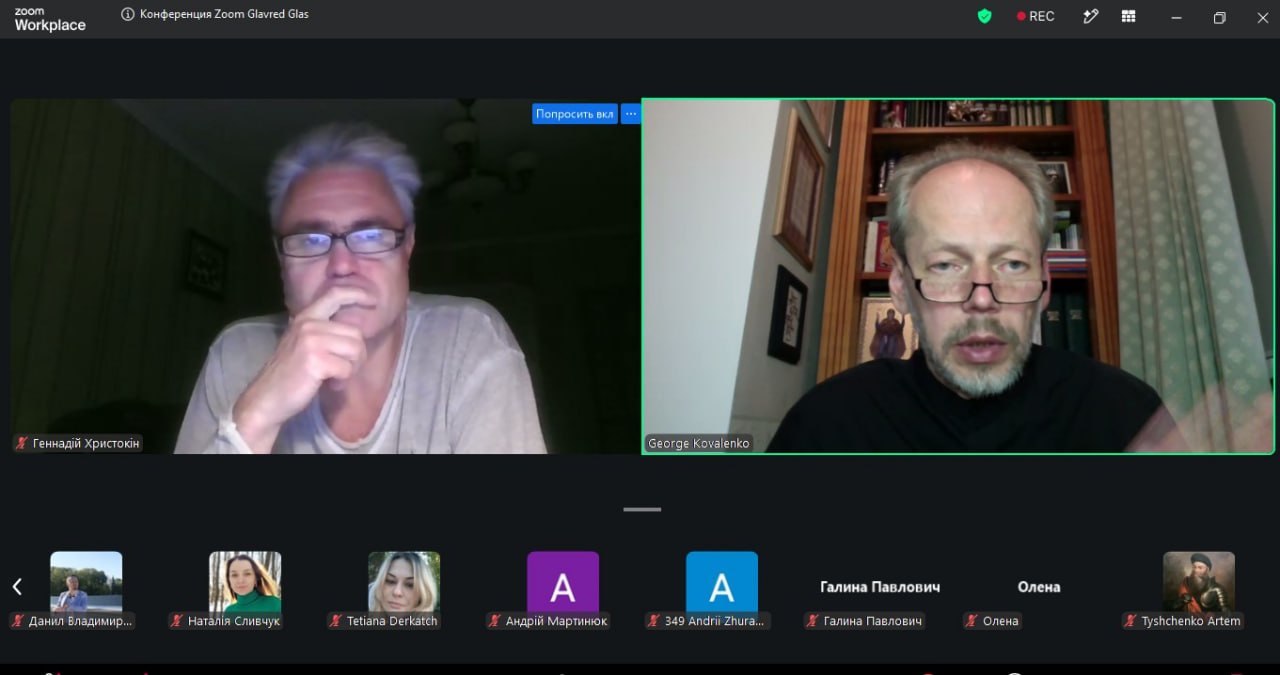
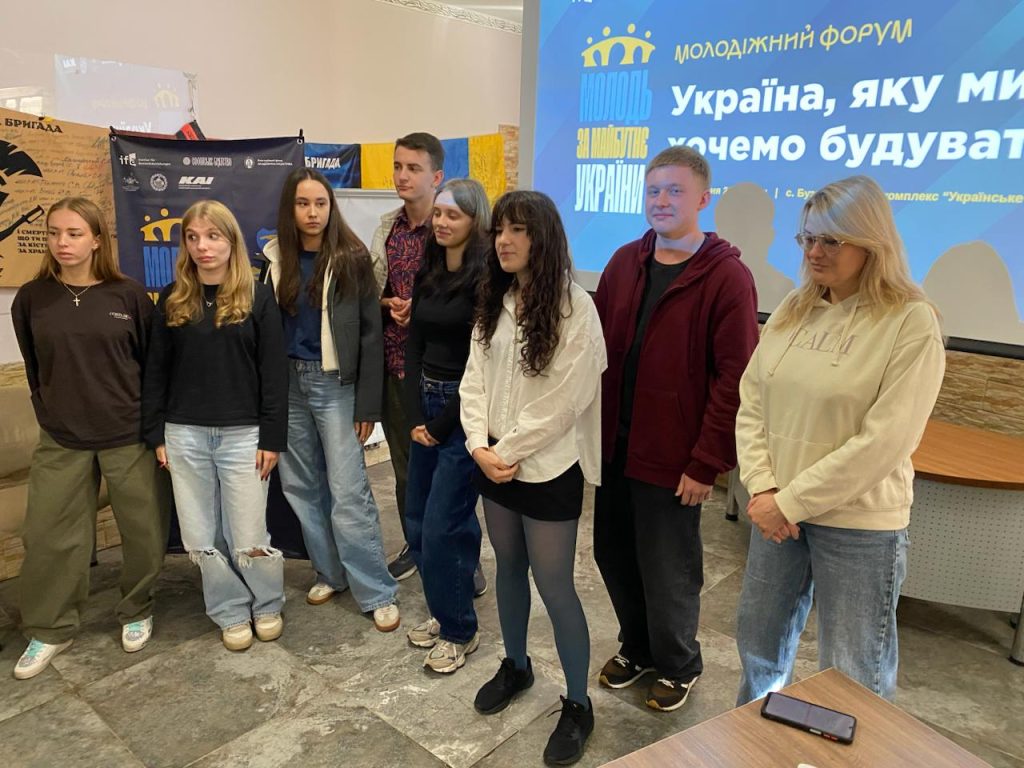
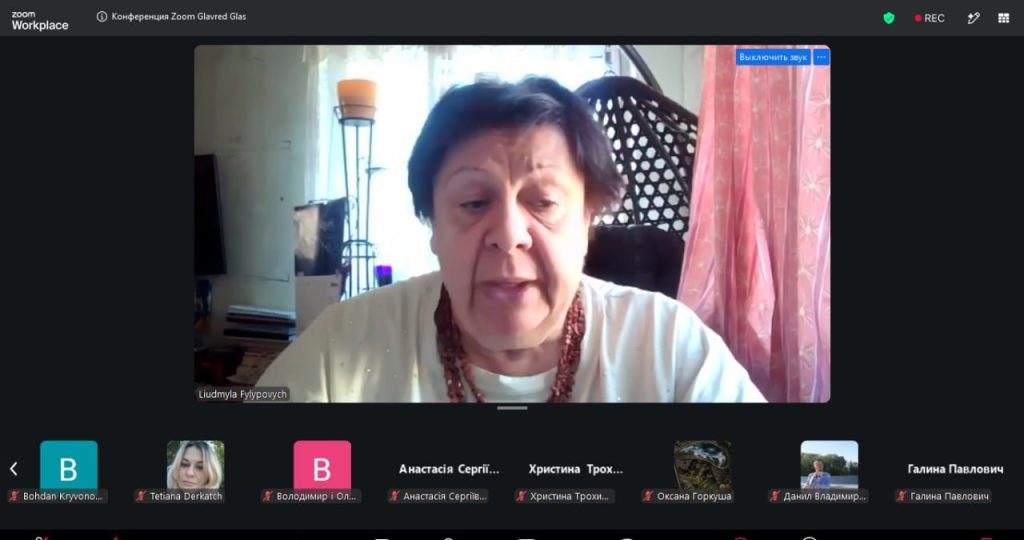
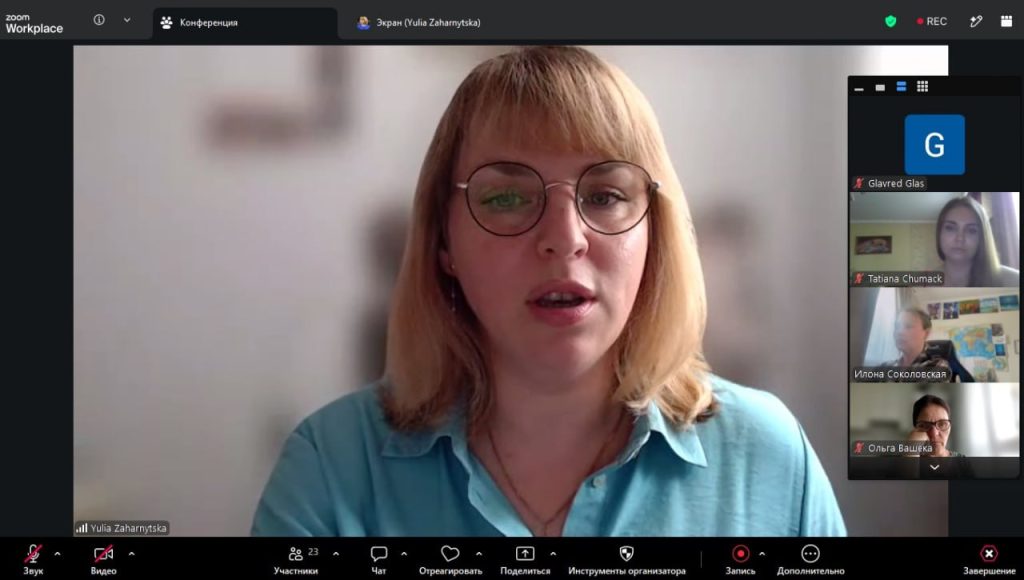
This was the focus of the webinar “From Church Media to Public Dialogue: How the Church Enters Ukraine’s Information Space,” held on 16 September as part of the “Youth for the Future of Ukraine” project.
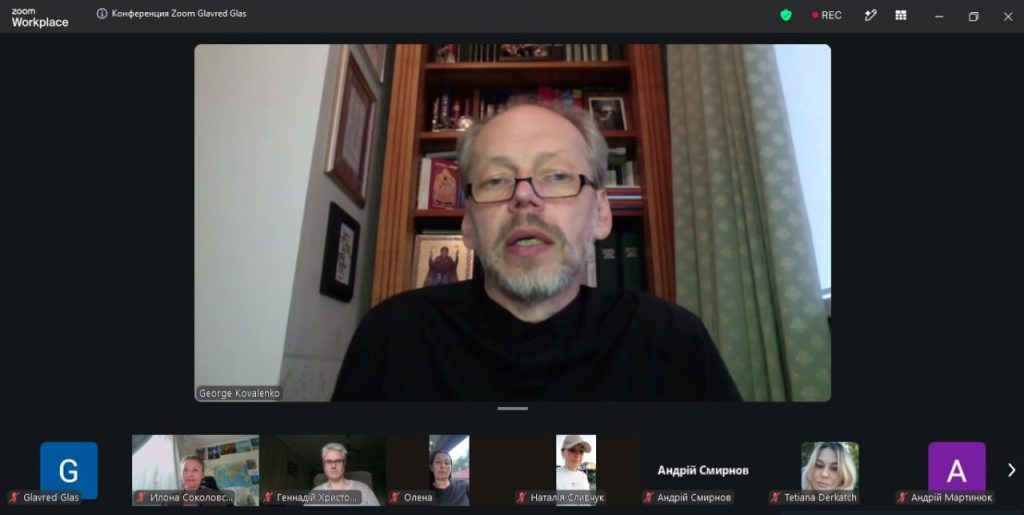
The guest speaker was Archpriest Georgiy Kovalenko – an OCU priest, philosopher, journalist, Rector of the Open Orthodox University of Saint Sophia the Wisdom, one of the early active contributors to the development of an Orthodox presence on the Ukrainian internet, and founder of the online portal “Orthodoxy in Ukraine.”
The conversation went far beyond the history of church journalism. In fact, it was a story about how, over the past three decades, not only communication technologies have changed, but also the very understanding of the Church’s responsibility for its public voice.
From a Library and the First Newspaper to the Church Online
For Georgiy Kovalenko, the history of church media does not begin with the internet. It begins in the late 1980s, at a time when, for many people, the very possibility of obtaining a Bible, a religious book, or access to alternative information was perceived as a kind of “breath of freedom.”
Fr Georgiy recalled how, after returning from the Soviet army in 1988, he became involved in the life of the Orthodox community in Konotop, establishing a Sunday school and a library. By the early 1990s, the library already contained around two thousand publications, many of which had come from abroad.
At the same time, work with local media was beginning. Diocesan newspapers and television programmes followed, and in 1997–1998 one of Ukraine’s first Orthodox internet resources was launched.
“Orthodoxy in Ukraine” was created at a time when a website essentially had to be built by hand and when, for most people in church circles, the word “internet” still sounded almost exotic.
But the technological breakthrough itself was not the most important part of this story.
Fr Georgiy noted that he deliberately sought to work not only within the church information environment but also in professional secular journalism. For him, it was important not to approach journalists with the attitude of “we are going to teach you how to talk about the Church,” but rather to become part of the professional media environment himself – working with editors, journalists, proofreaders, and designers, and gradually creating a space of trust.
According to him, this experience later became one of the key foundations for developing the Church’s information policy.
From “Struggle” to Responsibility for One’s Words
Fr Georgiy also spoke specifically about what church journalism should not be.
He was critical of the practice whereby media outlets that present themselves as church-related build their communication around mocking, humiliating, or discrediting representatives of other denominations and jurisdictions.
In his view, the Church should not seek to prove that it is right by humiliating others. If there is a need to “fight” for one’s own tradition, this should be done primarily by developing one’s own education, mission, communities, and positive agenda.
“The main news of the Church is the Gospel” – this idea became one of the recurring themes of his talk.
This is also the basis of his expectations for church journalism: responsibility for one’s words, rejection of anonymity, willingness to speak in one’s own name, and readiness to be accountable for what one says.
Fr Georgiy also mentioned a principle he calls “post-censorship”: rather than preventing someone from speaking in advance, one should require them to take responsibility for what they say publicly.
In his view, the church environment needs not mechanisms of total prohibition, but institutional rules that allow people to express themselves, make mistakes, engage in discussion, and correct those mistakes – without relieving them of responsibility for their own words.
“We Are the Church”
One of the important themes of the webinar was the problem of insularity within the church environment.
Fr Georgiy spoke about his experience in developing the concept of “Open Orthodoxy” and establishing the Open Orthodox University of Saint Sophia the Wisdom. This approach involved reaching beyond a strictly denominational audience and entering the spheres of education, culture, public dialogue, and engagement with people who may not be practising Christians or may not belong to a church community at all.
In this context, he formulated a simple but fundamental idea: the Church is not only the hierarchy. The Church is also the people and communities who take responsibility for its future.
This leads to another question: if every initiative must wait for permission “from above,” does the church community itself not lose its ability to act as an independent agent?
For Kovalenko, the answer is clear: the modern Church needs people who do not merely wait for ready-made solutions, but create new educational, cultural, media, and public initiatives.
Do Not Simply React to Someone Else’s Agenda
The participants also discussed information warfare, particularly the current information confrontation between circles associated with the UOC and the OCU.
Fr Georgiy drew attention to a problem that extends far beyond any particular denominational conflict: when the Church constantly reacts to someone else’s information agenda, it gradually loses the ability to decide for itself what it wants to talk about.
According to him, information warfare gives rise to another kind of conflict – a “semantic war,” in which the parties begin to struggle not only over facts but also over the meanings of symbols, historical events, and concepts.
In such a situation, reacting itself can become a trap.
If a media outlet responds every day to an opponent’s accusations, it simultaneously accepts that opponent’s rules of the game. As a result, its media activity turns into an endless effort to refute someone else’s claims.
The alternative proposed by Fr Georgiy Kovalenko is to create what has not existed before.
New communities. New educational formats. New projects. New ways of speaking about Christianity. New topics that matter not only to church audiences.
In other words, the task is not merely to respond to information attacks, but to shape one’s own agenda.
Can the Church Talk to Ukraine About the Future?
In the second part of the conversation, Fr Georgiy broadened the discussion further, turning to the question of meaning.
He noted that after the Revolution of Dignity, and especially since the beginning of the war, various professional communities in Ukraine have increasingly sought not merely strategies or management solutions, but answers to questions such as: “Why?”, “For what purpose?”, and “What kind of country are we building?”
According to him, this need exists among people working in business, public administration, education, security, and other fields. These are often people who independently seek answers to philosophical, ethical, and spiritual questions and who continue learning throughout their lives.
It is precisely here, Kovalenko believes, that a distinct field of work opens up for the Church.
But it is not enough to approach such people with ready-made answers and the language of the nineteenth or even twentieth century.
“You have to come with original ideas,” he said, emphasising that modern people need a language they can understand, but one that is also capable of addressing profound issues – meaning, responsibility, resilience, freedom, and the future.
This, he argues, is how a new formation of Ukrainian identity is emerging – a network of people and communities asking themselves why Ukrainian society should remain together, where its resilience comes from, and what the country should look like after the war.
From Church Communication to Public Dialogue
Ultimately, the conversation returned to the question with which the webinar began: who is the Church speaking to today?
The answer can no longer be reduced to the number of subscribers to a church website or the number of views a sermon receives.
The Church’s influence on society is determined not only by its ability to respond quickly to information attacks. Far more important is whether it can offer society meanings of its own, raise difficult questions, create space for dialogue, and be present where the country’s future is being shaped.
This is why the history of church media recounted by Fr Georgiy Kovalenko ultimately turned out not to be a story about technology.
From the first church newspaper to the internet, from an official press-service statement to a personal blog, from defending one’s own information territory to open public dialogue – this is a journey in which the Church is gradually learning to speak with society not only about itself, but together with society about what matters to everyone.
And perhaps the next stage of this story lies precisely here: not waiting for someone else to set the agenda for the Church, but creating the topics, communities, and meanings around which people will want to discuss the future of Ukraine.