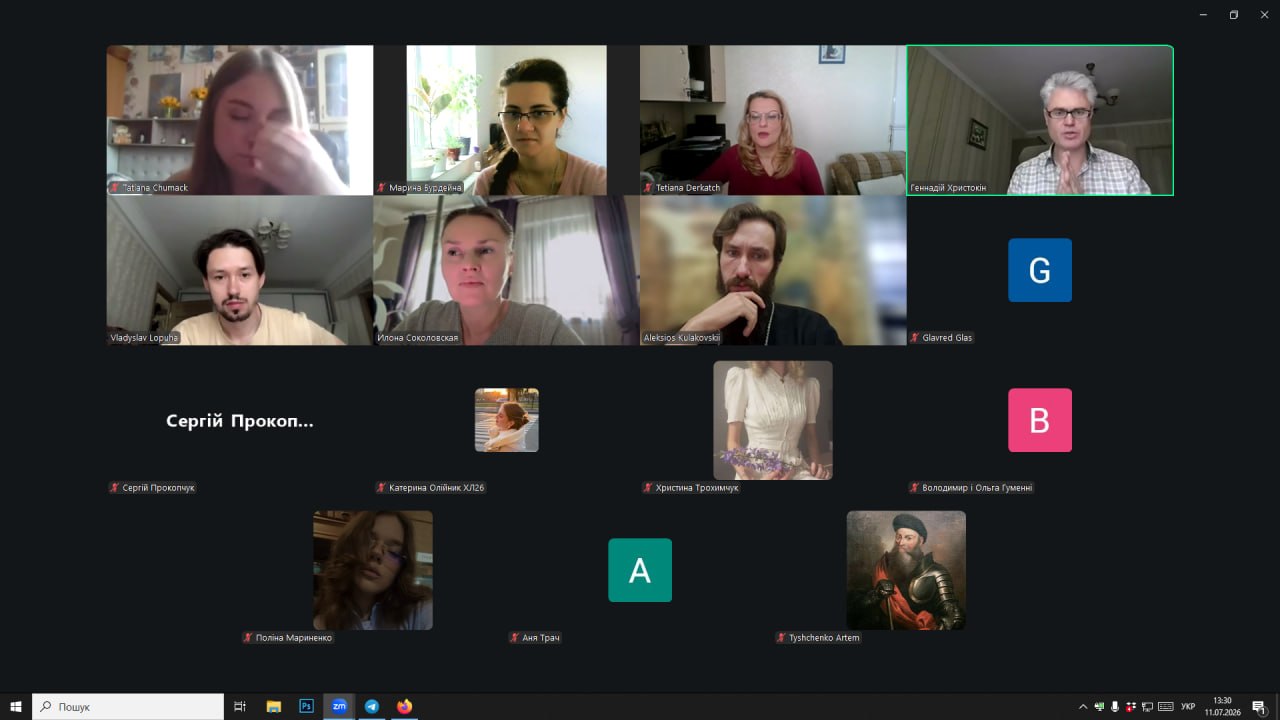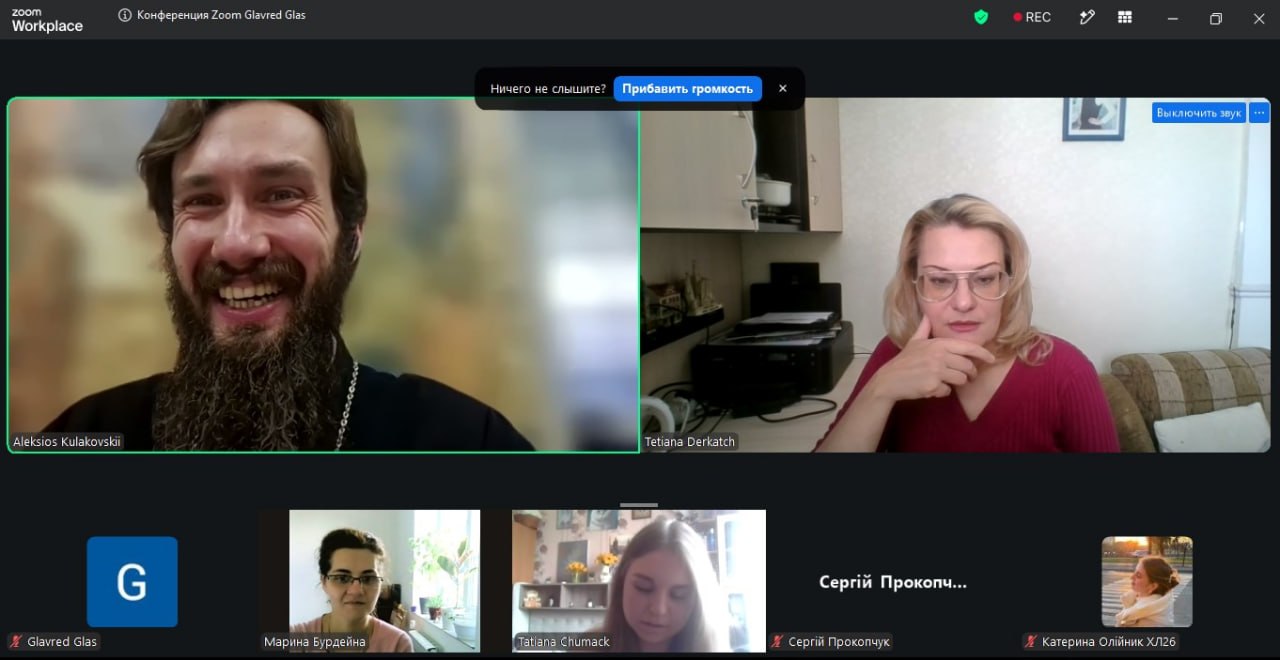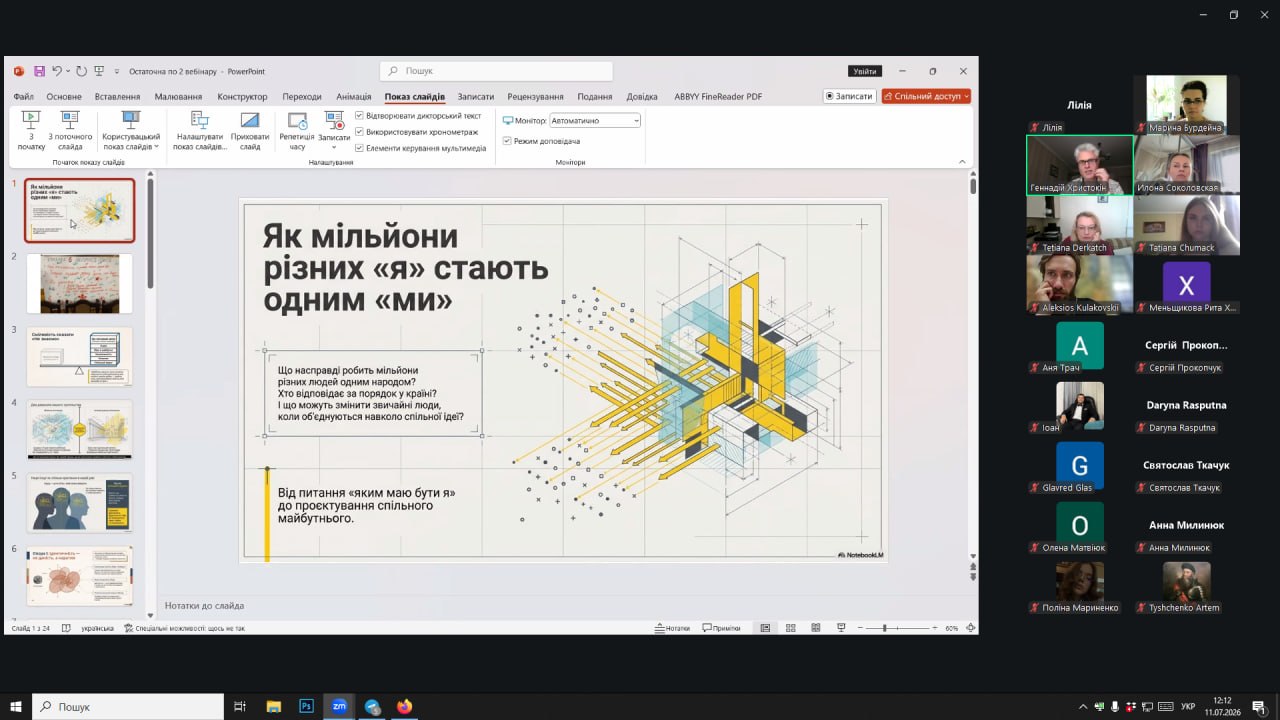


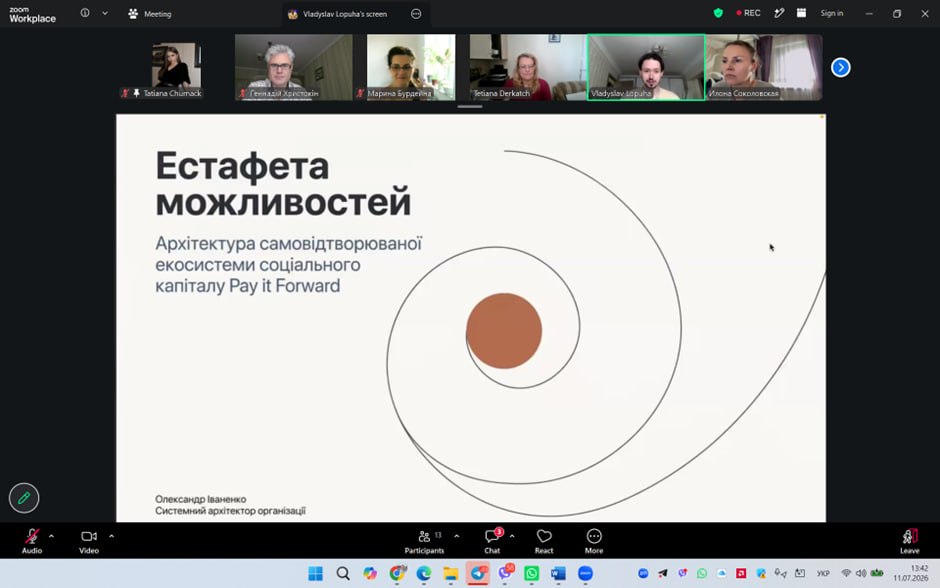
The webinar series of the project “Youth for the Future of Ukraine: Dialogue, Research, and Creative Media Work for the Consolidation of Ukrainian Society and Orthodoxy” continues. While the first session focused on the concepts of the common good, virtues, and justice, the second webinar sought to address even more challenging questions: Who is a Ukrainian today? How is our shared identity being formed? And what kind of country should emerge after the war?
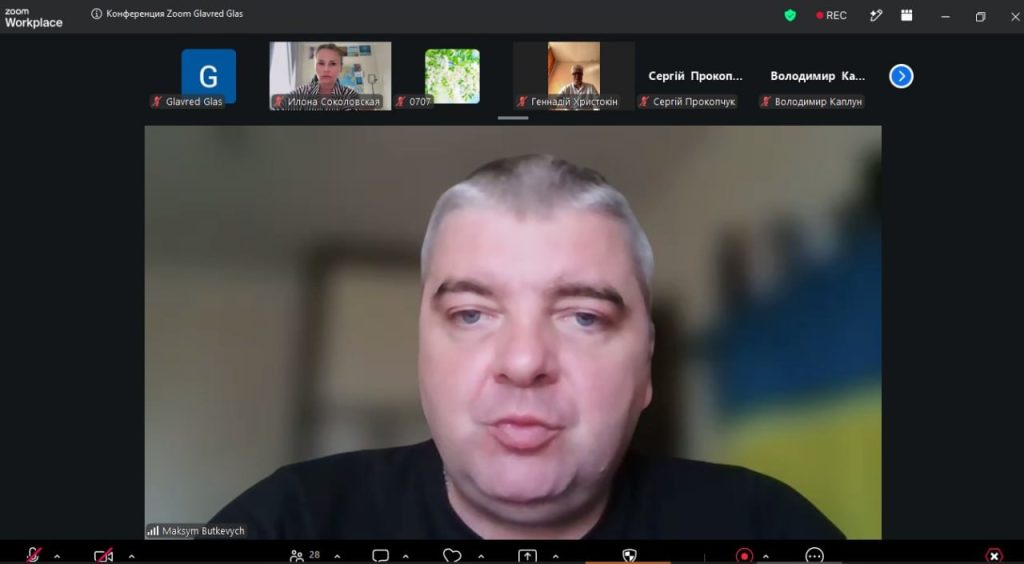
The second interactive session with young participants was once again led by Hennadii Khrystokin, Doctor of Philosophy and Professor at the State University “Kyiv Aviation Institute.”
This was not a traditional academic lecture. Following a brief theoretical introduction, participants once again worked in teams, tackling three major practical assignments. Each task was designed not to uncover a single “correct” answer, but to encourage collective reflection on Ukraine’s future.
The first session focused on identity.
Who is a Ukrainian today? Are we defined by language, culture, civic commitment, freedom, the experience of war, or perhaps by something else?
Participants examined different models of Ukrainian identity, debated various perspectives, challenged one another’s ideas, and worked together to formulate their own definitions.
One of the most significant conclusions was the recognition that many Ukrainians today define themselves through the struggle for freedom and through their distinction from Russia. At the same time, participants agreed that this alone is insufficient. Ukraine cannot build its identity solely in opposition to another state. Instead, it must increasingly articulate its own positive identity through shared values, culture, responsibility, freedom, and a common vision of the future.
The second assignment shifted the discussion toward state-building.
Teams explored one of the most pressing questions facing Ukraine today: Where will the new generation of responsible people capable of building a modern Ukrainian state come from?
Participants discussed a variety of possible approaches: educational reform, successful local reforms, the experience of veterans, youth initiatives, and the involvement of Ukrainians living and working abroad. The discussion demonstrated that strong public institutions cannot be created solely through legislation or personnel decisions. They begin with the formation of people who are prepared to take responsibility.
The third practical assignment addressed civic engagement.
Participants sought answers to another difficult question: How can youth initiatives continue to thrive after grant funding ends, sustained by the people themselves rather than external financial support?
The teams proposed their own models for sustainable civic movements, discussing partnerships with local businesses, mutual support within communities, the development of local leadership, and new forms of grassroots self-organization. Their shared conclusion was that lasting change emerges when people unite not merely around funding, but above all around trust, shared values, and mutual responsibility.
This format—where philosophical ideas are immediately tested through practical application, and where young people do not simply listen but also debate, argue, and develop their own solutions—has become a defining feature of the project’s webinar series.
Participants can look forward to further meetings with Ukrainian intellectuals, journalists, researchers, and practitioners. The project’s central goal is not merely to provide knowledge, but to help young people develop critical thinking, teamwork skills, and the ability to design their own initiatives for the benefit of their communities and the future of Ukraine.