

In a time of full-scale war, the term “human-centeredness” may sound almost paradoxical. When a country is fighting for its very right to exist, when human lives become part of military statistics, and when the state is forced to restrict citizens’ rights and freedoms, is it even possible to place the human being at the center?
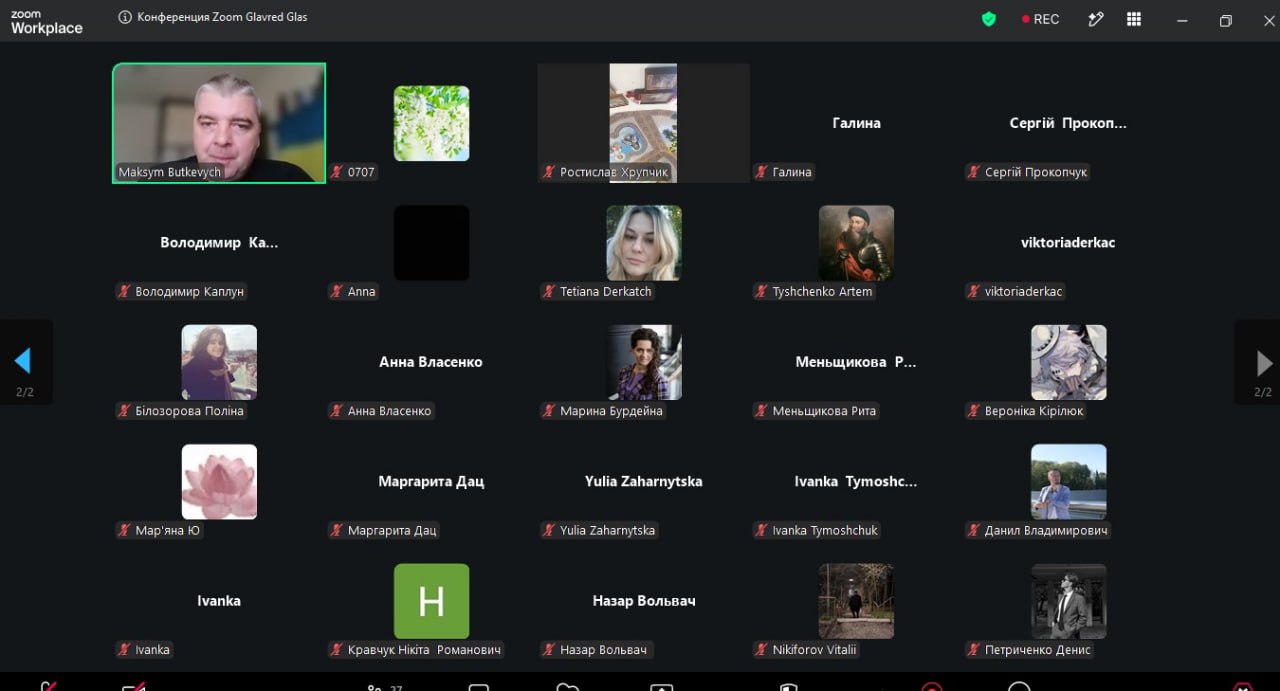
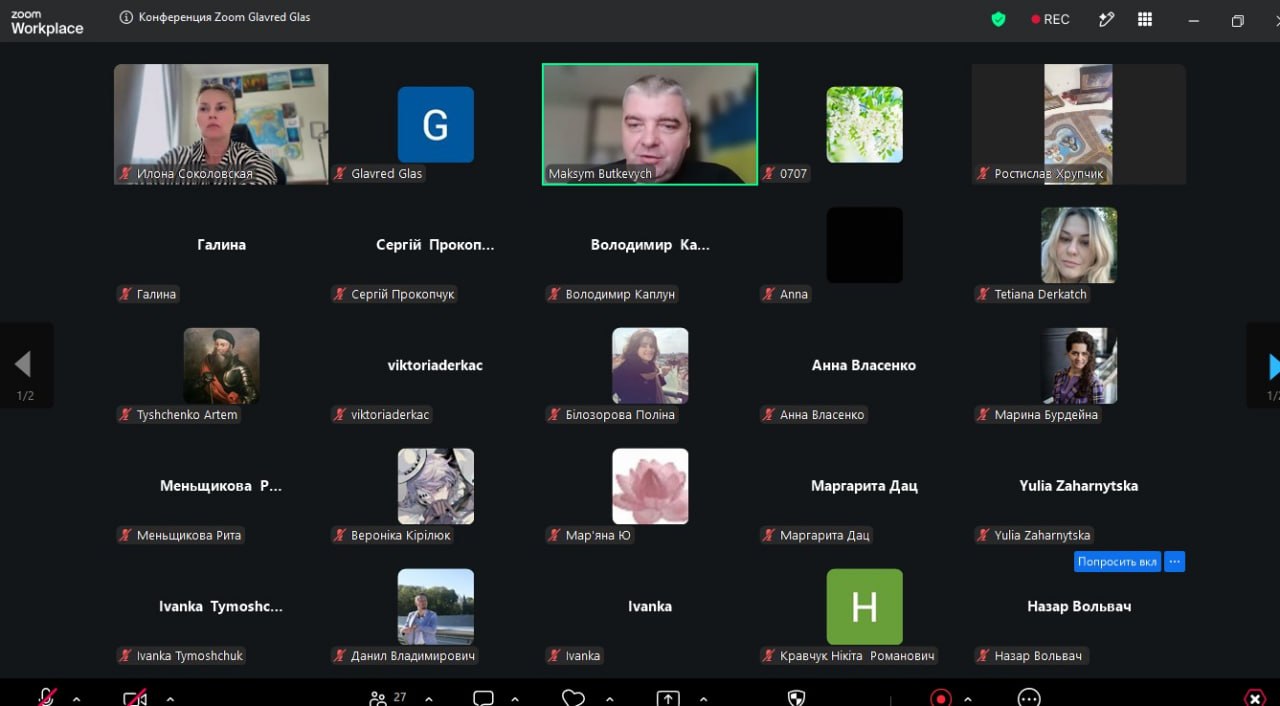
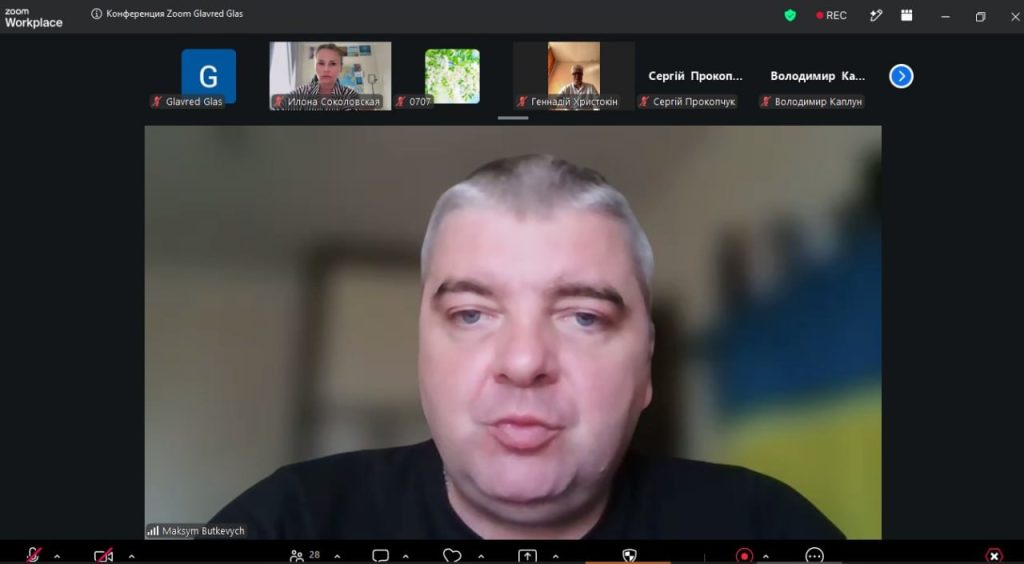
It was precisely this difficult contradiction that Maksym Butkevych explored during a webinar with young people. A human rights defender and journalist, co-founder of the ZMINA Human Rights Center and Hromadske Radio, co-coordinator of the Principle of Hope Charitable Foundation, a serviceman and former prisoner of war, Butkevych voluntarily joined the Armed Forces of Ukraine in March 2022. He was captured by Russian forces in June and returned to Ukraine in a prisoner exchange on October 18, 2024.
Yet the conversation was not so much about captivity itself as about what captivity revealed about freedom, dignity, responsibility, and the very nature of humanity.
A War in Which the Human Being Becomes a Resource
Maksym Butkevych began with an obvious yet uncomfortable contradiction: war inevitably changes the state’s attitude toward the individual. The military operates in terms of personnel; the state speaks of human and labor resources, demographics, and mobilization potential. Rights and freedoms are restricted, while the space for personal choice narrows.
Yet, in Butkevych’s view, a resource-based approach and human-centeredness do not necessarily contradict one another.
He offered a telling example from within the Defense Forces themselves. Units in which commanders pay greater attention to the needs of individual servicemen and servicewomen—where there is proper medical support, opportunities for rest, training and development, and less unnecessary bureaucracy—often prove not weaker but, on the contrary, more effective.
In other words, caring for people turns out not to be the opposite of defense capability, but one of its prerequisites.
This logic matters far beyond the military. Ukraine is already being forced to think about demographics, migration, the return of its citizens, the future labor market, and attracting new people. It will have to compete for them. And a country that wants people to return—or to choose Ukraine as a place to live—cannot offer patriotic duty alone. It must provide security, opportunities for development, the rule of law, protection of rights, and a sense that your life here matters.
Freedom Is Not an Abstraction
The most powerful part of the conversation was Maksym Butkevych’s personal experience.
During his captivity in Russia, he reconsidered the very concept of violence. Previously, he had associated violence primarily with physical harm. But in captivity, something became clear: violence begins much earlier—with turning a human being into an object.
When a person is told how to stand, what to say, what to sing, when to sit, when to move, and when to remain silent; when any expression of one’s own will can lead to punishment, a person is gradually deprived of more than physical freedom. They are stripped of their sense of themselves as an autonomous subject.
That is why, after his release, even the simplest everyday decisions—where to go, what to read, what to say, when to sit down or stand up—acquired special value for him.
This insight also forces us to reconsider human-centeredness itself. It is not simply about caring for a person. It is about recognizing their agency, their right to choose, and their responsibility for their own choices.
And this raises a difficult question for the state: where does necessary concern for security end and paternalism begin? How much room for independent choice is the state prepared to leave to the individual, even when it acts with what appear to be the best of intentions?
The State Exists for the Individual, Not the Individual for the State
This issue becomes particularly acute during wartime.
Maksym Butkevych acknowledges that during war, the state is compelled to restrict certain rights. Citizenship itself entails not only rights but also responsibilities. Mobilization is one of the most difficult examples of such restrictions.
But there is a danger that must not be overlooked: the state apparatus has a natural tendency to retain powers acquired under emergency conditions.
War centralizes decision-making, strengthens vertical structures of authority, and expands state powers. This may be necessary. But once the war is over, society must ask which of these restrictions truly remain necessary and which have simply become convenient for those in power.
Human-centeredness, therefore, also means society’s ability to hold the state accountable. Butkevych effectively proposed reversing the conventional logic: the state is not the highest value in and of itself. The state is an instrument created by people to organize their common life. When that instrument becomes an end in itself, there is a danger of a kind of “state worship.” Here, his argument unexpectedly intersected with the biblical tradition and its commandment against idolatry.
“We Are Not Them”
One of the most powerful stories from the webinar concerned Russian captivity.
On one occasion, Ukrainian prisoners of war began discussing how Russian POWs were being treated in Ukraine. One of them expressed the hope that Ukrainians were doing to Russian servicemen at least some of the things the Russians had done to them.
Almost everyone else immediately objected.
“We are not them.”
There is an extraordinary amount contained in this short sentence. War provides countless reasons for hatred. Captivity provides even more reasons for revenge. Yet at precisely that moment, people who had themselves endured violence refused to reproduce it.
Butkevych does not deny that on the battlefield, the enemy is perceived as a combat unit that must be neutralized. This is part of the mechanism of survival. A person may even psychologically dehumanize the enemy in order to be able to fight.
But the battlefield must not consume the entirety of life.
That is why it is essential to follow the rules governing the treatment of prisoners of war, protect civilians, and refuse to allow the logic of war to determine every moral decision we make. This is one of the fundamental distinctions between fighting for freedom and seeking revenge.
The Good Samaritan and the Person Without a Label
It was no coincidence that the parable of the Good Samaritan arose in the conversation. Maksym Butkevych referred to it not merely as a religious text, but as a universal story about humanity.
A wounded person lies by the roadside. A priest passes by. A Levite passes by. A Samaritan helps—a member of a community that was in conflict with the Jews. He does not know who the wounded person is. He does not know their political views, religion, or name. He sees a human being whose life is in danger, and he acts.
It was here that Maksym Butkevych articulated one of the webinar’s central ideas: love is not merely an emotion. Love is an action aimed at affirming the existence and development of another person. Human-centeredness therefore begins with the same gesture made by the Samaritan: another human being becomes the point of reference. Not their passport. Not their language. Not their political views. Not their religious denomination. Not whether they belong to “us” or “them.”
The human being.
Veterans and a New Social Contract
Another important subject raised during the webinar was the future of veterans.
Butkevych pointed out that many people who volunteered to go to war had never dreamed of a military career. They made a choice at a critical moment in order to defend their community. After returning, therefore, what they expect may go far beyond material benefits. They may expect the state to provide a just society: quality education for their children, fair rules, freedom from corruption, opportunities for self-realization, and respect for human dignity.
In effect, this is a demand that the social contract be honored: I defended this state—now the state must ensure fair rules for me and my family. If this expectation is not heard, Butkevych warns, it could become a source of serious internal tension.
Veterans, therefore, are not merely a category of people who will need support in adapting to postwar life. They may become one of the key forces shaping Ukraine’s new social contract.
Trust as a Prerequisite for the Future
Another thread running throughout the conversation was trust.
In captivity, mutual assistance among prisoners was one of the main factors in survival. People with different backgrounds, views, and regions of origin supported one another, helped each other preserve the ability to think, and created their own space for living even in circumstances where virtually no such space remained.
At the same time, captivity left behind a legacy of distrust: “What does this person want from me?” According to Maksym Butkevych, returning to trust is a conscious choice.
For Ukraine, this has particular significance. War is exhausting not only physically. It destroys the ability to plan for the long term, intensifies suspicion, sharpens conflicts, and creates a sense that another person may pose a threat. After the war, therefore, we will have to rebuild more than cities.
We will have to rebuild trust between people.
Not Losing Ourselves
Ultimately, the conversation with Maksym Butkevych proved to be about much more than human rights or the experience of captivity. It was about who we remain when circumstances force us to do things we would never have wanted to do.
It was about freedom, which becomes fully visible only after it has been lost. About responsibility not only for our decisions, but also for our inaction. About mutual assistance as a way of remaining human. About faith, humor, learning, and creativity as small forms of resistance to circumstances. About the right to defend oneself without becoming like the one from whom one is defending oneself.
And, ultimately, about a very simple yet difficult principle: the state must exist for the individual, not the individual for the state.
In wartime, this principle may seem almost unattainable. Yet it is war itself that demonstrates just how necessary it is. Because if we are defending Ukraine for the sake of freedom, dignity, and every person’s right to their own future, then after victory we must build precisely that kind of Ukraine—one that is human-centered not only in its declarations, but in its everyday practice.