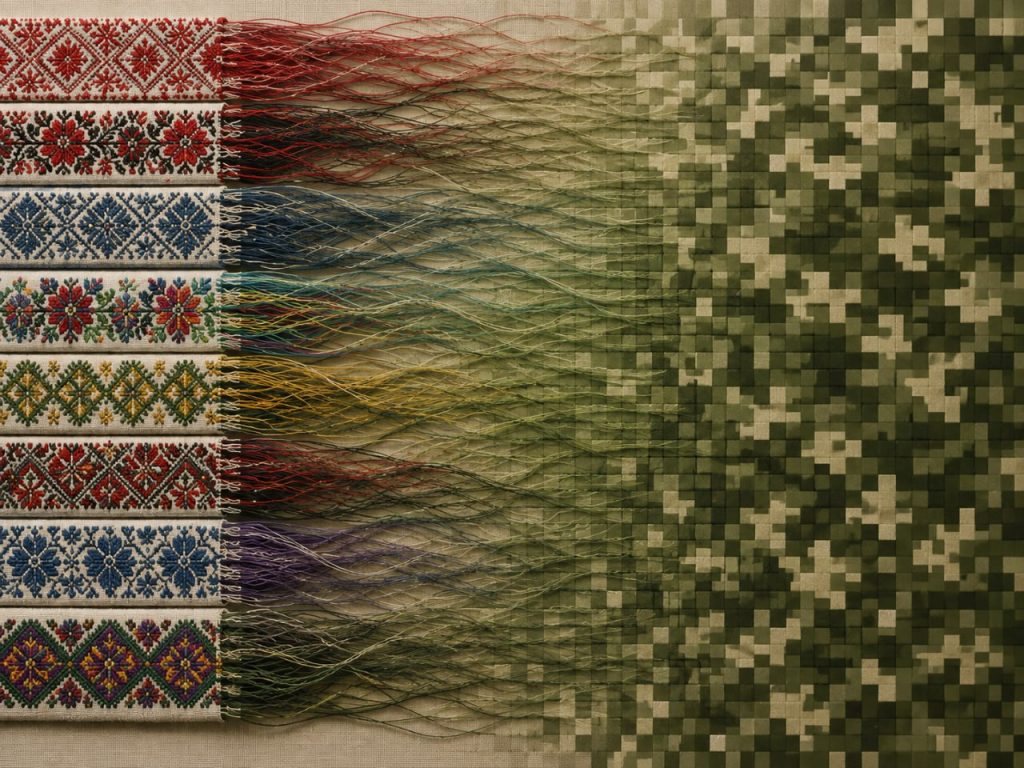

Over the past few years, each of us has changed. Some have lost their homes, some have lost loved ones, and some have gone to fight. We have all been given experiences we did not choose. And perhaps it is precisely now that we are asking ourselves with particular urgency: what remains unchanged within us? What makes us who we are?
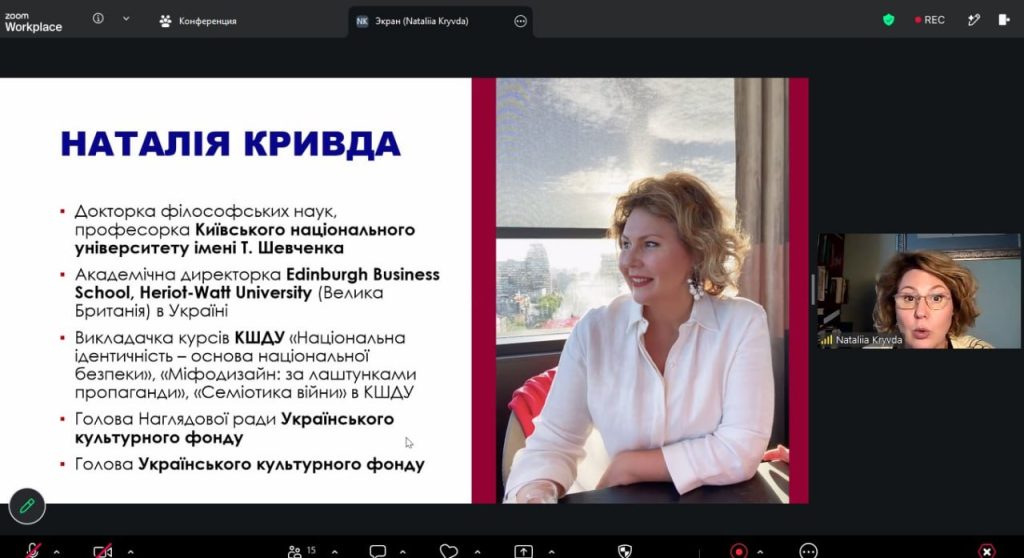
This question opened one of the key discussions of the “Youth for the Future of Ukraine” project – a youth webinar with Nataliia Kryvda, Doctor of Philosophical Sciences, Professor at Taras Shevchenko National University of Kyiv, and researcher of culture, identity, and cultural memory.
But the discussion quickly moved beyond the boundaries of a philosophical concept. In our guest’s interpretation, identity is not an abstract characteristic or simply an answer to the question “Who am I?” In wartime, it becomes a question on a much larger scale: who are we as a society, what are we willing to stay and defend our country for – and what do we want its future to look like?
Identity as a Matter of National Security
One of the central points of the webinar was the hypothesis that national identity is one of the keys to national security.
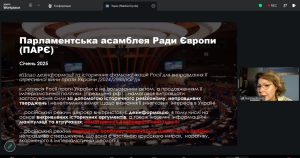
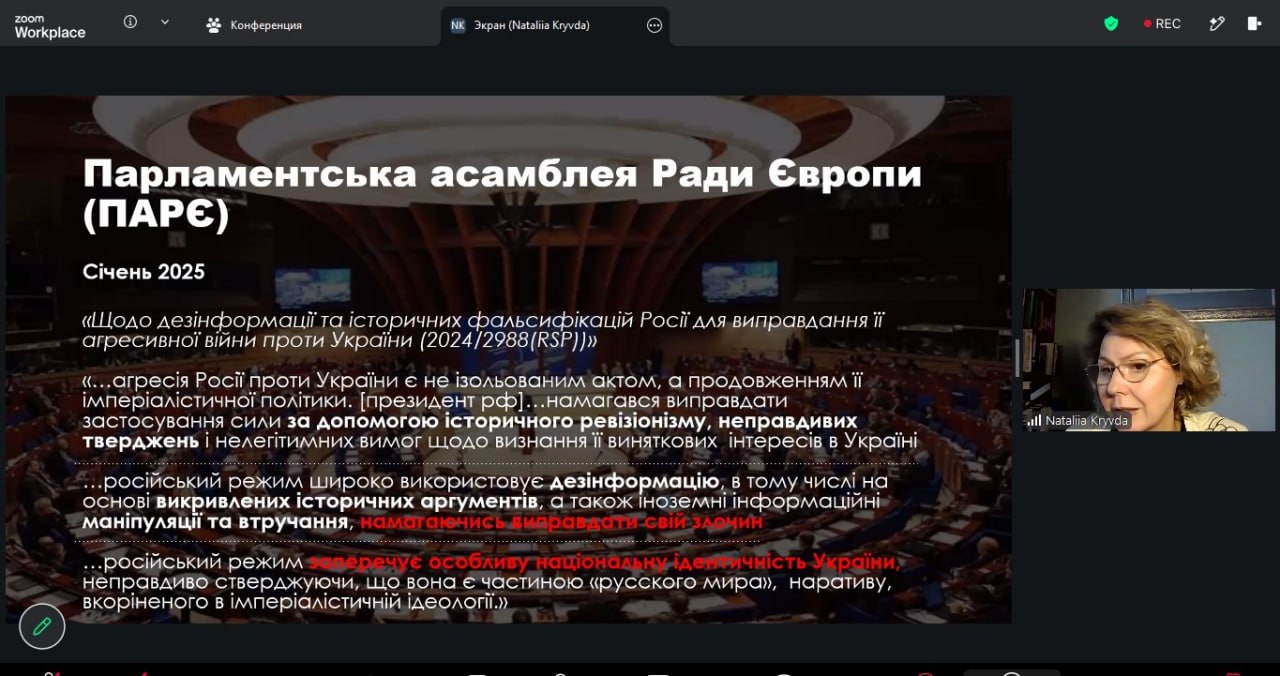
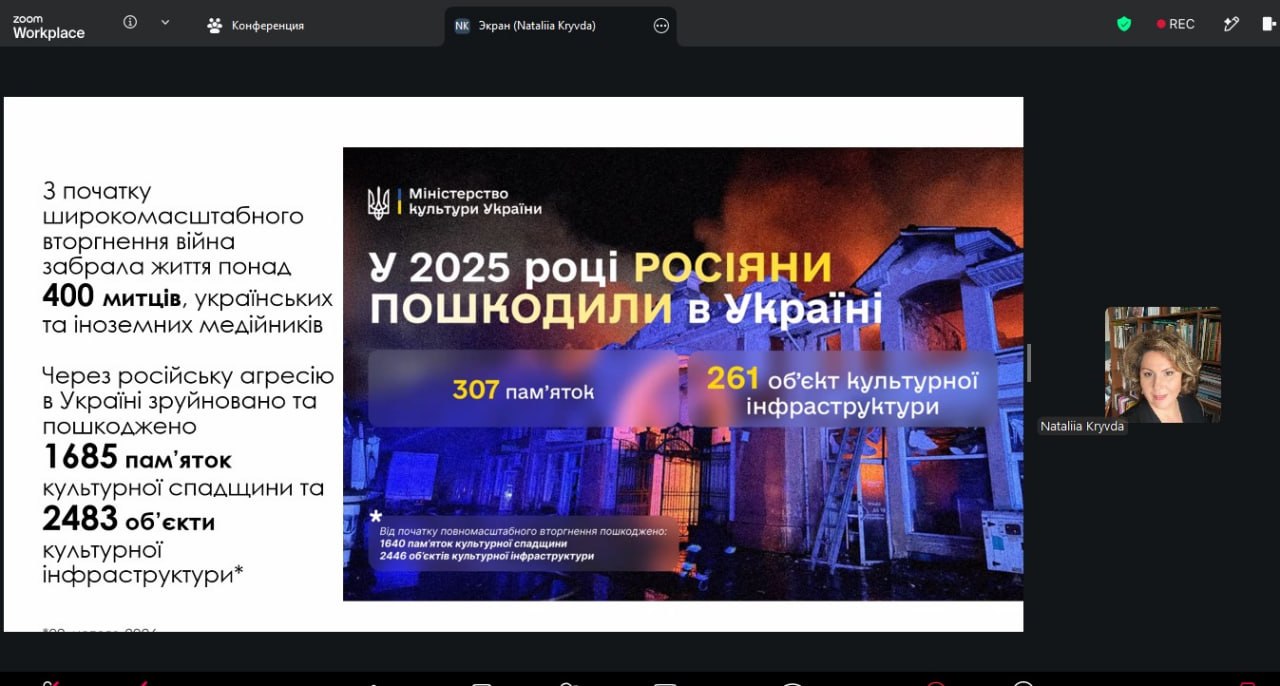
At first glance, the connection between culture and security may seem indirect. But, as Nataliia Kryvda emphasized, the Russian-Ukrainian war demonstrates the opposite. The aggression is directed not only against territory or resources – one of its targets is Ukraine’s very right to its own history, culture, memory, and worldview.
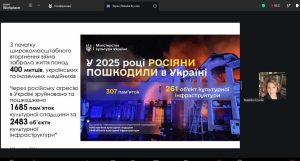
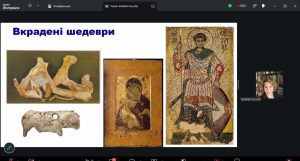
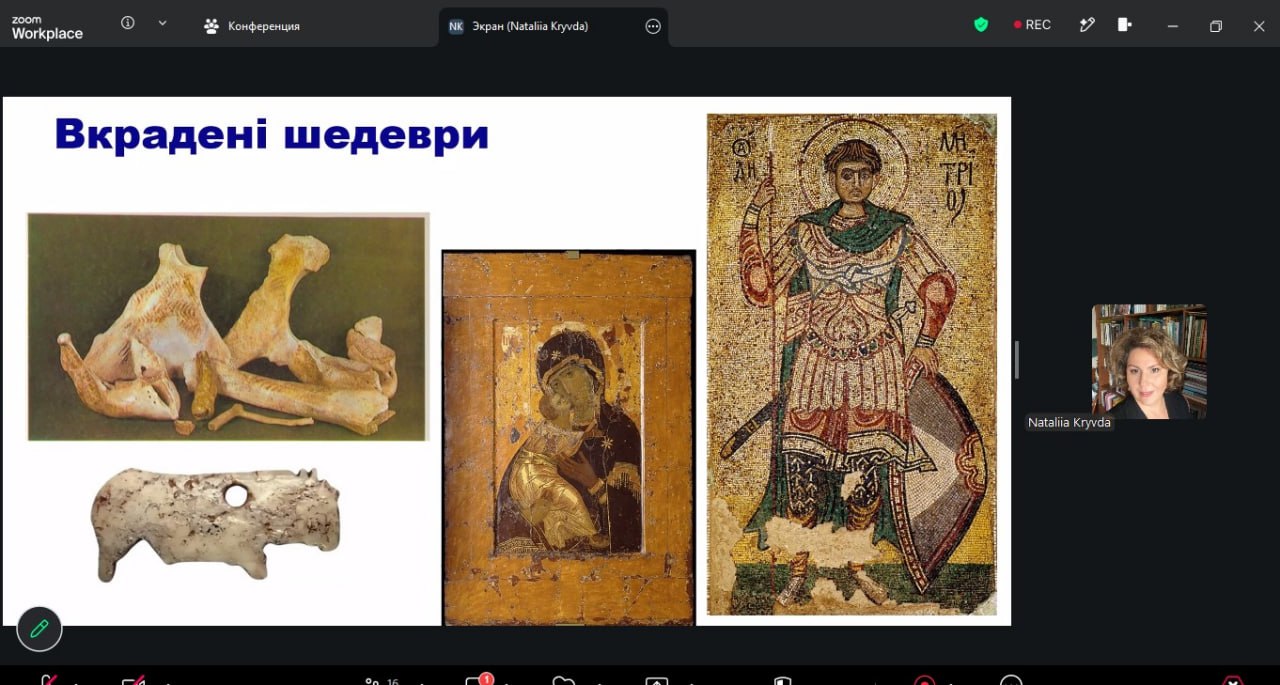
Therefore, the destruction of cultural heritage – museums, archives, monuments, churches – cannot be regarded as collateral damage. When an archive burns, part of our memory disappears. When a museum is destroyed, a future generation loses the opportunity to see material evidence of its own history.
In this war, culture becomes a battlefield for meanings. And while we previously spoke about information warfare or hybrid warfare, the researcher proposes speaking about cognitive confrontation – a struggle over how a person perceives the world, whom they trust, and what words they use to describe reality.
A Person Does Not Have Just One Identity
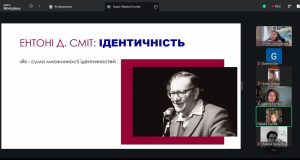
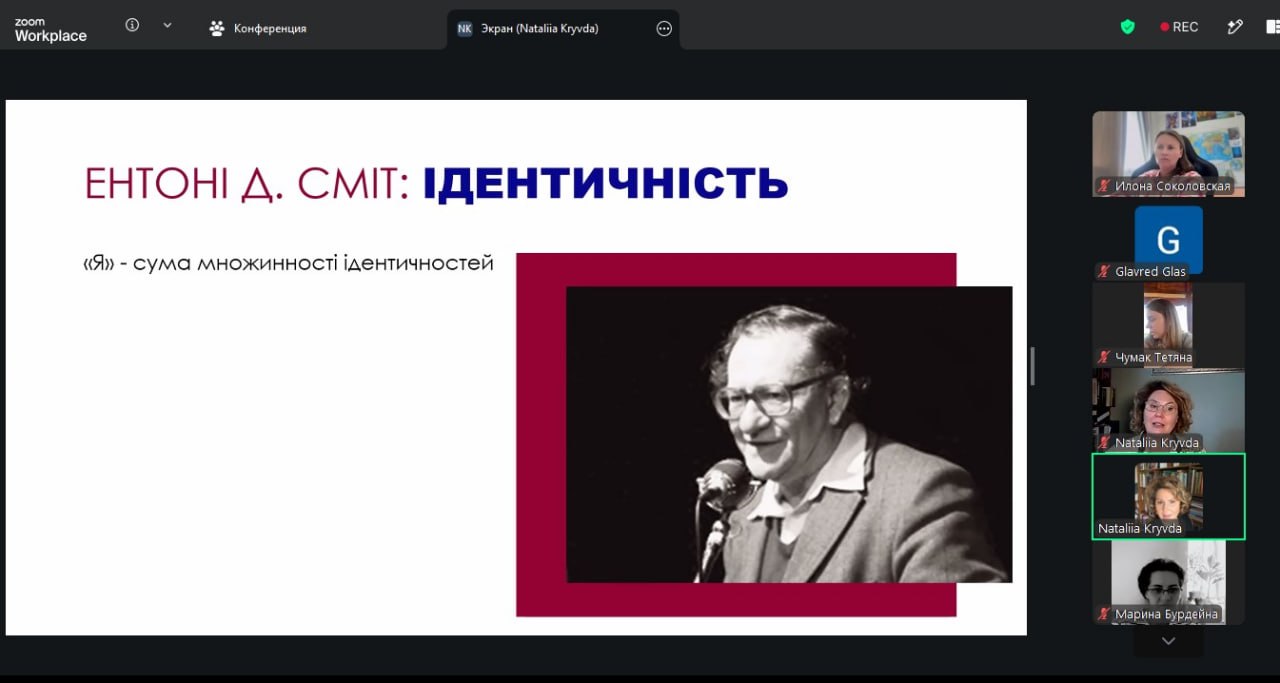
Nataliia Kryvda devoted a separate part of the discussion to the idea of multiple identities, drawing on the concept developed by British scholar Anthony Smith.
A person can simultaneously be a mother, a professional, a believer, a resident of Kyiv, a Ukrainian, and a member of a particular cultural community. These identities do not compete with one another – together, they form a complex picture of the individual.
But in moments of crisis, their hierarchy changes.
The speaker shared her own experience: after the beginning of the full-scale invasion, her professional identity – as a Doctor of Sciences and a director – temporarily receded into the background. Another question came to the forefront: what can I do for my country?
This experience allows us to see identity not as something fixed once and for all, but as a living system that changes together with the person and their circumstances.
One Does Not Become Ukrainian Only “by Blood”
The discussion about the nature of Ukrainian national identity was particularly important.
Nataliia Kryvda proposed considering it at the intersection of two approaches – the ethnocultural and the civic, values-based approach. On the one hand, Ukraine must restore what was destroyed for years: its language, culture, and memory – as well as the heritage of Crimean Tatars, Jews, Greeks, Gagauz, and other communities. On the other hand, the Ukrainian nation cannot be built exclusively on ancestry.
“I am only half Ukrainian,” the researcher said while speaking about her own roots. Her mother is Russian, has lived in Ukraine since 1954, speaks Ukrainian, and supports the army. Her daughter is of Georgian, Armenian, Russian, and Ukrainian descent – and has served as a combat medic since 2014.
For our guest, these are examples demonstrating that Ukrainian identity is not a matter of “blood,” but to a significant extent a matter of conscious choice. This is why she defines Ukraine as a political nation – a community of citizens of different backgrounds united by shared values and responsibility.
What Will Happen to Ukrainian Identity After the War?
The webinar participants also raised a more difficult question: if identity becomes so powerfully reinforced in times of crisis, does its strength depend on the existence of an external enemy? War creates a very powerful sense of “we.” But one day it will end. What, then, will remain the foundation of our unity?
The answer to this question is particularly important right now. Ukrainian society cannot build its future identity solely on trauma and confrontation. After victory, positive answers will be needed: what kind of country is Ukraine, what makes us want to live here, and what unites us apart from a common enemy?
Can the State Shape Identity?
Nataliia Kryvda emphasized that identity has long been a subject of state policy. Education – from kindergarten to university – is one of the most powerful instruments. But this raises a fundamental question: where is the boundary between supporting a shared identity and imposing the “correct” one?
This is particularly important in a democratic and multiethnic Ukraine, where people have different backgrounds, languages, religions, and cultural experiences. The researcher’s answer lies not in unification. Rather, it is about creating equal conditions for the development of different cultures while simultaneously building a shared civic space.
Identity Begins with Everyday Choices
An important part of the webinar was practical work: young people searched for concrete tools through which each person can strengthen Ukrainian identity.
These are not only large-scale state strategies. They include the language we use every day; the books we read; the museums we visit; the cultural products we support; volunteering and civic participation; the ability to think critically and recognize manipulation; and the willingness not merely to call ourselves part of a community, but to act as its members.
Perhaps this is the main conclusion of the discussion: Ukrainian identity is not a fixed construct. It is shaped by culture, memory, and circumstances – but also by our everyday choices.
As we rebuild Ukraine after the war, we will have to rebuild not only cities and institutions. We will also need to answer a more difficult question: what kind of society do we want to rebuild, and what exactly should hold it together?
And the answer may begin with a simple question: who are we – after everything that has happened to us?