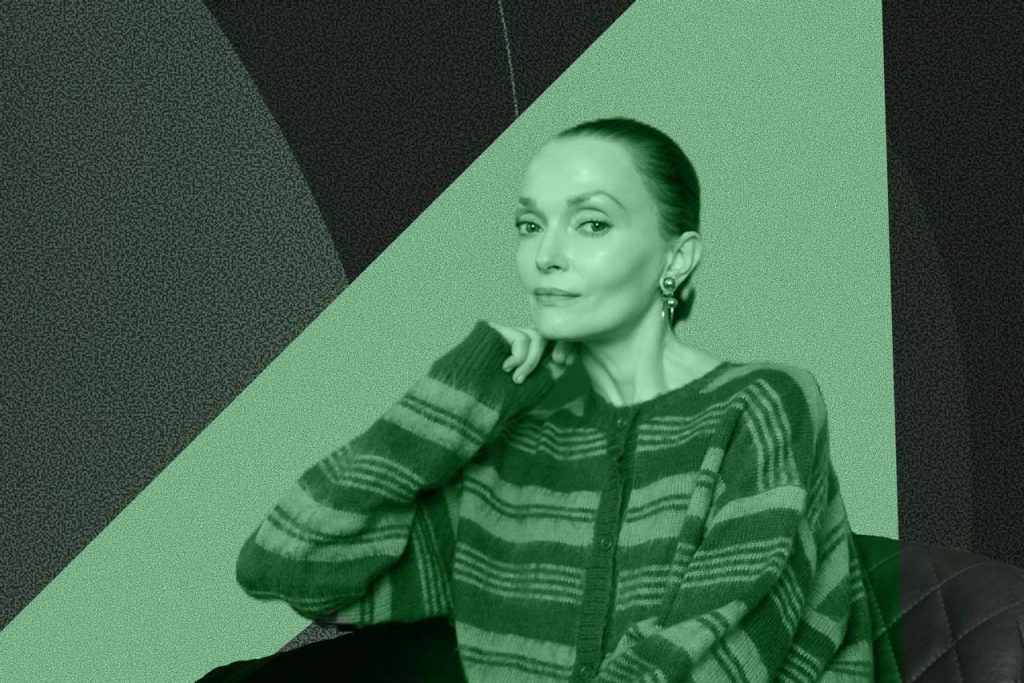


Archimandrite Cyril Hovorun, Doctor of Philosophy, Professor at Loyola Marymount University in Los Angeles and the Stockholm School of Theology
On the partnership between the Church, society, and the state, and on the growing complexity of the political landscape as a whole.
After the Maidan, Church-State Relations in Ukraine Became Three-Dimensional Rather Than Two-Dimensional
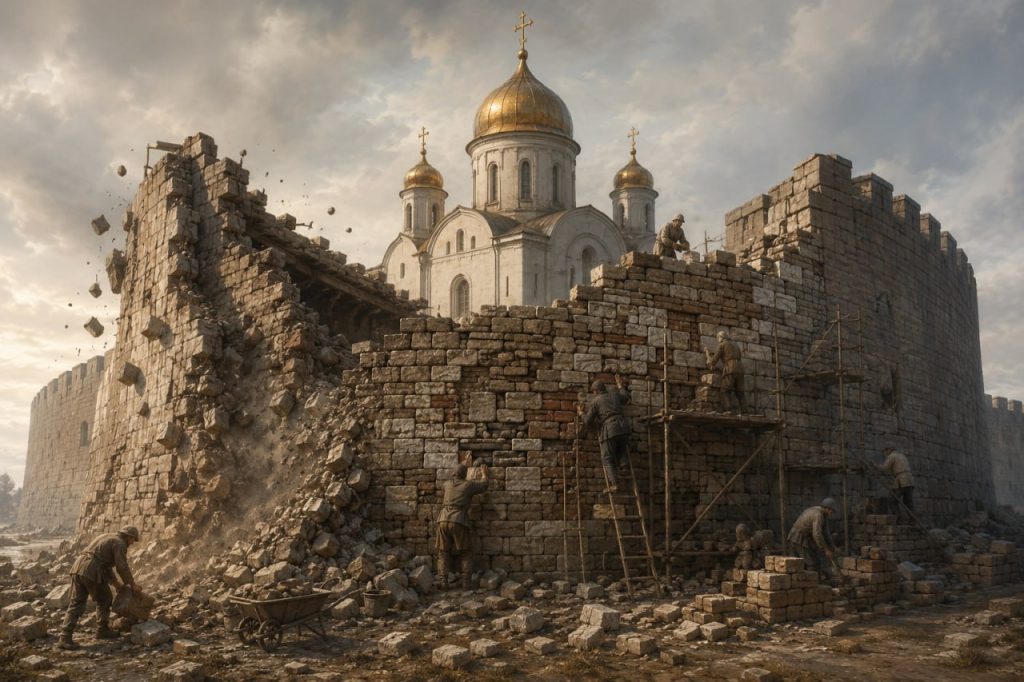
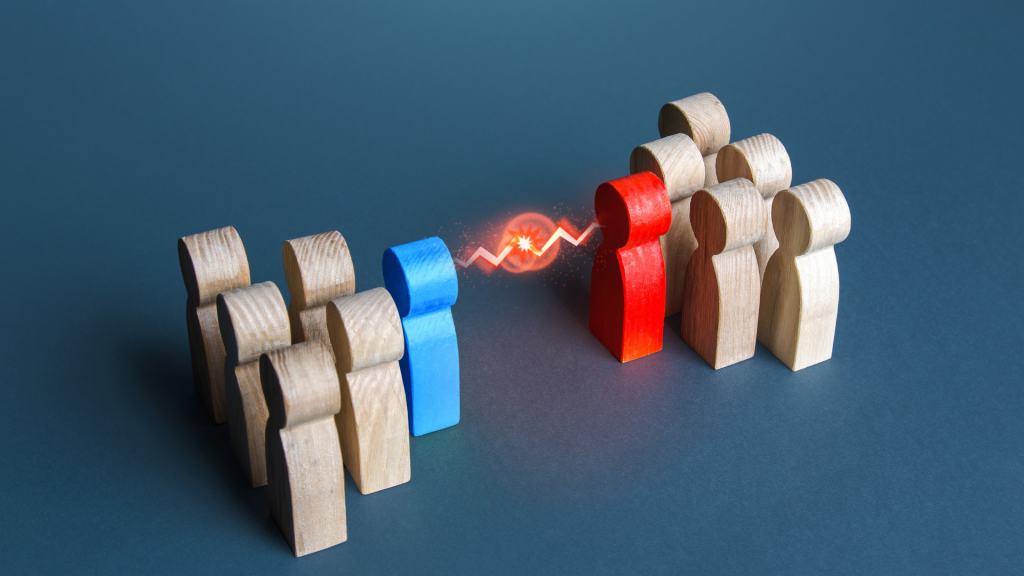
Whereas previously there was a strict Byzantine binary of “Church – state,” now there is a more intriguing triangle of “Church – society – state.” As with any transition from 2D to 3D, the Church-political picture has become more complex, but it now corresponds more closely to the rapidly evolving realities in Ukraine. Let us consider what this triangle looks like, and what it should look like, from the perspective of each of its corners.
From the Perspective of the Church
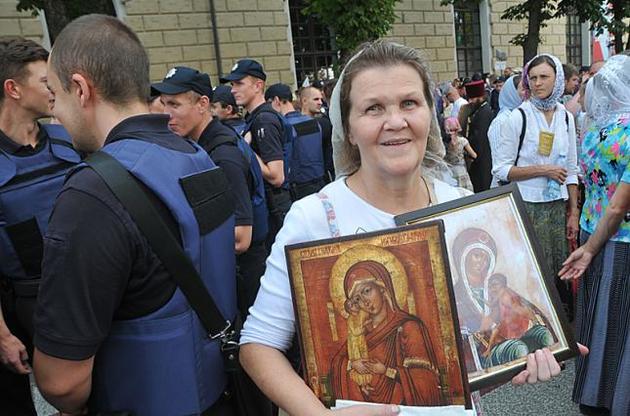
Practically all the so-called Churches of “Volodymyr’s Baptism” in Ukraine – that is, the Orthodox Churches and the Greek Catholic Church – inherited from that baptism a symphonic relationship with the state. The model of Byzantine symphonia was brought from the two shores of the Bosporus to both banks of the Dnipro together with the Gospel, and encoded itself into the DNA of the newborn ecclesiastical organism and all the other organisms that subsequently emerged from it. Therefore, even in Soviet times, when atheism became the political religion of the “land of the Soviets,” a distorted but nevertheless recognizable symphonia between the state and the Church was preserved. The true apostle of this symphonia, incidentally, was the then Exarch of the Russian Orthodox Church in the Ukrainian Soviet Socialist Republic, Metropolitan Filaret of Kyiv, who even now has not abandoned his service to the ideals of symphonia – this time with an independent state. In fact, all the Churches of “Volodymyr’s Baptism” sinned through symphonia in independent Ukraine. The Kyiv Patriarchate and the Ukrainian Autocephalous Orthodox Church had a stable partner: the Ukrainian president. For the Ukrainian Orthodox Church, partners changed: when the president sitting on Bankova Street did not want to be its symphonic partner, it sought symphonia with the president in the Kremlin. As for the Ukrainian Greek Catholic Church, although symphonia with the state did not correspond to the general framework of Catholic social doctrine, at the local level it often did not lag behind its Orthodox sisters in its symphonic aspirations.
The Maidan, as already noted, destroyed this two-dimensional idyll and confronted each Church with a choice: either the state or society. It was no longer possible to have both. And it must be said that on the Maidan the Churches chose, or at least demonstrated an intention to choose, society. Thus, a new partner was added to the traditional symphonia, and the triangle “Church – society – state” emerged – precisely in that order, with society preceding the state. It should be noted that this new structure remains fragile. For many members of the hierarchy of the Churches of “Volodymyr’s Baptism,” society and the state have switched places again, so that the latter has once more gained priority as a partner. Consequently, the equilateral triangle has begun to stretch along the “Church – society” side and contract along the “Church – state” side. Hence, the recommendation for the Churches is to keep all the angles at 60 degrees, so that the distance between them remains equal.
From the Perspective of Society
On Ukraine’s Maidans, civil society was born and underwent its rites of initiation, transforming itself into an actor whose agency was commensurate with that of the state. Society learned to become a force capable of controlling the state. In a country where there is a void instead of the rule of law, civil society filled that void. Even now, it is civil society that controls the state where the law itself should exercise that control. Speaking in the language of Byzantine political culture, society has become a “living law” in Ukraine.
On the Maidan, just as the Church discovered society, society also discovered the Church. Usually, during revolutions similar to Ukraine’s Revolution of Dignity, the Church and society look at one another from opposite sides of the barricades. In Ukraine, they found themselves on the same side. The Church recognized the agency of Ukrainian society, and Ukrainian society recognized the agency of the Church. This is why Ukraine’s rather secular civil society supported, with enthusiasm unusual for a European country, what might have seemed to be an internal Church matter concerning the Tomos and autocephaly. It diligently learned these new words and is still trying to learn how to read between the lines of the Byzantine rhetoric that the Orthodox Churches employ like a secret language in the prolonged marathon of recognition of the Orthodox Church of Ukraine. This is a good thing, because it makes it possible, in the near future, to avoid a conflict between the Church and Ukrainian civil society of the kind that frequently arose in Western societies during the secular era as democracy developed there. These societies are now trying to deal with the consequences of those conflicts by embracing concepts such as post-secularism, whereas the Maidan itself helped Ukraine avoid the negative consequences of total secularization.
However, being friendly toward the Church does not mean being uncritical. Society should learn to defend the principles of justice and the rule of law in its relations with the Church gently but firmly – just as it does in its relations with the state. This does not require interference in the internal affairs of the Church – that would be a mistake. Instead, society should develop its own centers within the Church. In fact, this is already happening naturally. Many believers are also active members of civil society. They know both the Church and civil society from within. They love their Church, but they are also aware of the shortcomings of its leadership and the chronic illnesses that continually afflict it. Thus, they know how and want to act within the Church as advocates of the principles of civil society. Examples of such interaction between the Church and society include the “First of December” Initiative Group, which includes Church figures alongside secular figures, as well as the group called “Ten Theses for the Orthodox Church of Ukraine.” It is precisely those believers who understand the principles of civil society who can and should keep the Church in a healthy state, prevent it from slipping back into the two-dimensionality of Church-state symphonies, and develop healthy inter-Church and interreligious relations in Ukraine.
From the Perspective of the State
Both civil society and the state must respect the internal sovereignty of the Church while at the same time developing a partnership with it. Partnership is cooperation between equals by mutual consent. This is precisely what Church-state relations in Ukraine should be.
The state has done much to facilitate the development of the autocephalous Orthodox Church of Ukraine. It did so primarily by defending the country against Russian aggression. This is why it was more concerned that an independent local Church in Ukraine should exist than with what kind of Church it would be. Indeed, the state should not determine the quality of Church life or a citizen’s choice of one Church or another. The state’s primary task is to ensure the possibility of such a choice, not to make the choice itself.
It is good that the new government has declared neutrality toward Ukrainian denominations and jurisdictions. In putting this neutrality into practice, the state should remember why the need for Ukrainian autocephaly arose: because of Russian aggression and the active or passive cooperation with the aggressor by what was then the only canonical Church in Ukraine. At the same time, while maintaining neutrality, the state should not wink with either its left or its right eye at any of the Ukrainian jurisdictions.
The dream of Presidents Kravchuk, Yushchenko, and Poroshenko was a single Local Church of Ukraine. In reality, this meant creating an ecclesiastical monopoly that would be easier for the state to control than a conglomerate of Churches. Therefore, in my view, there is nothing tragic about the fact that such an ecclesiastical monopoly did not materialize. At least two canonical Orthodox jurisdictions will coexist in Ukraine for many years to come: the Moscow jurisdiction and the autocephalous one. The only problem in their coexistence is the quarrels between them. The state should not control these jurisdictions themselves, but should ensure that they do not break each other’s heads. Therefore, all attention should be directed toward ensuring that the two Orthodox Churches first recognize each other’s right to exist and subsequently begin to cooperate. The state must put an end to any attempts at defamation or violence using the legal instruments at its disposal. From the state’s perspective, all jurisdictions and every hierarch must be equal before the law, including equal in their accountability to the law.
And finally: at the decisive hour, before the next elections, this government, despite its declared indifference toward religion – just like every previous government – will be tempted to use the Church as a resource in order to gain additional political points. Church resources have not helped any previous government. Therefore, it is not even worth trying.
Source: Mirror Of The Week