
Can a state protect itself without restricting freedom of conscience? And can the state remain neutral if the religious sphere becomes a space of real security risks?
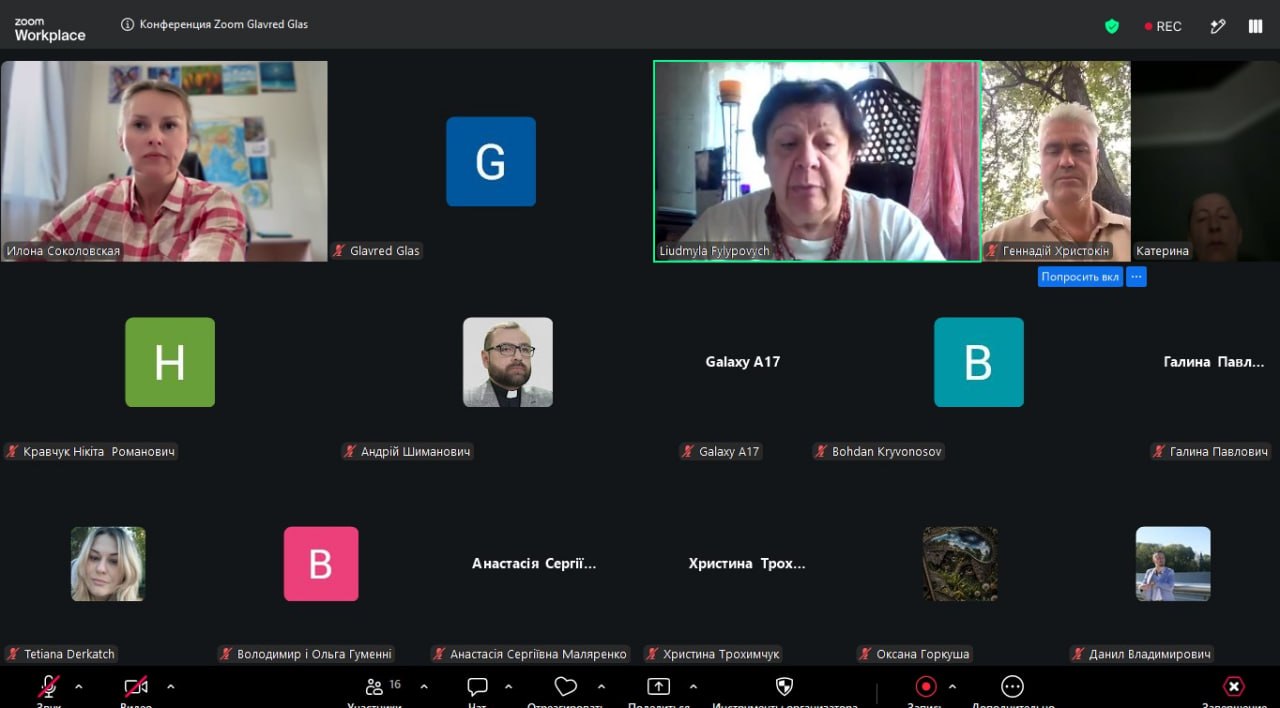
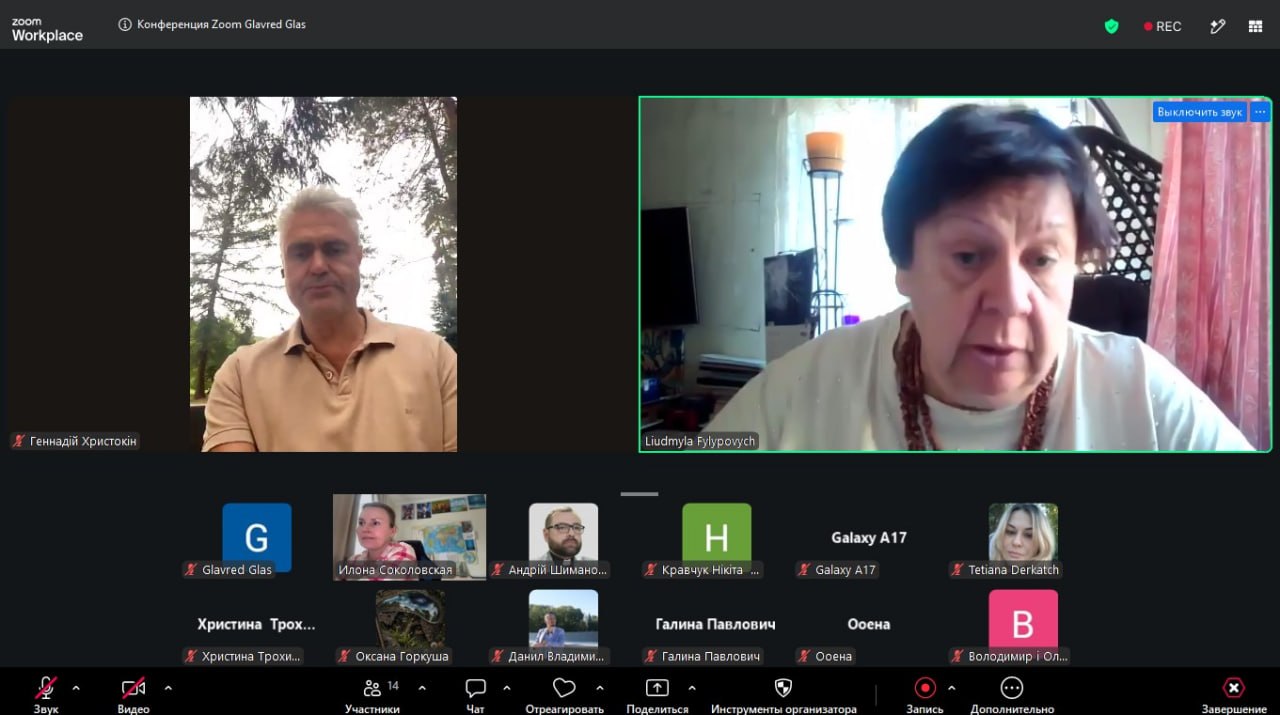
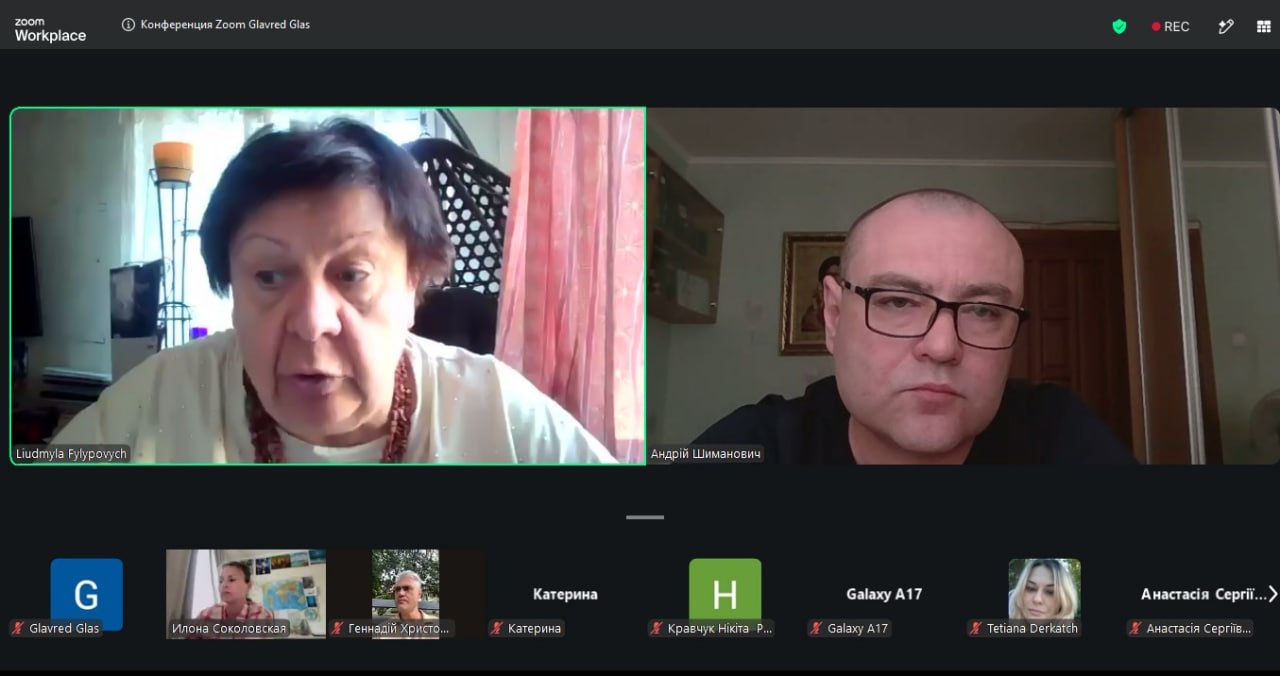
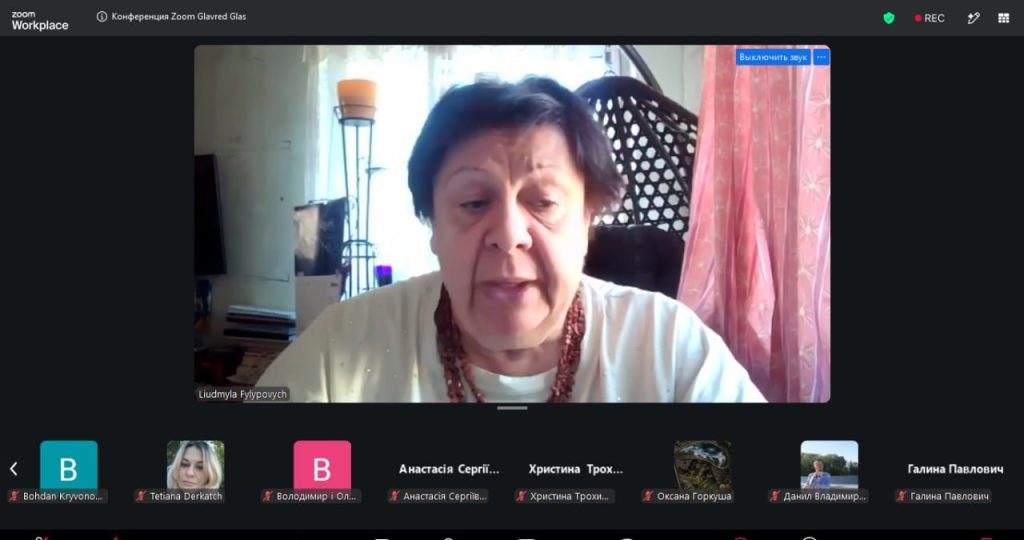
These questions were at the center of the webinar “How Can Freedom of Religion and National Security Be Reconciled? Is It Time to Work on Religious Security?”, whose guest was Dr. Liudmyla Fylypovych – Doctor of Philosophy, Professor, Leading Research Fellow at the Department of Religious Studies of the H. S. Skovoroda Institute of Philosophy of the National Academy of Sciences of Ukraine, and President of the Ukrainian Association of Researchers of Religion.
The discussion took place within the youth project “Youth for the Future of Ukraine: Dialogue, Research and Creative Media Work for the Consolidation of Ukrainian Society and Orthodoxy”, implemented with the support of the German government (Zivik/IFA).
War Does Not Abolish Freedom – But It Changes the Context
One of Dr. Liudmyla Fylypovych’s key points was simple, yet far-reaching: war does not abolish freedom of conscience and religion. At the same time, it changes the security context in which that freedom is exercised.
Therefore, in the lecturer’s view, Ukraine needs not an approach in which an entire religious community automatically comes under suspicion, but a risk-based model.
Its logic is that the higher the proven threat, the more justified state restrictions may be. But such restrictions must concern specific actions, specific individuals, and specific proven risks, rather than a person’s faith, convictions, or denominational affiliation as such.
This is particularly important in a situation where religious issues in Ukraine are becoming increasingly intertwined with questions of war, national security, and Russian influence.
Not Faith, but Activity
Dr. Liudmyla emphasized a fundamental distinction: the state should not interfere in what a person believes, but it must respond to specific activities if they go beyond the lawful exercise of religious freedom and create a real threat.
This also applies to religious organizations that maintain ties with foreign structures.
In this context, it is important to distinguish between the mere fact of international or ecclesiastical contacts and cases in which religious infrastructure may be used for political propaganda, justification of aggression, recruitment, incitement of hostility, or other activities that pose a danger to society.
This is precisely where, according to the lecturer, evidence, expertise, and law are needed rather than public stigmatization.
Religious Security: A New Ukrainian Concept
Special attention during the webinar was given to the concept of “religious security.”
Dr. Liudmyla noted that this concept has largely taken shape specifically within Ukrainian academic discourse. This is no coincidence: the experience of the full-scale war has confronted Ukraine with questions for which previous models have often proved insufficient.
Under the proposed approach, religious security does not mean “protecting the state from religion.” On the contrary, it refers to a social order in which freedom of conscience, religious pluralism, and protection against the use of the religious sphere for violence, hostility, external political control, or destabilization are ensured simultaneously.
Within this system, there are at least three levels of security: the security of the individual, the security of the religious community, and the security of the state and society.
And finding a balance between them is the most difficult task.
When Does a Denominational Conflict Become a Matter of National Security?
The most acute part of the discussion concerned Ukrainian Orthodoxy.
The war has made particularly visible what previously often remained within the ecclesiastical sphere: disputes between the Ukrainian Orthodox Church and the Orthodox Church of Ukraine are now perceived by society not only as theological or canonical disagreements. For some Ukrainians, church affiliation has become a matter of national identity and security. For others, by contrast, attempts to equate denominational affiliation with political position represent a dangerous substitution of concepts. This is where one of the most difficult dilemmas of contemporary Ukraine arises: how can a real threat be distinguished from collective suspicion?
During the webinar, the view was expressed that certain positions and practices do indeed exist within some environments of the UOC that require a response from the state. At the same time, this does not mean that responsibility for them can automatically be extended to all clergy and believers of that Church.
After all, freedom of conscience also includes the right of a person to belong to a religious community, to change their beliefs, or not to profess any religion at all.
Who Defines the Boundary?
One of the most important issues discussed during the webinar was that of expert assessment.
Dr. Liudmyla Fylypovych drew attention to the fact that contemporary Ukraine is experiencing an acute shortage of specialists capable of understanding religious systems, law, social processes, and the security context at the same time. Simply reading a statute or a doctrinal text is not enough. A dangerous idea may be formulated in very neutral terms, while its consequences may become apparent only in practice. At the same time, the same religious concept may be implemented differently by different individuals and communities.
Therefore, the issue is not only what is written in a text, but also how these convictions are put into practice. This requires not political labeling, but serious interdisciplinary work.
Does Ukraine Need a Civil Religion?
Another line of discussion proved no less interesting – the conversation about civil religiosity. Ukrainian society is indeed undergoing a process of forming a shared system of symbols, memory, heroes, and values. The war has intensified this process. But this raises the question: can a shared civic identity turn into a demand for uniformity?
A fundamental point was made during the discussion: Ukrainian unity does not necessarily have to mean denominational unity. People can belong to different religious traditions, hold different theological views, and at the same time remain part of one civic society. This is why it is especially important that shared Ukrainian values do not become a tool for determining who is a “proper” or “improper” citizen.
The Front as a Space for a Different Kind of Interaction
Paradoxically, the war itself has in some situations demonstrated the possibility of much broader religious interaction. The webinar referred to the experience of military chaplaincy, in which representatives of one Christian tradition try to meet the spiritual needs of a servicemember even when those needs go beyond their own denominational practice. This invites us to view interdenominational dialogue not merely as a fine declaration, but as a practical response to human needs.
At the same time, it raises difficult questions for the state concerning equality among religious organizations, access to chaplaincy service, and the criteria according to which one denomination receives certain opportunities while another does not.
Not to Defeat One Another, but to Learn to Live Together
The intense discussion during the webinar showed that Ukrainian society today is far from having a single answer to the question of where exactly the boundary between religious freedom and security lies.
And perhaps that is normal. Because this boundary cannot be defined solely by the emotions of wartime. But neither can it be defined as though the war did not exist. Ukraine must simultaneously protect itself from real threats and preserve the freedom for which it is fighting.
That is why it is especially important to distinguish between faith and action, the individual and the institution, conviction and crime, denominational affiliation and political position.
And perhaps the most difficult task for Ukrainian society after the war will not be to make everyone the same, but to learn how to remain together while being different.
For the younger generation, this issue will be especially important. It is young Ukrainians who will determine whether diversity becomes a source of conflict – or, on the contrary, one of the signs of a mature democratic society.
The webinar with Dr. Liudmyla Fylypovych became part of this broader conversation – about freedom, responsibility, security, and the future of Ukraine.
The project “Youth for the Future of Ukraine: Dialogue, Research and Creative Media Work for the Consolidation of Ukrainian Society and Orthodoxy” is implemented with the support of the German government (Zivik/IFA).