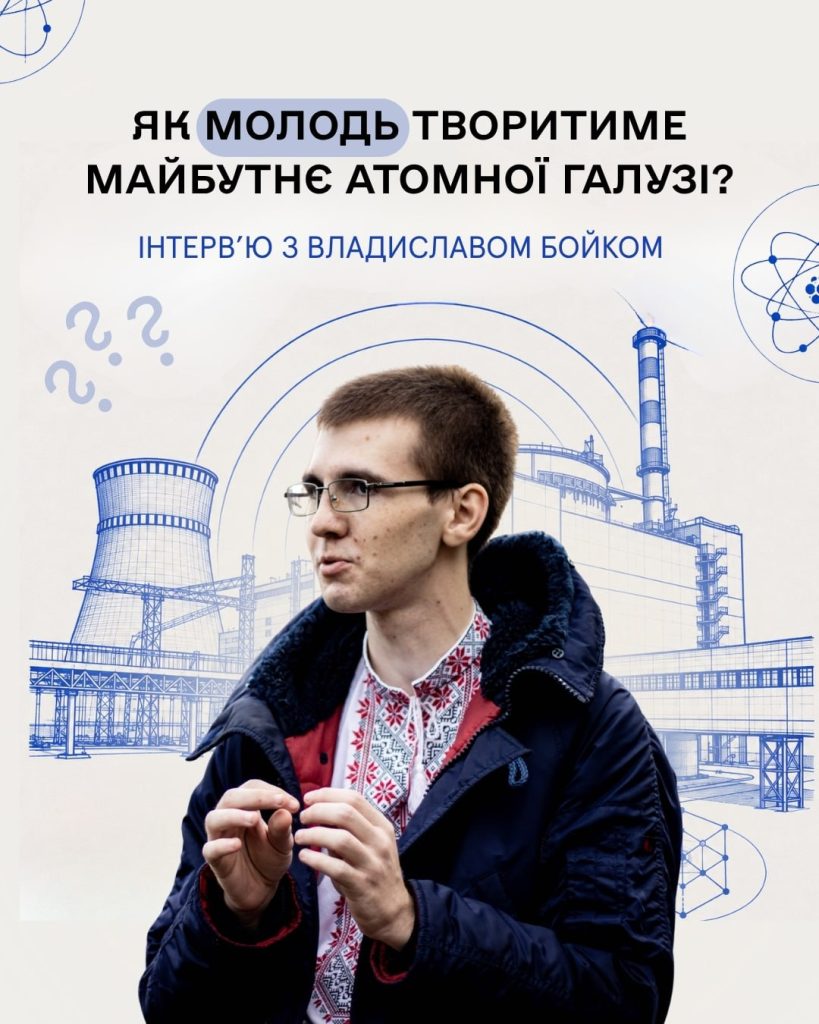
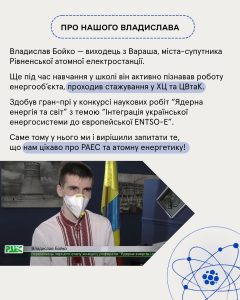
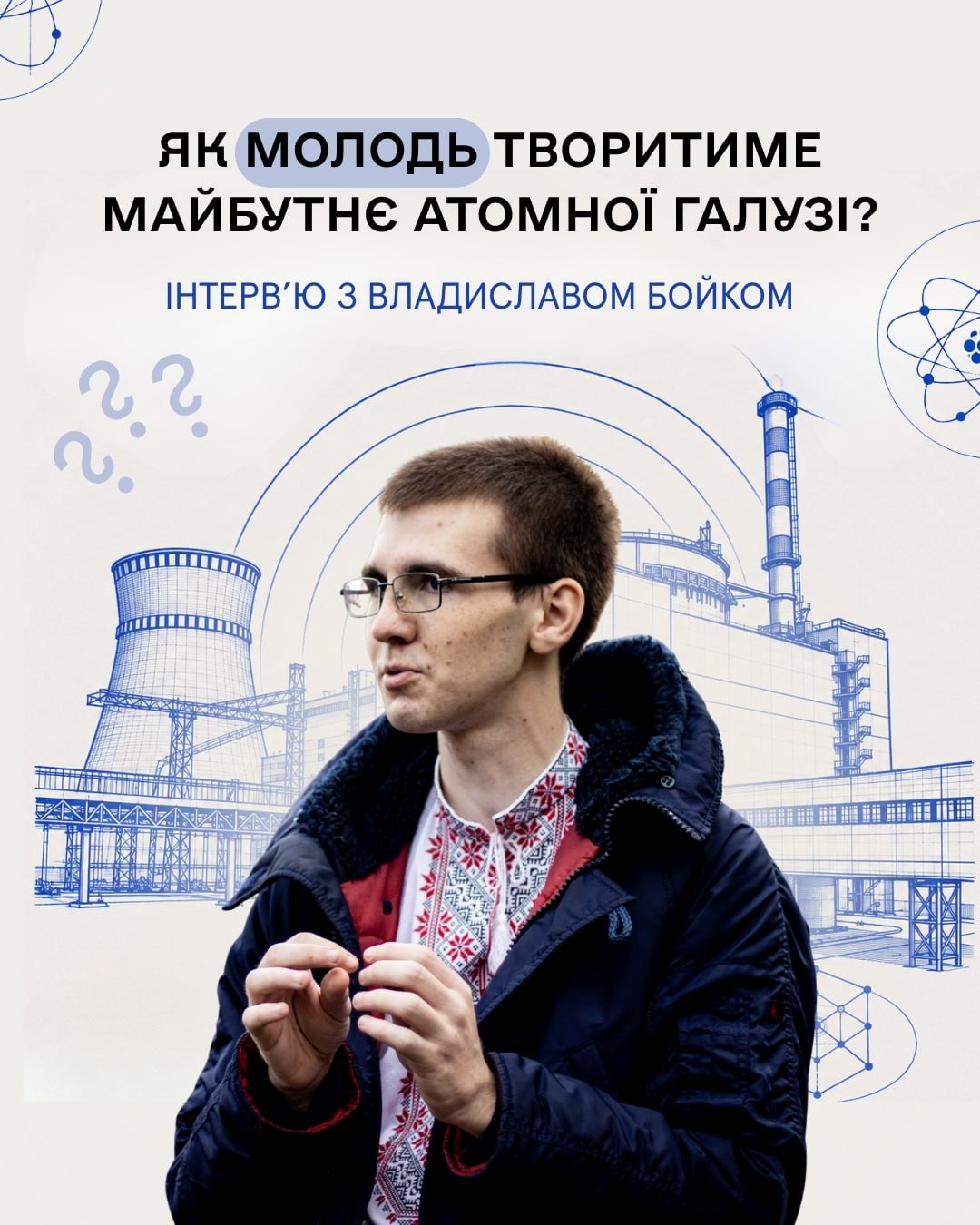
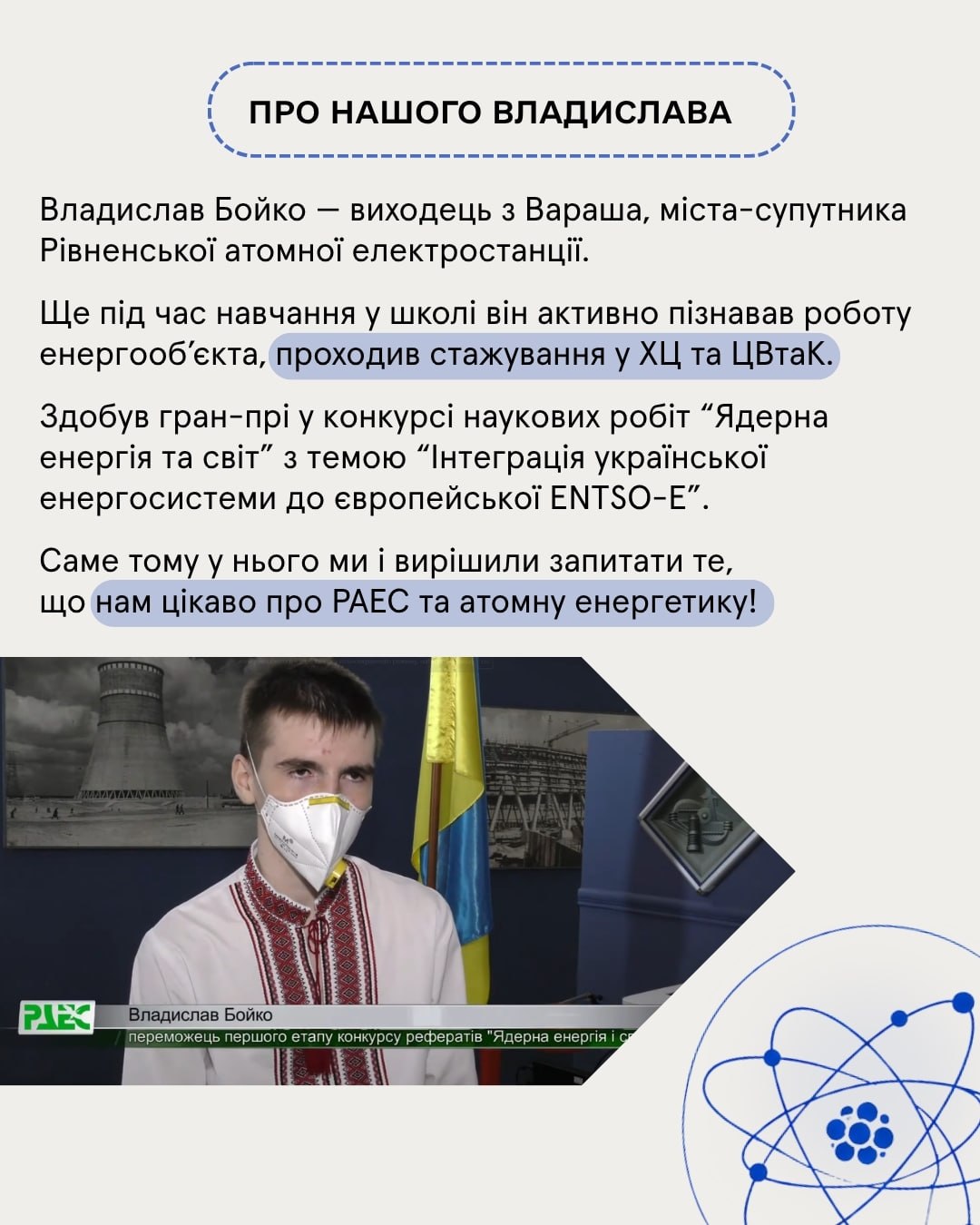
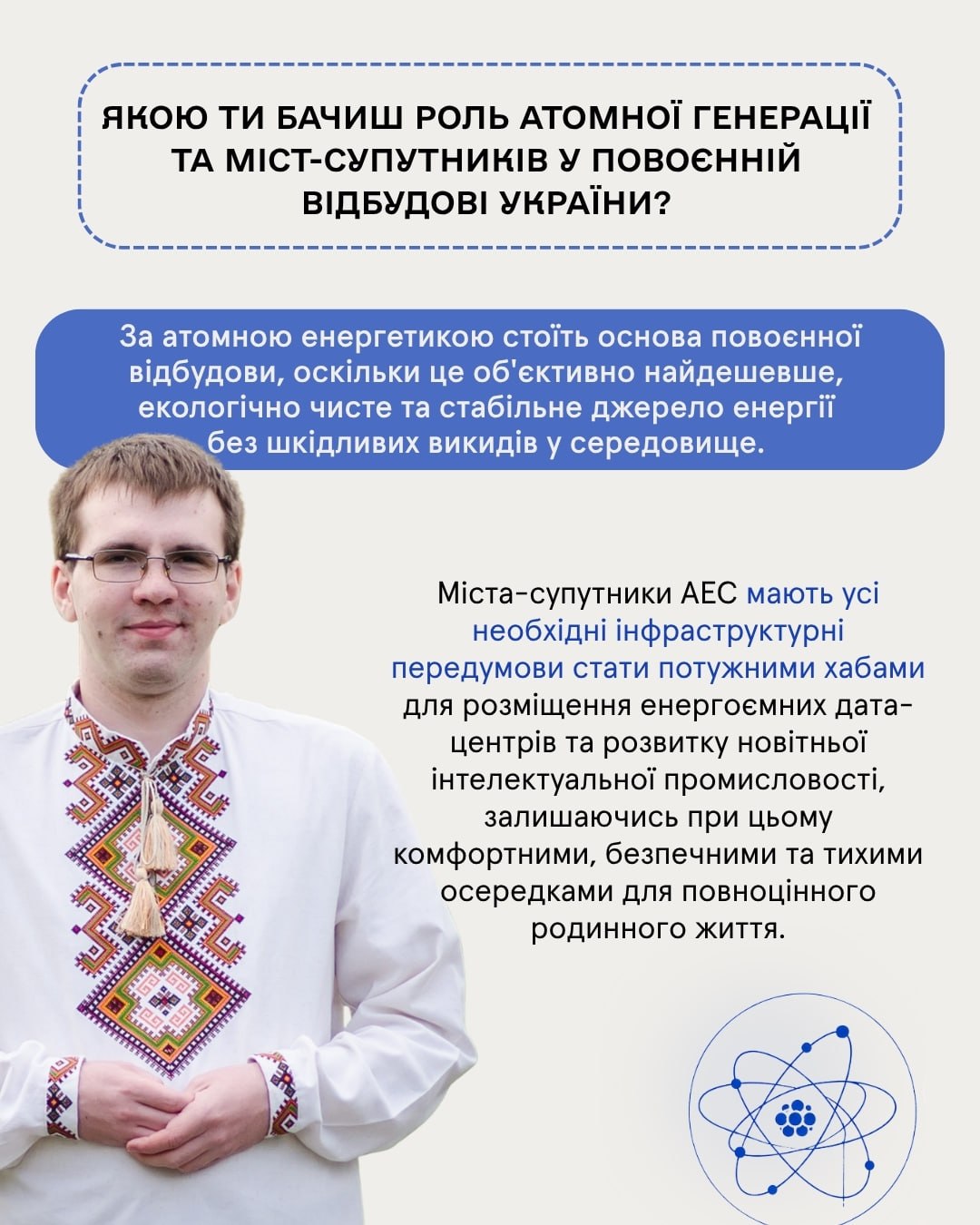
Vladyslav Boiko is a native of Varash, the satellite city of the Rivne Nuclear Power Plant. While still at school, he actively explored the operation of the energy facility and completed internships at the Chemical Department and the Ventilation and Air Conditioning Department. He won the Grand Prix in the “Nuclear Energy and the World” scientific research competition with his project titled “Integration of the Ukrainian Power System into the European ENTSO-E Network.” That is why we decided to ask him the questions that interest us about the Rivne Nuclear Power Plant and nuclear energy!
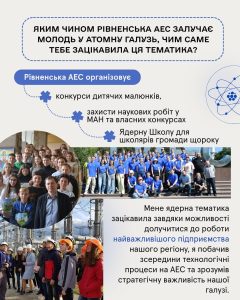
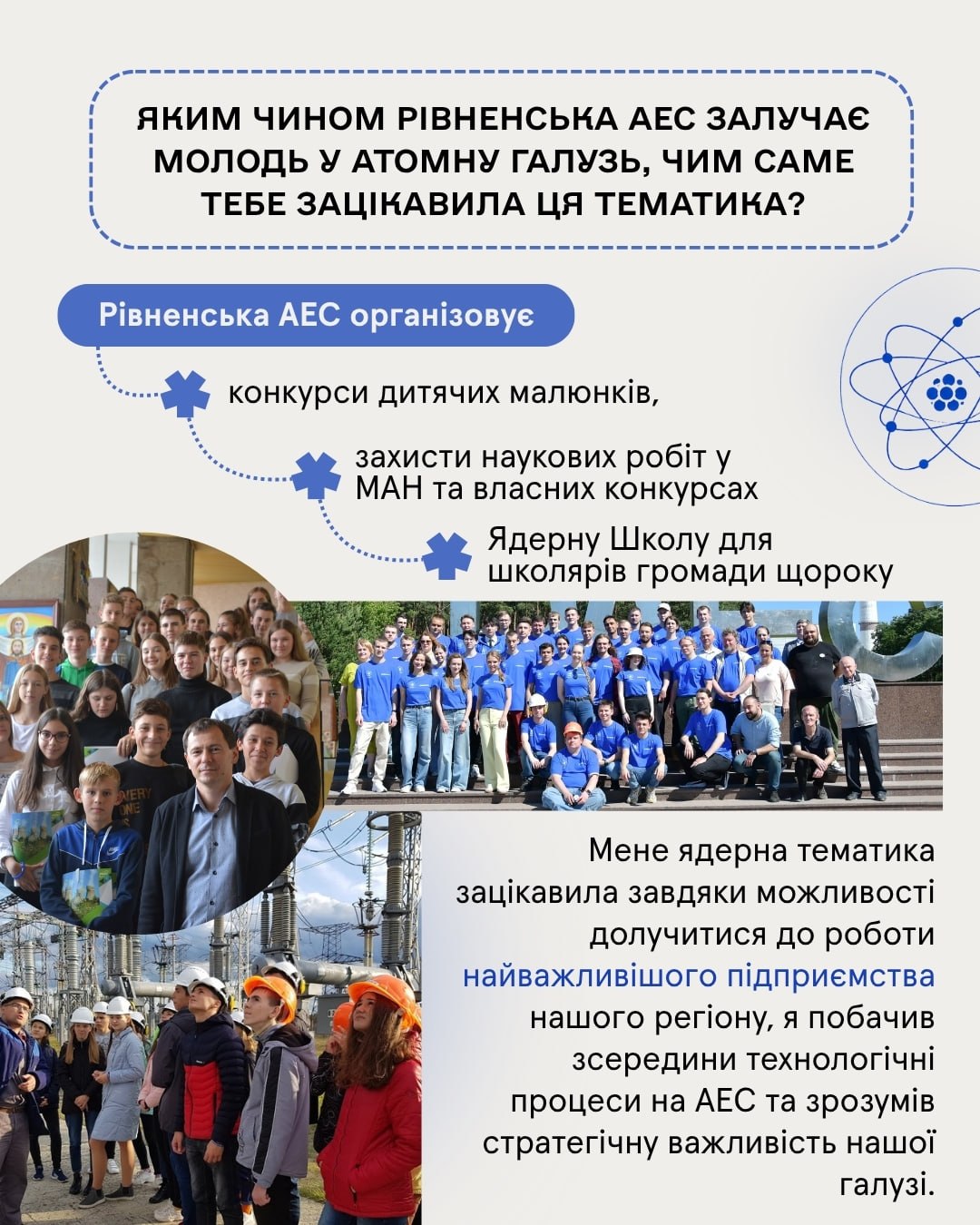
1. How does the Rivne Nuclear Power Plant engage young people in the nuclear energy sector, and what specifically sparked your interest in this field?
The Rivne Nuclear Power Plant organizes children’s drawing competitions, presentations and defenses of scientific research projects within the Junior Academy of Sciences of Ukraine and its own competitions, and holds an annual Nuclear School for school students from the local community. I became interested in nuclear energy because of the opportunity to become involved in the work of the most important enterprise in our region. I was able to see the technological processes at the nuclear power plant from the inside and came to understand the strategic importance of our industry.
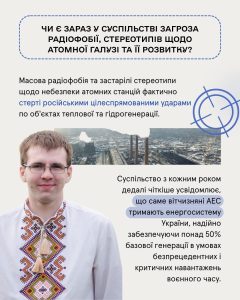
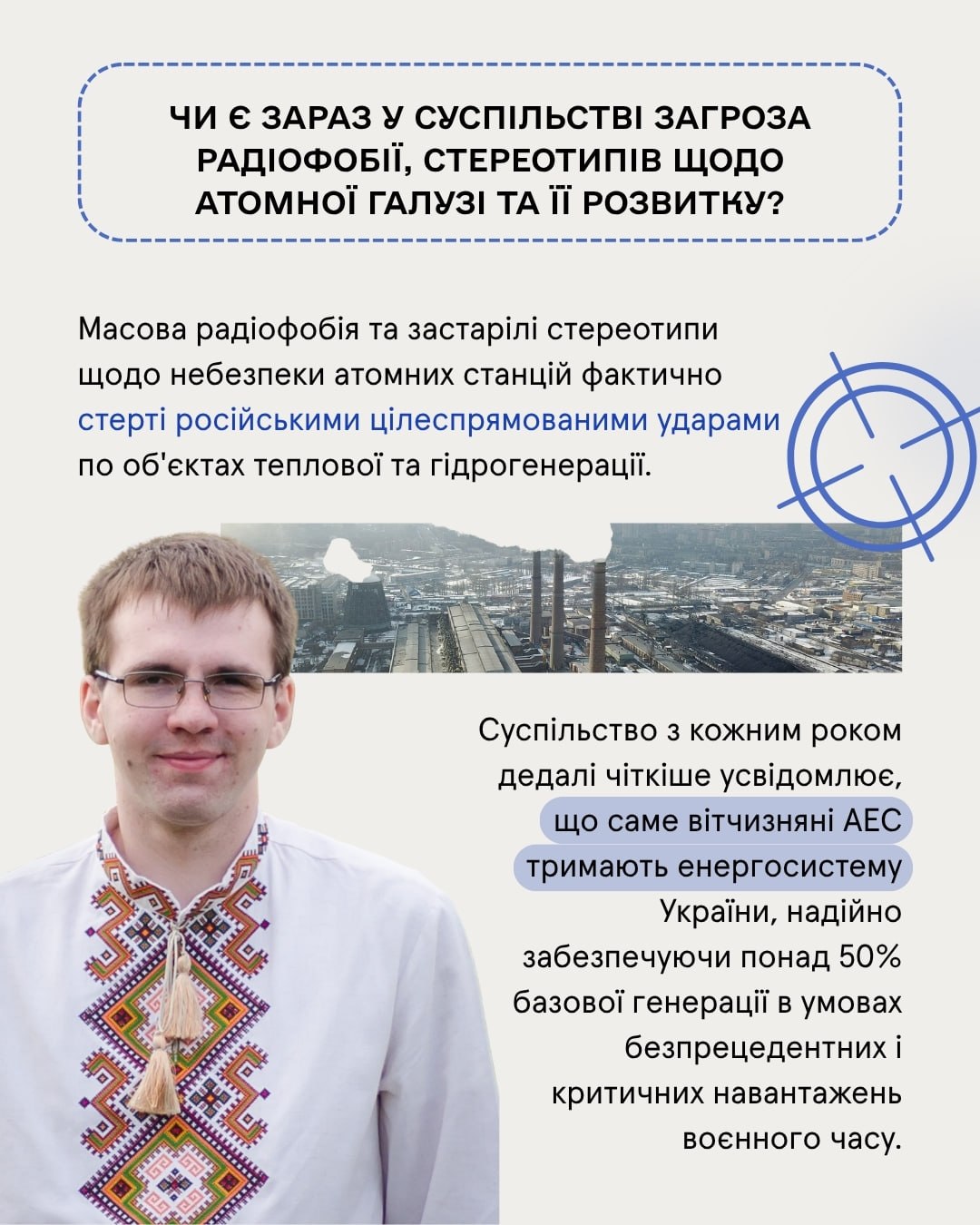
2. Is there currently a risk of radiophobia and stereotypes about the nuclear energy sector and its development within society?
Widespread radiophobia and outdated stereotypes about the dangers of nuclear power plants have effectively been erased by Russia’s deliberate strikes against thermal and hydroelectric power generation facilities. With each passing year, society is becoming increasingly aware that it is Ukraine’s nuclear power plants that sustain the country’s power system, reliably providing more than 50 percent of baseload electricity generation under the unprecedented and critical pressures of wartime.
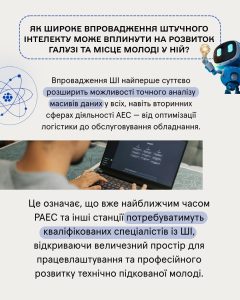
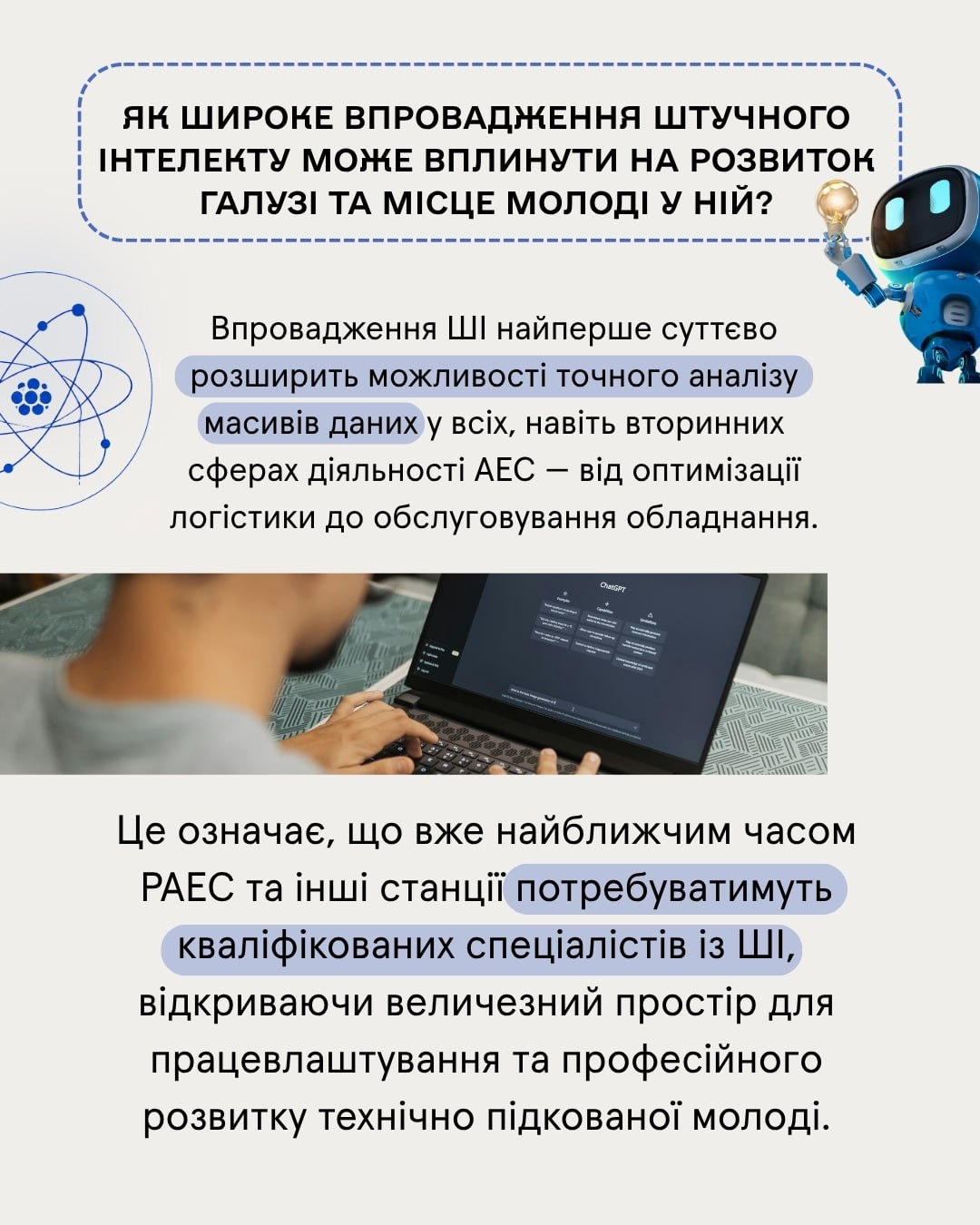
3. How could the widespread adoption of artificial intelligence affect the development of the industry and the role of young people within it?
First and foremost, the introduction of artificial intelligence will significantly expand the possibilities for the precise analysis of large volumes of data across all areas of nuclear power plant operations, including even secondary areas – from logistics optimization to equipment maintenance. This means that, in the very near future, the Rivne Nuclear Power Plant and other nuclear power plants will require qualified artificial intelligence specialists, opening up enormous opportunities for employment and professional development for technically skilled young people.
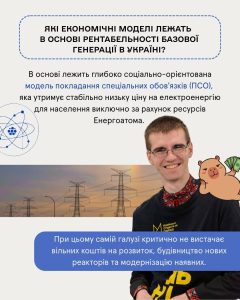
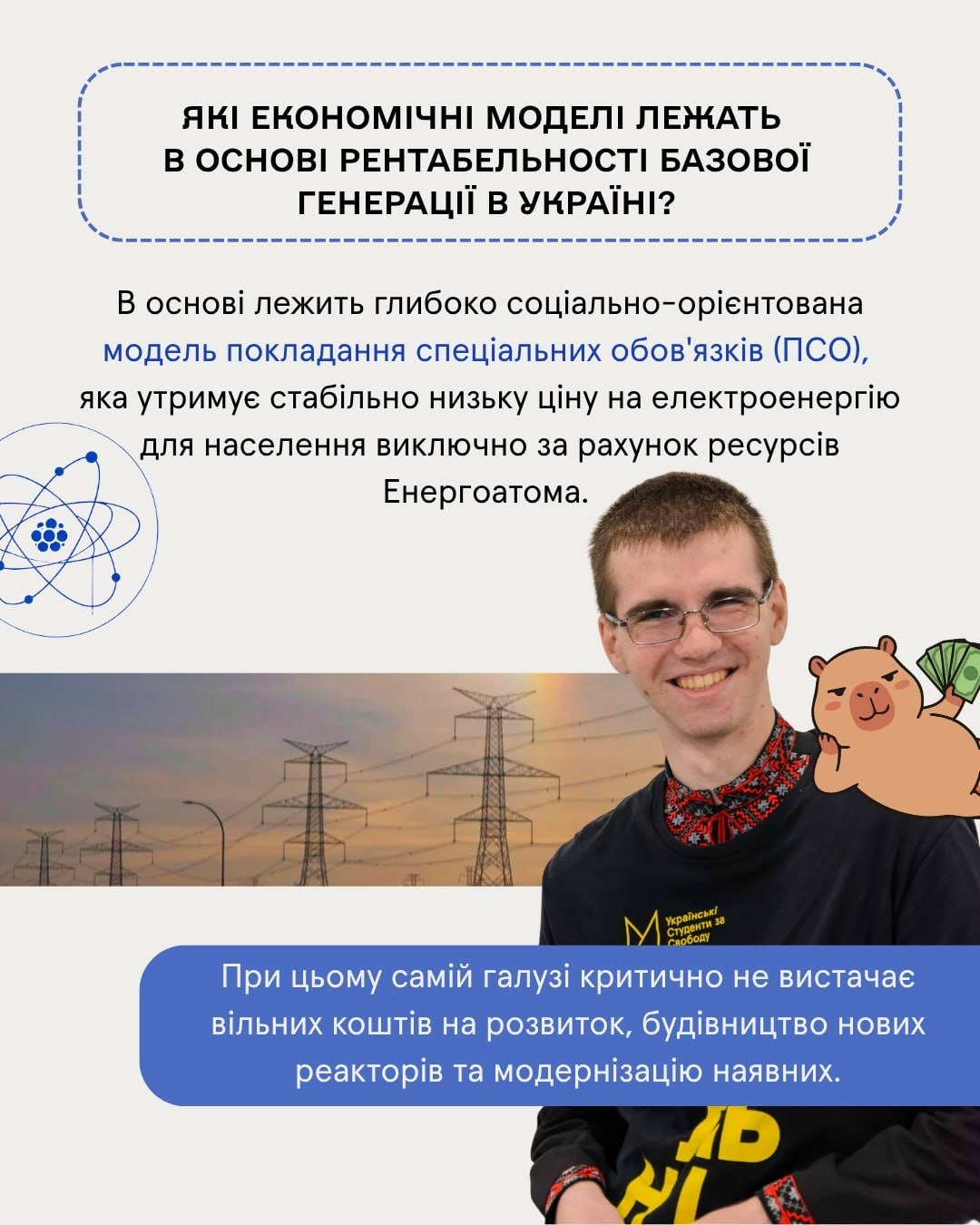
4. What economic models underpin the profitability of baseload electricity generation in Ukraine?
At its core is a deeply socially oriented model based on the Public Service Obligation mechanism, which maintains a consistently low electricity price for the population exclusively through the resources of Energoatom. At the same time, the nuclear energy sector itself faces a critical shortage of unrestricted funds for development, the construction of new reactors, and the modernization of existing ones.
5. How can participants in the “Youth for the Future of Ukraine” project contribute to the development of nuclear power generation in their communities without working directly at a nuclear power plant?

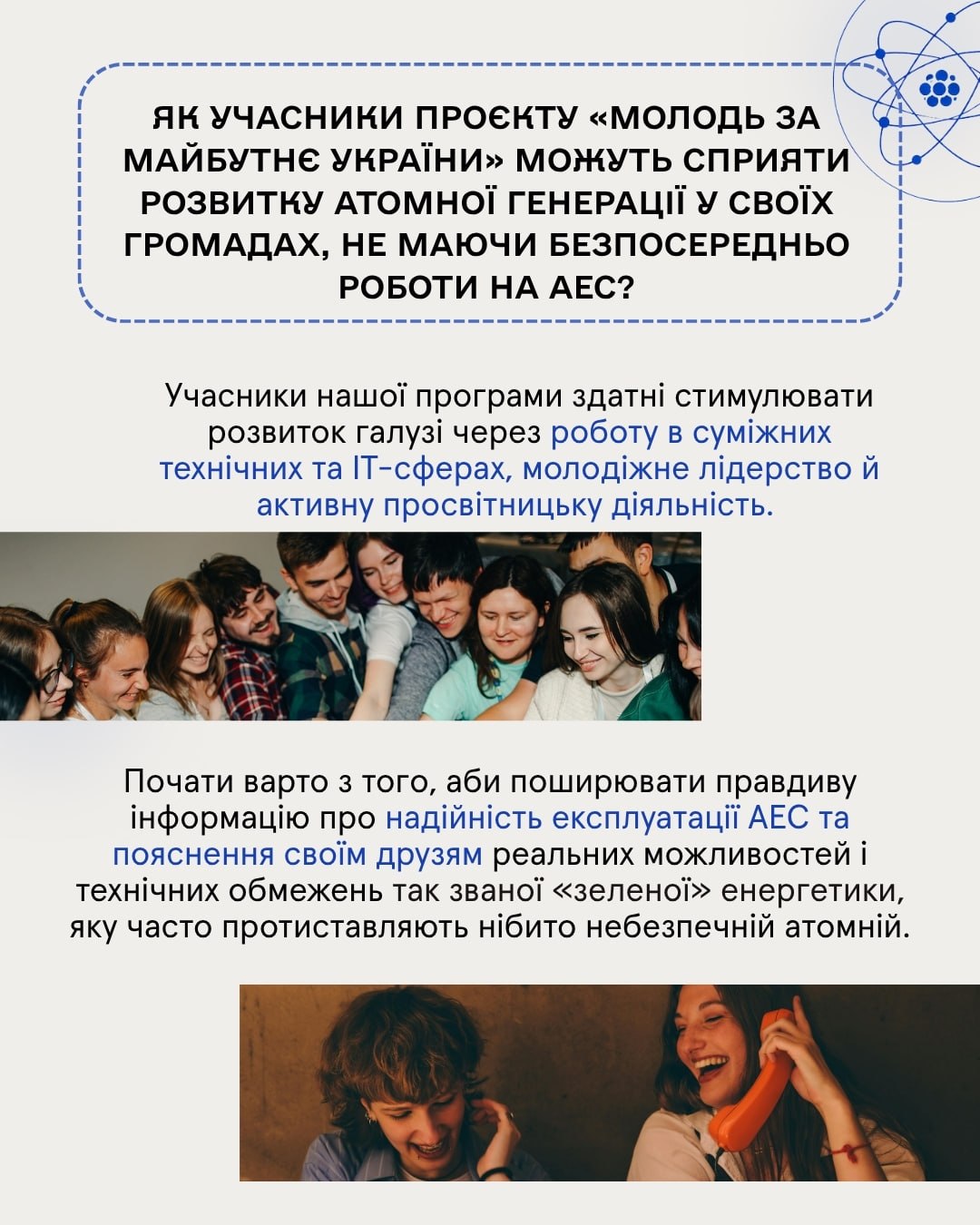
Participants in our program can stimulate the development of the industry through work in related technical and information technology fields, youth leadership, and active educational and awareness-raising activities. A good place to start is by spreading accurate information about the reliability and safe operation of nuclear power plants and explaining to friends the actual capabilities and technical limitations of so-called “green” energy, which is often contrasted with supposedly dangerous nuclear power.
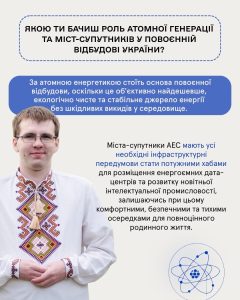
6. How do you see the role of nuclear power generation and nuclear power plant satellite cities in Ukraine’s post-war reconstruction?
Nuclear energy will form the foundation of post-war reconstruction because it is objectively the cheapest, environmentally clean, and stable source of energy, producing no harmful emissions into the environment. Nuclear power plant satellite cities have all the necessary infrastructure prerequisites to become powerful hubs for hosting energy-intensive data centers and developing cutting-edge knowledge-based industries, while at the same time remaining comfortable, safe, and quiet communities.